
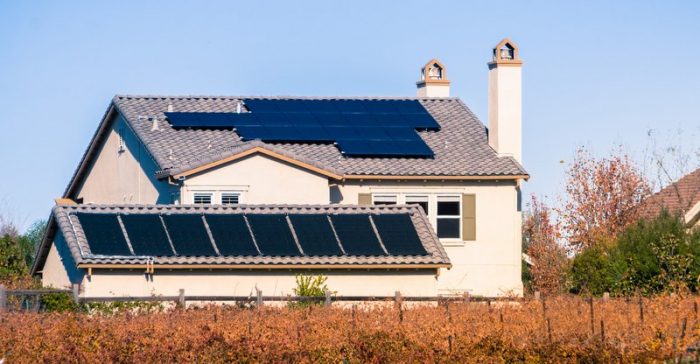
A multi-family property owner in Oakland recently explored adding a shared solar system to reduce tenants’ electricity costs and improve the building’s long-term efficiency. The project initially appeared financially practical under California’s existing Virtual Net Energy Metering (VNEM) framework. However, proposed policy revisions from the California Public Utilities Commission (CPUC) introduced new uncertainty around project size limits, electricity credit structures, and future system economics. Situations like this are becoming increasingly common across California, especially in PG&E service territories where electricity costs continue to rise, and property owners are searching for more stable long-term energy strategies.
Virtual NEM for Multi-Family Homes in California has played a major role in expanding solar access to apartment buildings, condominiums, affordable housing developments, and multi-tenant properties that cannot use traditional single-meter net metering systems. Proposed CPUC changes could reshape how future projects are designed, financed, and operated. Property owners considering multi-family solar installation in California projects now need a clearer understanding of how VNEM works, what the proposed changes involve, and which strategies may still make sense moving forward.
What Is Virtual NEM for Multi-Family Homes in California?
Virtual NEM for Multi-Family Homes in California allows one shared solar system to distribute energy credits across multiple tenant utility accounts.
Traditional net energy metering systems work best for single-family homes because one solar system offsets one utility meter. Multi-family buildings operate differently because apartment communities and condominium properties often contain many individual utility accounts connected to a shared building infrastructure. Virtual Net Energy Metering, commonly called VNEM, was created to solve this challenge.
Under a VNEM arrangement, a single solar installation on a multi-family property generates electricity that can be allocated across multiple tenants and common-area utility accounts. Instead of limiting solar benefits to one meter, VNEM allows participating residents to receive credits on their individual utility bills based on the building’s shared solar production. This structure made solar more accessible for apartment buildings, affordable housing developments, and multi-tenant communities throughout California.
The VNEM California framework became especially important in Bay Area cities such as San Jose, Fremont, and Oakland, where many residents live in shared housing environments rather than detached single-family homes. Without VNEM, many of these properties would struggle to distribute solar savings fairly among tenants.
Multi-family solar systems supported by VNEM also contribute to California’s broader clean energy goals by helping urban housing developments reduce grid demand during daytime production hours. For many property owners, the program created a path toward lower operating expenses, improved sustainability goals, and stronger tenant retention.
In summary, VNEM was designed to expand solar accessibility for multi-tenant buildings that traditional net metering systems could not effectively support. The program became a foundational tool for shared solar benefits across California’s growing multi-family housing sector.
Why VNEM Became Important for Shared Solar Projects
VNEM became important because it solved one of the biggest barriers preventing apartment buildings from adopting solar energy.
Many multi-family buildings operate with separate tenant utility meters while sharing one roof structure. Before VNEM programs existed, property owners often struggled to justify solar investments because only common-area electricity usage could directly benefit from solar generation. Tenants paying their own utility bills received little direct value from the system.
Virtual Net Energy Metering changed that equation by allowing solar production credits to flow to multiple utility accounts. This improved the financial practicality of apartment solar programs that California developers had previously avoided. Shared solar benefits California residents could access through VNEM became particularly valuable in utility territories with high electricity rates, including PG&E service regions.
The policy also supported affordable housing initiatives. Affordable housing operators could install solar systems and distribute energy credits to tenants without requiring every resident to install separate equipment. Community solar California programs tied to VNEM structures helped improve energy equity for residents who otherwise had limited access to renewable energy.
Property managers also benefited operationally. Multi-tenant solar systems in California allowed owners to offset common-area loads such as hallway lighting, elevators, shared HVAC systems, and laundry facilities while still delivering measurable benefits to residents.
As electricity prices increased and sustainability requirements became more prominent, VNEM became one of the most practical tools for expanding solar access in densely populated urban areas. The program helped align tenant savings, owner incentives, and California’s clean energy objectives.
What Changes Is the CPUC Proposing?
The CPUC is considering policy revisions that could significantly alter how future VNEM projects operate.
One of the most discussed proposals involves reducing the maximum eligible VNEM project size from 5 megawatts to 500 kilowatts. This adjustment would substantially limit the scale of future shared solar projects. Larger apartment communities and housing developments may no longer be able to offset energy consumption as effectively as they could under the existing rules.
Another proposed change would limit the number of VNEM projects allowed on a single property. Larger multi-building developments currently have more flexibility to distribute solar generation across several structures or utility accounts. Restricting the number of eligible projects could reduce expansion opportunities for growing residential communities.
The CPUC has also evaluated revised pricing and billing structures tied to grid electricity usage during high-demand periods. Under certain proposals, property owners could face additional charges for electricity imported from the utility grid during evening peak hours. Since solar production naturally declines later in the day, this shift could reduce the long-term value of shared solar systems without battery storage.
These proposals are part of California’s broader effort to modernize utility compensation structures and address concerns about grid cost allocation. However, many property owners and solar advocates argue that overly restrictive policies could discourage future investment in multi-family solar Bay Area projects.
The regulatory process remains active, which means final policy details could still evolve. Property owners evaluating new systems should monitor CPUC proceedings carefully because timelines, grandfathering provisions, and implementation details may materially affect future project economics.
How Proposed VNEM Changes Could Affect Property Owners
Proposed VNEM revisions could reduce flexibility and increase uncertainty for future multi-family solar projects.
Existing VNEM participants may experience fewer immediate changes if their systems qualify for grandfathering protections under earlier program rules. However, property owners planning future system expansions or new construction projects could face more restrictive design limitations.
Smaller project size caps may force developers to install undersized systems that offset a lower percentage of building electricity usage. That limitation can weaken long-term operational efficiency because common-area loads and tenant consumption may continue rising while solar production remains constrained.
New utility billing structures may also change how savings are distributed across tenants and property owners. Multi-family buildings relying heavily on evening electricity consumption could become more dependent on battery storage systems to manage peak-hour utility charges. Home battery storage installation in the Bay Area and commercial battery systems may become increasingly important for larger properties seeking energy flexibility.
For affordable housing operators, reduced VNEM benefits could create additional financial pressure because many projects already operate within strict budget limitations. Developers may need to reassess project feasibility assumptions, financing structures, and long-term operating projections.
At the same time, the changes may encourage more sophisticated system design strategies. Property owners could begin combining solar generation, battery storage, load management systems, and energy efficiency upgrades to maintain stronger long-term energy performance.
The proposed changes do not eliminate multi-family solar opportunities, but they do increase the importance of careful planning, system sizing, and regulatory awareness.
Why Multi-Family Solar Economics Are Becoming More Complex
Multi-family solar projects are becoming more complex because utility pricing structures and policy rules are changing simultaneously.
California utilities such as PG&E increasingly rely on time-of-use rate structures that charge higher electricity rates during periods of peak grid demand. These pricing models influence how valuable solar generation becomes at different times of the day. Solar systems typically generate the most electricity during midday hours, while many residential properties consume more electricity during evening periods.
This mismatch between solar production and evening demand creates operational challenges for shared solar systems without battery storage. Multi-family buildings that rely heavily on nighttime electricity consumption may still need substantial grid electricity during expensive utility periods.
At the same time, policy changes surrounding net metering, VNEM compensation structures, and utility cost recovery mechanisms continue evolving. Property owners now need to evaluate not only solar production potential, but also battery integration strategies, tenant energy behavior, and future regulatory uncertainty.
A residential solar installer in Bay Area markets must now evaluate projects more holistically than before. System design decisions increasingly depend on utility territory rules, tenant load profiles, roof space constraints, and future expansion flexibility.
The growing complexity does not necessarily reduce the value of solar energy for rental properties. Instead, it changes the way successful projects must be structured. Multi-family owners who plan carefully and evaluate long-term energy behavior may still achieve strong operational benefits under revised rules.
Comparison Table: Existing VNEM vs Proposed VNEM Structure
| Feature | Existing VNEM Structure | Proposed VNEM Changes |
| Maximum Project Size | Larger project eligibility | Reduced project size limitations |
| Shared Solar Allocation | Flexible tenant credit distribution | Potentially more restricted allocation |
| Multi-Building Flexibility | Multiple projects may be allowed | Greater project restrictions |
| Grid Usage Charges | Existing utility compensation structure | Potential additional peak-hour charges |
| Tenant Benefit Potential | Strong shared credit opportunities | Potentially reduced savings distribution |
| Expansion Flexibility | More scalable for large developments | More restrictive future expansion |
| Battery Storage Importance | Helpful but not always required | Increasingly important for peak management |
| Affordable Housing Impact | Strong support for shared solar access | More uncertainty for future projects |
Real-World Scenario: Fremont Apartment Solar Evaluation
A Fremont property owner evaluating a 24-unit apartment solar project recently encountered challenges tied to evolving VNEM expectations.
The property originally planned to install a shared rooftop solar system capable of supporting tenant utility credits and common-area electricity loads. Early project modeling suggested the VNEM structure would provide long-term operational benefits while improving tenant satisfaction.
As proposed CPUC VNEM changes became more widely discussed, the owner reassessed the project design with a solar installer in Bay Area markets familiar with multi-family compliance requirements. The revised strategy incorporated battery storage planning, expanded energy efficiency upgrades, and phased system implementation rather than relying entirely on one large shared solar installation.
The updated approach improved operational flexibility because battery storage could help offset evening electricity demand when utility rates are typically highest. The owner also upgraded common-area lighting and HVAC controls to reduce baseline electricity consumption before finalizing the solar system size.
This example illustrates how policy uncertainty is changing project planning throughout California. Multi-family property owners increasingly need flexible energy strategies rather than relying exclusively on older compensation assumptions.
Who Should Consider This and Who Should Not
VNEM projects remain valuable for many multi-family properties, but they are not equally practical in every situation.
Property owners operating apartment communities, affordable housing developments, condominiums, or multi-tenant buildings with substantial daytime electricity usage may still benefit from shared solar systems. Buildings located in PG&E territories with strong solar production potential and high utility rates often remain good candidates for multi-family solar installation in California projects.
Owners planning long-term property operations may also benefit because solar infrastructure can support sustainability goals, improve building marketability, and help stabilize operational energy exposure over time. Properties considering battery storage integration alongside solar may gain additional flexibility under evolving utility rate structures.
However, VNEM projects may not fit every property profile. Buildings with limited roof space, extensive structural limitations, or very low common-area electricity usage may struggle to justify shared system complexity. Property owners planning short-term asset sales may also hesitate to pursue projects requiring longer operational planning horizons.
Certain smaller properties may face additional feasibility challenges if future CPUC rules significantly restrict eligible project size thresholds. In those cases, direct tenant-level solutions or energy efficiency upgrades may provide stronger near-term value.
The right decision depends on building design, tenant load behavior, ownership goals, financing structure, and future regulatory developments.
Risks and Limitations of Multi-Family Solar Under Proposed Rules
Multi-family solar systems carry operational and regulatory risks that property owners should evaluate carefully.
One major limitation involves policy uncertainty. CPUC proposals can evolve during the rulemaking process, and future utility compensation structures may differ substantially from current assumptions. Property owners relying heavily on projected utility credit values could face lower-than-expected returns if regulations change.
Battery storage integration may also become increasingly necessary as time-of-use utility pricing evolves. Although battery systems can improve energy flexibility, they introduce additional equipment, maintenance considerations, and long-term operational planning requirements.
Tenant turnover presents another challenge. Shared solar allocation systems require careful utility account management to ensure credits are distributed correctly. Administrative complexity may increase for larger apartment communities with frequent occupancy changes.
Roof limitations, shading conditions, structural upgrades, and utility interconnection timelines can also affect project feasibility. Some older buildings may require infrastructure improvements before supporting large-scale solar systems.
Finally, assumptions about future electricity rates may not always develop as expected. Although California utility rates have generally trended upward, future regulatory reforms or grid modernization efforts could alter long-term energy economics.
Balanced project evaluation is essential because strong solar performance depends on careful design, accurate operational modeling, and realistic long-term expectations.
Policy Timeline and Regulatory Outlook
The VNEM regulatory environment remains active, and policy timelines continue evolving.
The CPUC has been reviewing solar compensation frameworks as part of broader efforts to modernize California’s energy grid and address utility cost allocation concerns. Proposed VNEM revisions emerged alongside other policy adjustments affecting distributed energy resources and shared solar programs.
Property owners considering new projects should pay close attention to implementation dates, grandfathering protections, and utility-specific filing updates. Existing systems approved under earlier frameworks may retain certain protections, while future projects could operate under revised rules.
Bay Area property owners working with solar panel installation Bay Area providers should confirm whether proposed policy changes affect project timing, interconnection eligibility, or system sizing strategies. Regulatory timing can materially influence project economics and operational assumptions.
Although uncertainty exists, California’s broader clean energy goals still support ongoing solar adoption. State agencies continue promoting renewable energy deployment, electrification, and grid modernization initiatives. Multi-family solar projects are likely to remain important components of California’s long-term sustainability strategy, even if program structures evolve.
How Multi-Family Property Owners Can Prepare
Property owners can reduce uncertainty by approaching multi-family solar planning proactively.
Working with experienced Bay Area solar companies familiar with VNEM California regulations is increasingly important because utility compliance requirements and project structures continue changing. A qualified installer can help evaluate roof capacity, tenant load distribution, battery integration options, and future expansion flexibility.
Energy efficiency upgrades may also improve project resilience. Reducing baseline electricity consumption through LED lighting, HVAC optimization, insulation improvements, and smart controls can strengthen overall building performance before solar installation occurs.
Property owners should also review utility consumption patterns carefully. Buildings with strong daytime common-area loads may align more naturally with solar generation patterns, while properties with heavy evening demand may benefit from battery storage planning.
Monitoring CPUC developments and consulting legal or regulatory professionals when necessary can also help avoid future compliance surprises. The most successful projects will likely combine solar generation, operational efficiency, and flexible long-term planning.
Nabu Energy continues working with California property owners evaluating shared solar opportunities, battery integration strategies, and long-term energy planning across evolving utility environments.
FAQs
What is Virtual NEM for multi-family homes in California?
Virtual Net Energy Metering allows a shared solar system to distribute electricity credits across multiple tenant utility accounts within the same property. This structure helps apartment buildings, condominiums, and affordable housing projects share solar benefits among residents who do not have individual rooftop systems connected to separate solar arrays.
Why are CPUC VNEM changes causing concern?
The proposed CPUC changes may reduce project size eligibility, limit system expansion flexibility, and modify utility billing structures. These revisions could make future multi-family solar projects more complex and potentially reduce the operational value that property owners currently expect from shared solar installations.
Can apartment buildings still benefit from solar after VNEM changes?
Many apartment buildings may still benefit from solar systems, particularly when combined with energy efficiency upgrades and battery storage planning. Project success increasingly depends on building design, utility territory rules, electricity usage patterns, and careful long-term operational analysis.
Does battery storage matter more under proposed VNEM rules?
Battery storage may become more valuable because time-of-use utility rates often charge higher prices during evening demand periods when solar production declines. Battery systems can help properties store daytime solar generation for later use, improving operational flexibility and reducing dependence on expensive peak-period grid electricity.
Conclusion
Virtual NEM for Multi-Family Homes in California remains one of the most important shared solar frameworks supporting apartment buildings, affordable housing developments, and multi-tenant communities across the state. Proposed CPUC changes introduce new uncertainty around project sizing, utility billing structures, and long-term operational assumptions, particularly for properties located in PG&E service territories throughout the Bay Area.
Even with these challenges, multi-family solar projects can still provide meaningful operational and sustainability benefits when carefully planned. Property owners who evaluate energy usage patterns, battery integration opportunities, and long-term regulatory considerations may be better positioned to adapt to California’s changing solar landscape. Nabu Energy continues supporting property owners across California with informed solar planning strategies designed around evolving utility and policy conditions.