If you’re a homeowner in California, there’s a high chance you’ve experienced a steady increase in your electricity bills from Pacific Gas and Electric Company over the past few years. What used to be a predictable monthly expense has now become one of the most frustrating and uncertain parts of household budgeting.
This isn’t happening randomly. It’s the result of structural changes in how electricity is priced, how energy is delivered, and how utilities recover costs. With the introduction of Time-of-Use (TOU) rates and the transition to NEM 3.0, the entire economics of electricity consumption has shifted.
Today, reducing your electricity bill is no longer just about installing solar panels. It’s about controlling when you consume electricity and how you store it. That’s exactly where battery energy storage systems (BESS) play a critical role.
Why PG&E Bills Are Increasing in California
To understand how to reduce your bill, you first need to understand why it’s increasing in the first place.
PG&E has been under significant financial pressure due to multiple factors. These include wildfire mitigation efforts, infrastructure upgrades, increased insurance costs, and regulatory changes. Each of these adds to operational expenses, which are eventually passed on to customers through higher electricity rates.
However, the more important shift is not just higher rates-it’s how those rates are structured.
PG&E has moved toward a pricing system that reflects demand patterns. This means electricity is no longer priced evenly throughout the day. Instead, it becomes significantly more expensive during peak demand hours, particularly in the evening when most households are actively using power.
This creates a situation where two households using the same amount of electricity can have very different bills, simply because of when they use that electricity.
PG&E Time-of-Use (TOU) Rates Explained in Detail
Time-of-Use pricing is at the core of why electricity bills feel unpredictable.
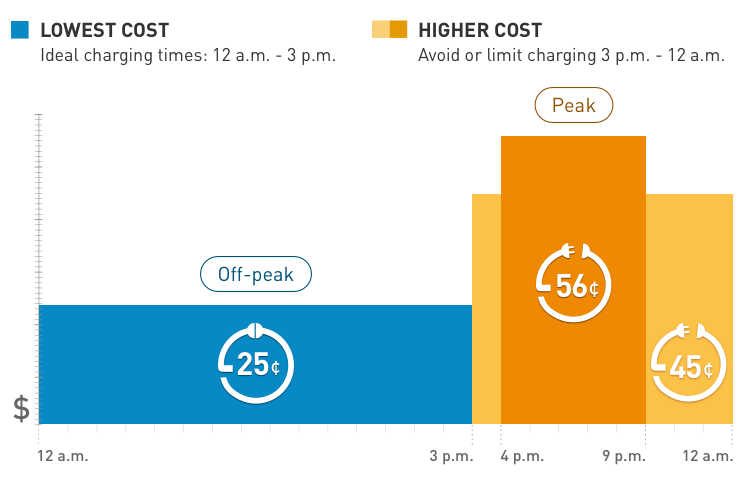
Under TOU plans, the cost of electricity varies depending on the time of day:
- Off-Peak Hours: Typically late night to early afternoon, when demand is low
- Mid-Peak Hours: Transitional periods with moderate pricing
- Peak Hours (usually 4 PM – 9 PM): When demand is highest, and electricity is most expensive
Under California’s NEM 3.0 billing structure, sending excess solar back to PG&E offers diminishing returns. The true financial ROI now comes from storing that power to completely offset expensive evening Time-of-Use (TOU) rates. Discover how our battery storage system design and installation services can be customized to eliminate your peak rate exposure and maximize your daily savings.
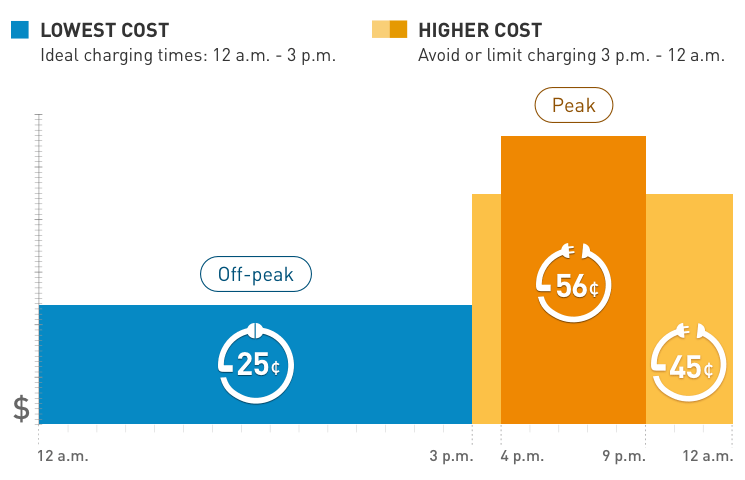
During peak hours, electricity rates can easily be two to three times higher than off-peak rates. This pricing model is designed to encourage users to shift their consumption away from high-demand periods.
The problem is that most households naturally use more electricity during peak hours-cooking dinner, running appliances, using air conditioning, lighting, and entertainment systems. This creates a mismatch between natural usage behavior and pricing incentives, which directly leads to higher bills.
Even if your total energy usage hasn’t increased, your bill can still rise because a larger portion of your usage is happening during these expensive time windows.
What Is a Battery Energy Storage System (BESS)?
A Battery Energy Storage System, commonly referred to as BESS, is a system that allows you to store electricity for later use instead of consuming it immediately.
This stored energy can come from:
- Solar panels during the day
- The grid during off-peak hours
The fundamental purpose of a battery system is to decouple energy consumption from energy timing. Instead of being forced to use electricity when it is generated or supplied, you gain the ability to use it when it is most cost-effective.
This introduces a powerful concept known as energy shifting, which becomes extremely valuable under TOU pricing models.
How Batteries Reduce Your PG&E Bill
To truly understand the value of a battery, it’s important to walk through how it impacts your daily energy usage.
During the daytime, when electricity is relatively cheap or when your solar panels are producing energy, your battery charges. Instead of sending excess solar energy back to the grid (which now has low compensation under NEM 3.0), that energy is stored locally.
Later in the evening, when electricity rates are at their highest, your battery discharges and supplies power to your home. This reduces or completely eliminates your need to purchase expensive electricity from PG&E during peak hours.
Over time, this consistent avoidance of high-cost electricity creates meaningful savings.
The effectiveness of this strategy depends on factors such as battery size, energy usage patterns, and how well the system is configured. However, in most real-world scenarios, households see a noticeable reduction in their monthly electricity expenses.
How Much Can a Battery Actually Save You?
Let’s move beyond theory and look at practical numbers.
In many parts of California, peak electricity rates can range between $0.45 and $0.60 per kWh, while off-peak rates may fall between $0.20 and $0.30 per kWh.
If a battery allows you to shift 10–15 kWh of daily usage from peak to off-peak periods, the cost difference adds up quickly. Over a month, this can translate into savings ranging from approximately $120 to $250 or more, depending on usage patterns and system size.
It’s important to understand that savings are not uniform for every household. Homes with higher evening consumption and larger solar systems tend to benefit the most. However, even moderate usage can justify the investment over time, especially as electricity rates continue to rise.
How Batteries Work Under NEM 3.0
The introduction of NEM 3.0 has fundamentally changed how solar energy is valued in California.
Under previous policies, homeowners could export excess solar energy to the grid and receive relatively favorable compensation. This made solar-only systems financially attractive.
Under NEM 3.0, the compensation for exported energy has dropped significantly. This means sending excess energy to the grid is no longer as beneficial as it once was.
Instead, the focus has shifted toward self-consumption.
A battery allows you to capture and store excess solar energy instead of exporting it. That stored energy can then be used later when electricity is expensive, effectively increasing its value.
This shift makes batteries not just an optional upgrade, but a strategic necessity for maximizing the financial benefits of solar systems under the new policy.
Is a Battery Worth It in California in 2026?
The answer depends on multiple factors, but for many homeowners, the economics are increasingly favorable.
A battery system typically involves a significant upfront investment, often ranging from $10,000 to $18,000, depending on capacity and configuration. However, when evaluated over a long-term horizon, the combination of monthly savings, rising electricity costs, and potential incentives can make the investment worthwhile.
In addition to financial returns, batteries provide resilience during outages, which is particularly valuable in regions affected by wildfire-related power shutoffs.
The key is to evaluate your specific situation, including your energy usage patterns, your reliance on peak-hour electricity, and your long-term plans for your home.
Best Home Batteries for PG&E Customers
Several battery systems are widely used in residential applications, each offering different strengths.
Tesla Powerwall
This system is known for its high storage capacity and seamless integration with home energy systems. It is particularly well-suited for homeowners who want both cost savings and reliable backup power during outages.
Enphase Energy
This option offers a modular design, allowing homeowners to expand capacity over time. It integrates well with Enphase microinverter systems and is often chosen for its flexibility.
LG Home 8
This is a compact and efficient system that balances performance and cost, making it a practical choice for many residential installations.
LG RESU Prime
A reliable and widely adopted solution, known for its performance consistency and compatibility with various solar setups.
Choosing the right battery involves evaluating your energy needs, budget, and long-term goals rather than simply selecting the most popular option.
How to Choose the Right Battery System
Selecting the right battery system requires careful consideration of several factors.
First, you need to analyze your electricity usage patterns. This includes not just how much energy you consume, but when you consume it. Homes with high evening usage typically benefit more from battery systems.
Second, you should determine your backup requirements. Some homeowners want full-home backup during outages, while others only need to support essential loads such as lighting, refrigeration, and internet.
Third, budget considerations play a significant role. While larger systems offer greater savings potential, they also come with higher upfront costs. Finding the right balance between cost and benefit is essential.
Finally, compatibility with your existing or planned solar system should be evaluated to ensure seamless integration and optimal performance.
To determine the exact size, chemistry, and specifications required to offset your specific PG&E usage, check out our full guide on how to choose a battery energy storage system.
Battery Backup for PG&E Outages (Beyond Cost Savings)
While most discussions around batteries focus on cost savings, their role in providing energy security should not be overlooked.
In many parts of California, planned and unplanned outages have become more frequent due to wildfire prevention measures and grid instability. During these events, homes without backup systems lose access to electricity entirely.
A battery system allows you to maintain power for critical appliances and systems, reducing disruption and improving overall resilience. This added reliability is often a deciding factor for homeowners, even when purely financial calculations are marginal.
Frequently Asked Questions
How much can a battery reduce my PG&E bill?
The amount a battery can reduce your electricity bill depends on several interconnected factors, including your daily energy consumption, your reliance on peak-hour electricity, the size of your battery system, and how effectively your system is configured.
In practical terms, most homeowners see noticeable reductions because the battery allows them to avoid purchasing electricity during the most expensive periods of the day. By consistently shifting energy usage away from peak hours, the cumulative savings over a month can become substantial. Over the course of a year, these savings can significantly offset the cost of the battery system, especially as electricity rates continue to rise.
Can I use a battery without solar panels?
Yes, it is entirely possible to use a battery without solar panels. In such setups, the battery charges directly from the grid during off-peak hours when electricity is cheaper. The stored energy is then used during peak hours to avoid higher rates.
However, while this approach can still provide savings, it is generally less effective than combining a battery with solar panels. Solar integration allows you to store energy that you generate yourself, effectively reducing reliance on grid electricity altogether. This combination maximizes both cost savings and energy independence.
What is energy shifting, and why is it important?
Energy shifting is the process of storing electricity when it is inexpensive or readily available and using it later when it becomes more expensive or scarce. Under PG&E’s Time-of-Use pricing model, this concept is particularly important because it directly aligns with how electricity is priced.
Instead of consuming electricity during peak hours when rates are highest, a battery allows you to rely on previously stored energy. This not only reduces your electricity bill but also provides greater control over your energy usage patterns, making your household less vulnerable to pricing fluctuations.
What is the best battery for PG&E customers?
The best battery system depends on your specific needs rather than a single universal recommendation. Factors such as your daily energy consumption, desired backup capacity, budget, and compatibility with your solar system all influence the ideal choice.
For example, homeowners seeking comprehensive backup and higher capacity often consider options like Tesla Powerwall, while those looking for modular flexibility may prefer systems like Enphase Encharge. The key is to evaluate your requirements carefully and work with a qualified installer who can design a system tailored to your situation.
Conclusion: The Smart Way to Reduce Your PG&E Bill
With rising electricity rates and the shift to NEM 3.0, reducing your PG&E bill now depends on when and how you use your energy. Battery storage allows you to avoid peak pricing, increase self-consumption, and gain better control over your monthly costs.
However, real savings come from choosing the right system design, not just installing a battery.
At Nabu Energy, we help homeowners design customized solar and battery solutions optimized for PG&E rate plans, focused on maximizing savings without sales pressure.
If you want to understand how much you can save with a battery system, the next step is a personalized evaluation based on your energy usage.
Stop overpaying PG&E during peak hours.
Every home’s energy footprint is different. Let our in-house team calculate your exact battery ROI and design a storage system tailored to your specific PG&E rate plan. Get your custom battery storage quote today with zero sales commission.
To determine the exact size, chemistry, and specifications required to offset your specific PG&E usage, check out our full guide on how to choose a battery energy storage system.