EV Charger Installation Bay Area — Level 2 Charging for Homes & Businesses
Nabu Energy designs and installs Level 2 EV charging stations for homeowners and businesses across California. From electrical assessment and system design through permitting, professional installation, and inspection – our in-house team delivers your EV charging installation with zero sales commission, complete pricing transparency, and full compliance with the California Electrical Code.





EV Charging Station Installation for Homes & Businesses Across the Bay Area & California
Whether you are a homeowner installing a Level 2 home EV charger to make overnight charging fast, convenient, and cost-effective, or a business owner meeting California’s expanding EV charging infrastructure requirements – Nabu Energy has the in-house electrical and installation expertise to design and deliver the right EV charging solution for your property.
Residential EV Charger Installation Bay Area
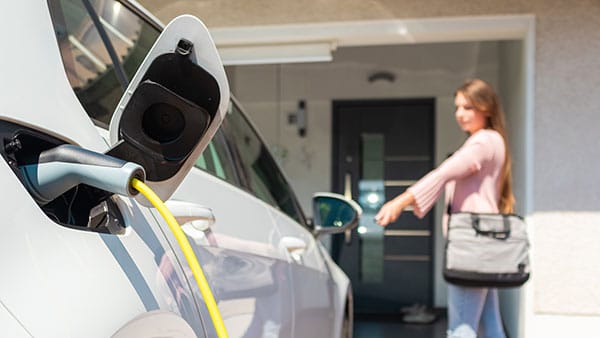
A dedicated Level 2 home EV charging station transforms your EV ownership experience – delivering 20 to 40 miles of range per hour on a 240-volt circuit and enabling a full overnight charge that a standard 120-volt Level 1 connection cannot provide. We assess your home’s electrical panel capacity, design the most efficient circuit routing, handle all permitting, and install your Level 2 charger to National Electrical Code standards – so you wake up every morning to a fully charged vehicle.
Commercial EV Charging Station Installation
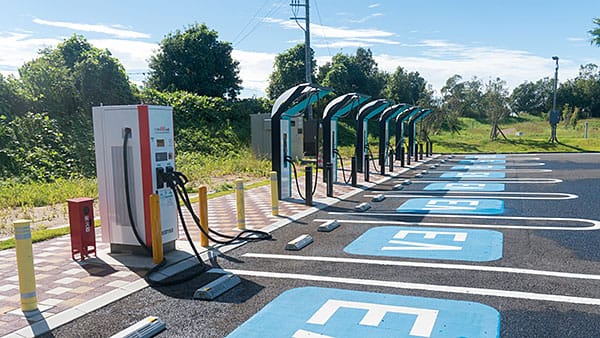
California’s 2025 Building Standards Code – effective January 1, 2026 – significantly expanded EV charging requirements for new commercial construction, retail, office, and multifamily developments. For large retail projects with 200 parking spaces, the 2025 California Code now requires 26 installed EV chargers – up from 9 under the 2022 standards. Nabu Energy designs and installs commercial Level 2 EV charging stations that meet current California Title 24 compliance requirements – managing all engineering, permitting, and utility coordination on your behalf.
What is a Level 2 EV Charging Station and How Does It Work?
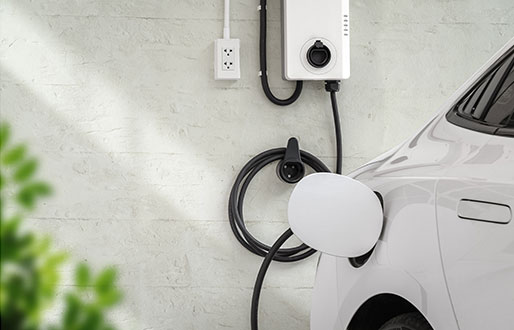
An EV charging station – also called Electric Vehicle Supply Equipment or EVSE – supplies electricity from your home or commercial electrical system to your electric vehicle’s battery. Understanding the difference between charging levels is essential to choosing the right solution for your property and driving needs.
Level 1 charging uses a standard 120-volt household outlet and the charging cable supplied with your vehicle. It typically delivers 3 to 5 miles of range per hour – meaning a fully depleted 75-kilowatt-hour battery could take 24 hours or more to fully charge. Level 1 is adequate only for drivers covering very low daily mileage with consistent overnight parking time. For most California EV owners, Level 1 charging is impractical as a primary charging solution.
Level 2 charging uses a dedicated 240-volt circuit – similar to the electrical supply for an electric dryer or oven – and delivers 20 to 40 miles of range per hour depending on the charger’s amperage rating and your vehicle’s onboard charger capacity. A Level 2 EV charging station can fully charge most electric vehicles overnight in 4 to 8 hours – making it the standard choice for California homeowners and the minimum requirement for most commercial EV charging installations.
Smart Level 2 EV chargers connect to your home WiFi and allow you to schedule charging during California’s off-peak electricity rate windows. California’s peak electricity rates from 4 to 9 PM run $0.45 to $0.55 per kilowatt-hour – while off-peak rates from midnight to 6 AM drop to approximately $0.29 per kilowatt-hour. A smart charger with automatic time-of-use scheduling can save charging costs – paying for the charger itself within the first couple of years for most PG&E and SCE customers. H3: Smart EV Charging – Time-of-Use Optimisation Smart Level 2 EV chargers connect to your home WiFi and allow you to schedule charging during California’s off-peak electricity rate windows. California’s peak electricity rates from 4 to 9 PM run $0.45 to $0.55 per kilowatt-hour – while off-peak rates from midnight to 6 AM drop to approximately $0.29 per kilowatt-hour. A smart charger with automatic time-of-use scheduling can save charging costs – paying for the charger itself within the first couple of years for most PG&E and SCE customers.
Level 2 EV charging integrated with a home solar PV and battery storage system delivers the lowest possible cost per mile for California EV owners. A Level 2 charger paired with home solar brings your effective cost per mile down to approximately $0.017 – two to three times cheaper than the equivalent cost of gas.
Nabu Energy designs solar, battery, and EV charging systems as integrated energy solutions – ensuring your EV charger, solar panels, and battery storage work together intelligently.
Nabu Energy’s EV Charging Certifications and Accreditations
Choosing a certified solar PV installer in California is one of the most important decisions you will make about your solar investment. Certifications confirm that your installer meets manufacturer installation standards, California licensing requirements, and industry best practice – protecting your equipment warranties, ensuring code-compliant installation, and giving you recourse if something goes wrong..
Nabu Energy holds the following certifications and accreditations relevant to solar PV installation across California:
 Contractors State License Board “/>
EV Charging Brands and Partners We Install
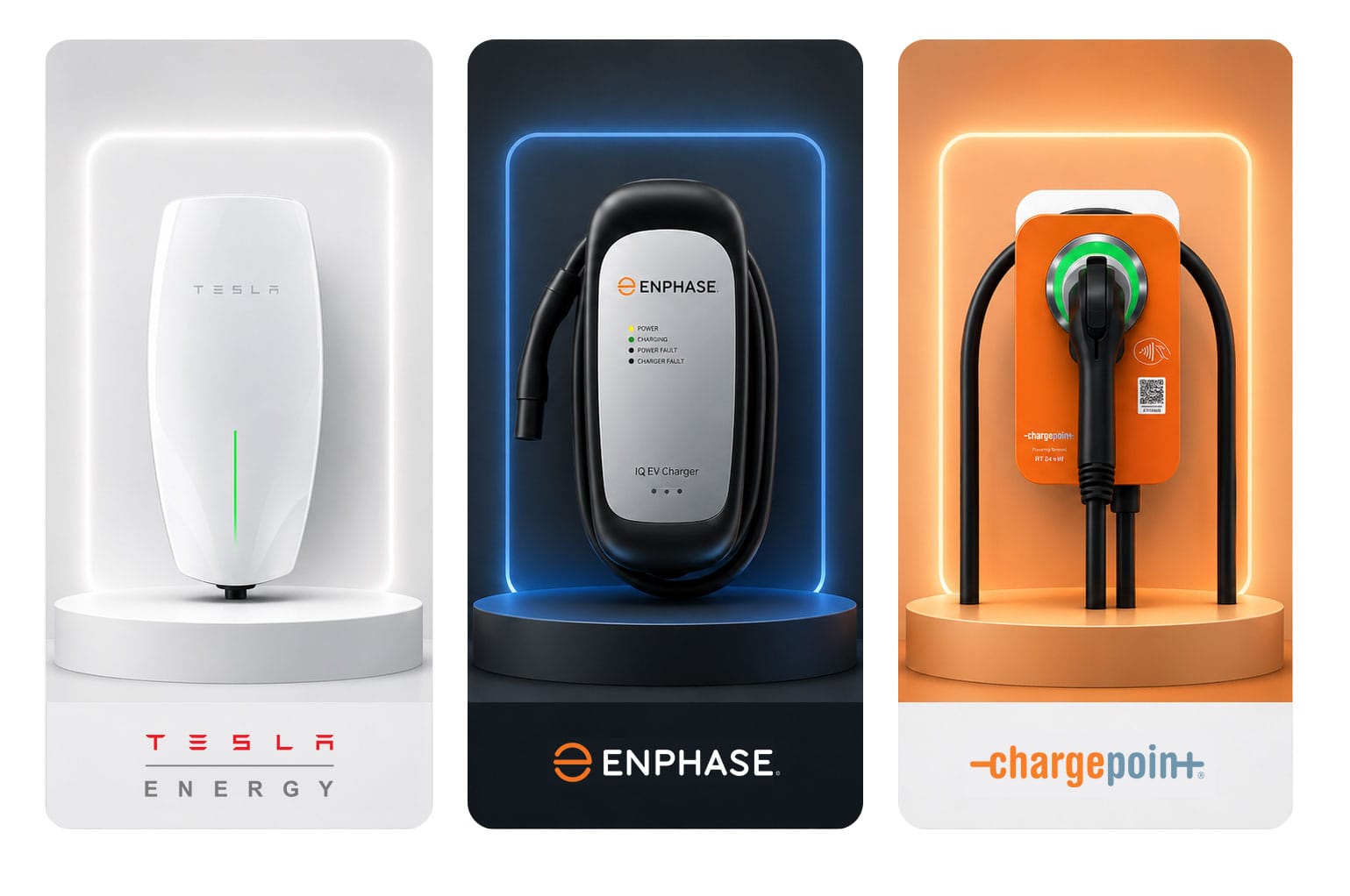
Level 2 EV Charging Solutions We Install for California Homes and Businesses
For California homeowners, a dedicated Level 2 home EV charging station is the most practical, cost-effective, and convenient EV charging solution available. We install smart Level 2 chargers with WiFi connectivity, time-of-use scheduling, app monitoring, and compatibility with both J1772 and NACS connector standards – ensuring your charger works with your current EV and any future vehicle you may purchase.
Key features of the Level 2 residential EV chargers we install:
Commercial Level 2 EV Charging Stations
For businesses, retail properties, offices, multifamily developments, and hotels, Nabu Energy designs and installs commercial Level 2 EV charging infrastructure that meets California’s 2026 Title 24 compliance requirements. Commercial EV charging stations provide a valuable amenity for employees, customers, and residents – and are now a legal requirement for most new California commercial construction.
Our commercial EV charging installations include:
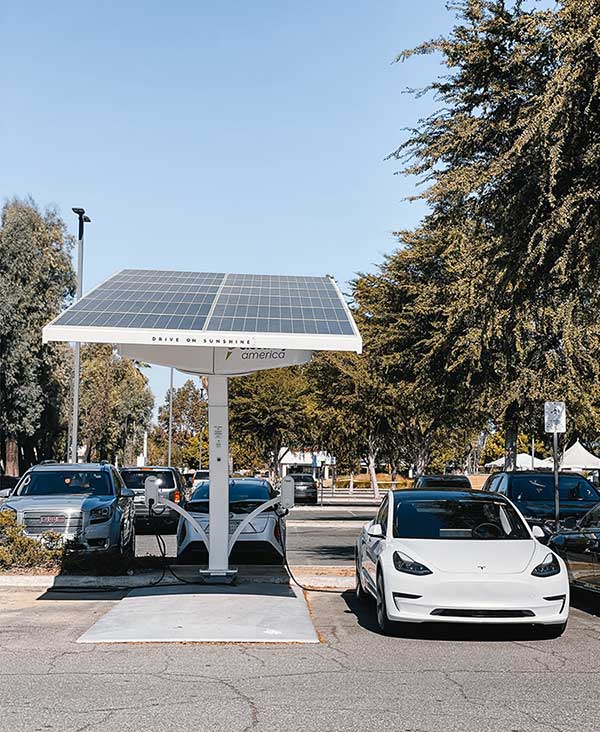
Solar-Integrated EV Charging
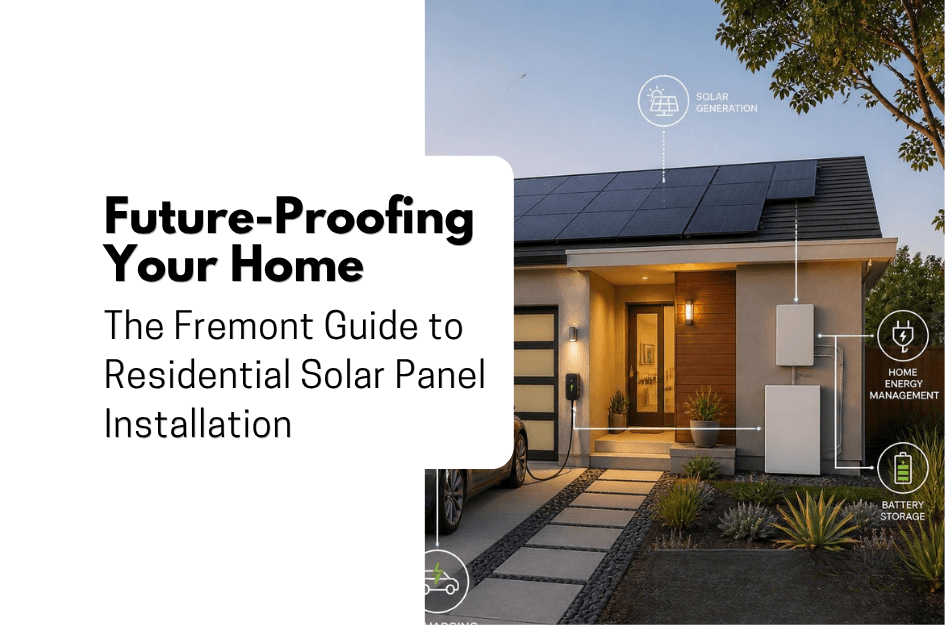
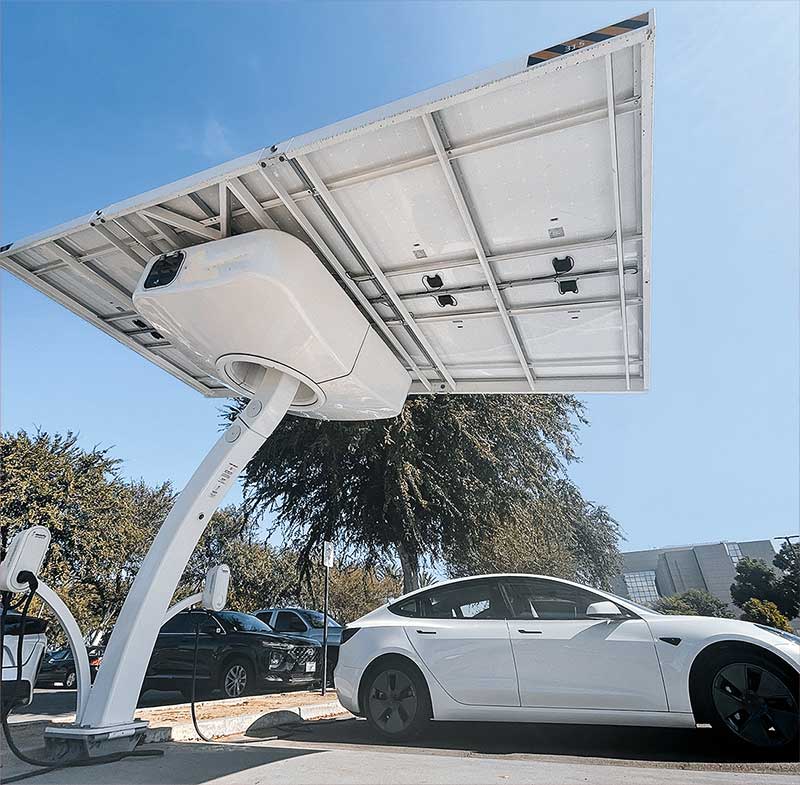
For homeowners and businesses with existing or planned solar PV systems, Nabu Energy designs EV charging installations that integrate directly with your solar and battery storage setup. Solar-charged EV driving eliminates grid electricity costs for your vehicle entirely – with solar-generated electricity providing the cleanest, cheapest charge available. Our in-house team can configure your solar, battery, and EV charging as a single integrated system – optimising how your solar generation, battery storage, and EV charging interact throughout the day.
Why Choosing a Licensed EV Charger Installer in California Matters
EV charger installation involves dedicated 240-volt electrical circuit work – the same class of electrical installation as major home appliances and HVAC systems. Choosing an unlicensed or unqualified installer creates real risks that extend well beyond a failed inspection.
Inspection Approval and Code Compliance
Level 2 EV charger installations in California require an electrical permit and inspection in most jurisdictions. Level 2 charger installations typically require an electrical permit and inspections to ensure the existing electrical service can handle the added load. Installations that fail inspection must be corrected and inspected – adding cost, time, and potential rework to your project. Nabu Energy’s licensed electricians design and install every EV charging system to California Electrical Code standards, ensuring first-submission inspection approval.
Federal Tax Credit and Utility Rebate Eligibility
Most California utility EV charger rebates – including those from PG&E and SCE – require installation by a licensed electrical contractor with permit closure documentation. The federal Section 30C Alternative Fuel Vehicle Refueling Property Credit also requires a properly installed and inspected charging station to qualify. Choosing an unlicensed installer risks losing both the federal tax credit and any available utility rebate – potentially forfeiting $1,500 or more in available incentives.
Electrical Safety and Home Insurance
An improperly installed 240-volt circuit creates a genuine fire and electrical safety risk. Beyond the immediate safety concern, an unpermitted installation can create issues with your homeowner’s insurance coverage if a claim is made relating to the EV charger circuit. A licensed, permitted installation provides full protection – for your family, your property, and your insurance coverage.
Manufacturer
Warranty Protection
Most Level 2 EV charger manufacturers require installation by a licensed electrician for their product warranty to remain valid. An unlicensed installation can void a 3 to 4-year charger warranty – leaving you without manufacturer support if a fault develops..
Benefits of Installing a Level 2 EV Charging Station in California
Dramatically Faster Charging Than Level 1
A Level 2 home EV charging station delivers 20 to 40 miles of range per hour – compared to 3 to 5 miles per hour from a standard Level 1 outlet. For a California EV owner driving an average of 40 miles per day, a Level 2 charger fully replenishes your battery in under 2 hours. Most EV owners simply plug in when they arrive home and wake up to a fully charged vehicle every morning – without thinking about charging at all.
Significantly Lower Charging Costs Through TOU Optimisation
Smart Level 2 EV chargers with time-of-use scheduling charge your vehicle automatically during California’s lowest-cost electricity rate windows – typically between midnight and 6 AM. For a typical EV driver covering 1,000 miles per month, smart off-peak charging on PG&E or SCE plans reduces monthly charging costs from approximately $143 to $51 – a saving of nearly $1,100 per year.
Increase Your Home’s Value and Appeal
Home EV charging emerged as one of 2026’s hottest real estate trends, with homes featuring EV charging stations listed 91.6 percent more often in 2025 versus 2024 – indicating charging infrastructure has become a mainstream selling point rather than a niche amenity. Installing a Level 2 EV charging station adds measurable, appraiser-recognised value to your California property.
Meet California’s New 2026 EV Charging Requirements
California’s new building codes effective January 1, 2026 require EV chargers in most new overnight parking spaces, with multifamily developments requiring at least one EV-ready spot per unit equipped with a minimum 240-volt outlet or charger. For developers, builders, and property owners undertaking new construction or significant renovation in California, professional EV charging installation is now a legal compliance requirement – not an optional upgrade.
Reduce Your Carbon Footprint and Operating Costs
Charging your EV at home with solar-generated electricity eliminates both the carbon footprint and the cost of your vehicle’s fuel entirely. Even on the grid, home EV charging costs a fraction of the equivalent petrol cost – and California’s ongoing transition to renewable electricity generation means your home-charged EV becomes progressively cleaner every year.
Federal and Utility Incentives Available Through June 2026
The federal Section 30C Alternative Fuel Vehicle Refueling Property Credit covers 30 percent of EV charger installation costs – up to $1,000 for residential installations – for eligible California homeowners in qualifying census tracts. This credit applies to property placed in service at your main home from January 1, 2023 to June 30, 2026. California utilities including PG&E and SCE offer additional EV charger rebates that can be stacked with the federal credit – reducing your total out-of-pocket installation cost significantly. Businesses may qualify for the 30C commercial charging tax credit worth up to $100,000 per installed EV charging port, also available until June 30, 2026.
EV Charging and Solar PV – California’s Most Powerful Clean Energy Combination
For California homeowners and businesses with solar panels, adding a Level 2 EV charging station completes your clean energy ecosystem – turning your solar generation directly into zero-cost, zero-emission vehicle fuel.
Under California’s NEM 3.0 net billing structure, excess solar energy exported to the grid earns only approximately $0.05 to $0.08 per kilowatt-hour. Using that solar surplus to charge your EV instead – at the equivalent of $0.30 to $0.45 per kilowatt-hour of avoided grid electricity cost – multiplies the effective value of every kilowatt-hour your panels generate.
When paired with a battery storage system, your EV charging setup becomes even more powerful – storing solar surplus during the day, avoiding peak-hour grid electricity costs in the evening, and providing a fully charged vehicle each morning using exclusively clean, self-generated energy.
Nabu Energy designs solar, battery, and EV charging systems as integrated solutions – ensuring all three components work together intelligently for maximum savings, minimum grid dependency, and the lowest possible cost per mile for your electric vehicle.
EV Charger Installation Bay Area — Our Design and Installation Process
Step 1
Consultation and
Electrical Assessment
We begin with a no-obligation consultation to understand your EV charging needs, driving habits, and electrical panel capacity. We assess your existing main panel’s available capacity, evaluate the most efficient conduit routing to your parking location, and discuss whether your project requires a main service panel upgrade before installation can proceed. No sales pressure – just honest, expert advice from our licensed team.
Step 2
Custom EV Charging
System Design
Our in-house engineers design your EV charging installation – selecting the right charger model, amperage rating, connector type, and smart charging features for your specific property and vehicle. For commercial projects, we design the complete EV charging infrastructure including load management systems, conduit routing, and switchboard capacity – ensuring your installation meets current Title 24 requirements and is sized to accommodate future expansion.
Step 3
Permitting and Utility
Notification
We prepare and submit all electrical permit applications on your behalf. For commercial installations requiring utility notification – including larger load additions that may affect your local transformer – we manage utility coordination as part of the project. Our experience with California’s permitting requirements across multiple counties means your permit is prepared correctly the first time.
Step 4
Professional EV
Charger Installation
Our in-house licensed electricians install your Level 2 EV charging station to California Electrical Code Article 625 standards. This includes all dedicated circuit wiring, conduit installation, charger mounting, and connection – with indoor or outdoor weatherproof installation as required. Where a main service panel upgrade is needed, our team handles this as part of the project.
Step 5
Inspection and
Commissioning
We coordinate all required electrical inspections and commission your EV charging station – including WiFi setup, time-of-use charging schedule configuration, and app pairing. We walk you through how to use your charger’s smart features to minimise your charging costs through off-peak scheduling and energy monitoring.
Step 6
Incentive Documentation
Support
We provide all permit documentation, installation receipts, and inspection records required to support your federal Section 30C tax credit claim and any applicable utility rebate applications – ensuring you have everything needed to maximise your available incentives.
Why Choose Nabu Energy
for EV Charging Station Installation in California
Every dollar you invest in your EV charging installation goes directly into your equipment and installation – not into sales commissions. Our commission-free model means you receive honest recommendations based on your charging needs, not on which charger or installation package generates the highest margin.
All EV charging installation work is performed by our own in-house CSLB-licensed electricians. No subcontractors, no third-party electrical work, no handoffs between parties. The same team that designs your installation installs it – giving you a single accountable point of contact from consultation to completion.
Nabu Energy provides all documentation required to support your federal Section 30C tax credit claim and utility rebate applications – helping you maximise available incentives on every residential and commercial EV charging installation.
As a full-service solar, battery, and EV charging installation company, Nabu Energy designs EV charging systems that integrate seamlessly with your existing or planned solar PV and battery storage setup. Most electricians install EV chargers in isolation – we design them as part of your complete home or commercial energy system.
For commercial EV charging projects, Nabu Energy’s in-house engineers design installations in full compliance with California’s 2025 Building Standards Code – including Title 24 CALGreen EV charging infrastructure requirements. We manage all compliance documentation, permitting, and utility coordination on your behalf.
Service Areas in the Bay Area
We provide Solar Panel, Battery Storage & EV Charging Installation across the Bay Area
Customer Testimonials

Frequently Asked Questions
Level 1 EV charging uses a standard 120-volt household outlet and delivers 3 to 5 miles of range per hour – requiring 24 hours or more to fully charge most modern electric vehicles. Level 2 EV charging uses a dedicated 240-volt circuit and delivers 20 to 40 miles of range per hour – enabling a full overnight charge for most electric vehicles in 4 to 8 hours. For California EV owners, Level 2 is the standard recommendation because it fits naturally into overnight home charging routines, supports higher-capacity EV batteries, and enables smart time-of-use scheduling to minimise electricity costs.
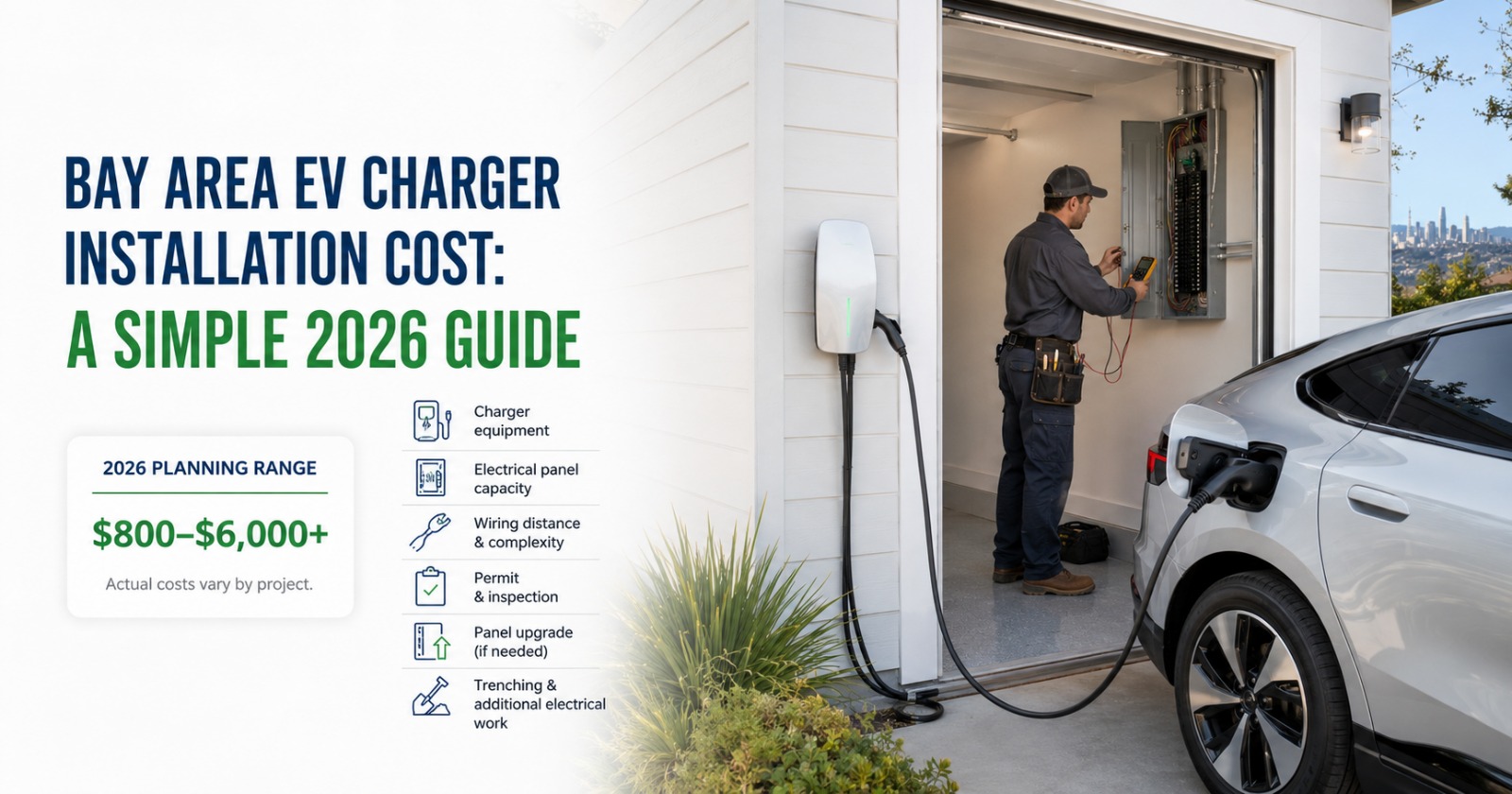
The total cost of a Level 2 EV charger installation in California depends on your home’s electrical panel capacity, the distance from your panel to the charger location, and whether a main service panel upgrade is required. Level 2 charger installation typically falls between $800 and $3,000 for installation work before equipment, with the total rising when the project requires panel work or a long wiring route. Available incentives can significantly reduce your out-of-pocket cost. The federal Section 30C credit covers 30 percent of installation costs up to $1,000 for eligible California homeowners in qualifying census tracts. California utilities including PG&E and SCE offer additional EV charger rebates – meaning many California homeowners net $0 to $500 out of pocket after stacking available incentives. Contact Nabu Energy for a transparent, commission-free quote specific to your property.
Yes. Level 2 charger installations in California typically require an electrical permit and inspection of the installation. The permit confirms that your existing electrical service can handle the added load and that the installation complies with the California Electrical Code. Nabu Energy manages all permit applications on your behalf – ensuring your installation is fully permitted, inspected, and compliant with local Authority Having Jurisdiction requirements. A permitted installation is also required to qualify for the federal Section 30C tax credit and most California utility EV charger rebates.
Yes – if your California address is in an eligible census tract. The Section 30C Alternative Fuel Vehicle Refueling Property Credit covers 30 percent of EV charger installation costs up to a maximum of $1,000 per charging port for property placed in service at your main home through June 30, 2026. Eligibility is determined by your census tract – most rural and many suburban California addresses qualify. Check the Department of Energy’s 30C Tax Credit Eligibility Locator tool to confirm your address qualifies before installation. Businesses may qualify for the commercial 30C credit worth up to $100,000 per installed EV charging port, also available until June 30, 2026. Consult your tax advisor for guidance specific to your situation.
California offers some of the strongest EV charger rebates in the United States through its major utilities. Southern California Edison provides rebates of $500 to $1,000 for Level 2 charger installation, with higher rebates for income-qualified households. Pacific Gas and Electric runs the EV Charge Network program offering similar rebates. These utility rebates can be stacked with the federal Section 30C tax credit – meaning eligible California homeowners can recover 50 to 75 percent of their total EV charging installation cost through combined incentives. Utility rebate programmes are subject to funding availability and may close before their listed end dates – contact Nabu Energy to assess your eligibility and act before available funds are exhausted.
It depends on your existing panel’s available capacity and the amperage of the charger you are installing. Many California homes have sufficient panel capacity for a standard 40-amp Level 2 EV charger without an upgrade – particularly if the panel was recently updated or has unused breaker capacity. Older homes with 100-amp panels or panels already running near capacity may require a main service panel upgrade before a Level 2 charger can be safely installed. Nabu Energy assesses your panel capacity as part of the consultation process – including this assessment in your project scope with transparent pricing before any work begins.
Yes – all modern electric vehicles sold in the United States are compatible with Level 2 charging using either the J1772 connector standard or the newer NACS connector standard adopted by Tesla and increasingly by other manufacturers. The Level 2 chargers Nabu Energy installs support both J1772 and NACS connector standards – ensuring compatibility with Tesla, Ford, Rivian, GM, Hyundai, BMW, and all other major EV brands currently available in California. Charging speed depends on your vehicle’s onboard charger capacity – most current EVs accept between 7.2 and 11.5 kilowatts on Level 2.
Yes – and for California EV owners this is the most cost-effective charging solution available. A Level 2 EV charging station integrated with a home solar PV system allows you to charge your vehicle directly from solar-generated electricity during daylight hours – eliminating grid electricity costs for your vehicle entirely. When paired with battery storage, your EV can also charge from stored solar energy during the evening and overnight hours. A Level 2 charger paired with home solar reduces your effective cost per mile to approximately $0.017 – twelve times cheaper than the petrol equivalent. Nabu Energy designs solar, battery, and EV charging systems as integrated solutions – ensuring all three work together to maximise your clean energy self-consumption.
California’s new building codes effective January 1, 2026 require EV chargers in most new overnight parking spaces, with multifamily developments requiring at least one EV-ready spot per unit equipped with a minimum 240-volt outlet or Level 2 charger. For hotels, the minimum requirement is 40 percent of spaces with low-power Level 2 receptacles plus 25 percent with installed Level 2 chargers. Commercial projects adding or modifying parking spaces under a building permit must also equip each new or altered stall with an installed Level 2 EV charger. Nabu Energy designs and installs commercial EV charging infrastructure in full compliance with California’s 2025 Building Standards Code – managing all compliance documentation and permitting on your behalf.