Location: Fremont, California
Estimated Reading Time: 13 minutes
Last Updated: August 2026
Quick Summary
For Fremont homeowners, installing solar is no longer simply a matter of putting panels on the roof and connecting them to the electrical system. A well-planned residential solar project should account for the condition and type of your roof, your home’s electrical capacity, current electricity consumption, future EV charging, battery storage, and how you expect your household’s energy needs to change.
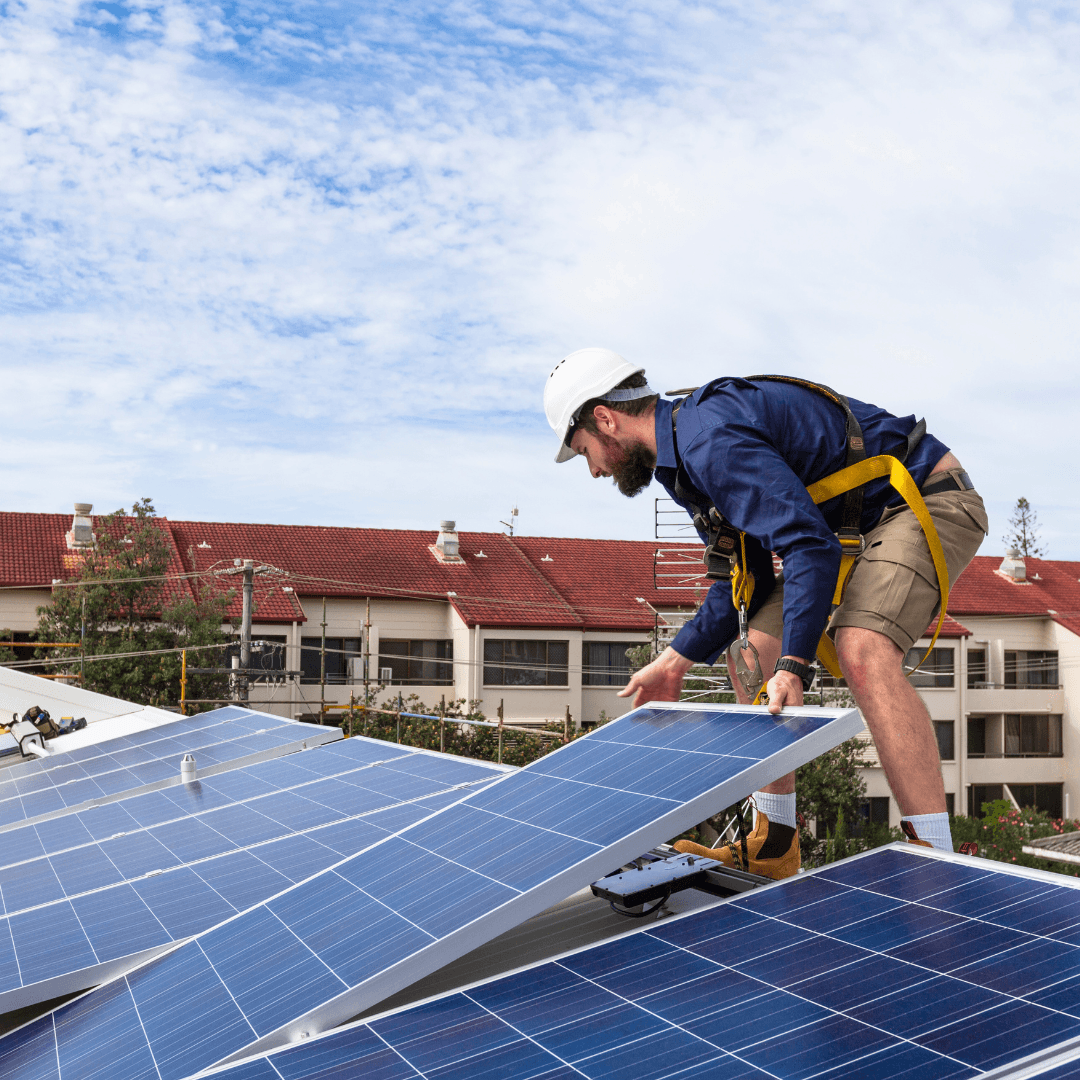
That is especially important if you are considering adding solar to your home while also planning other electrical upgrades. An EV charger, heat-pump HVAC system, electric water heater, or battery can all affect how your home’s electrical system should be planned.
The goal of a good solar project is therefore bigger than installing panels. It is to create a residential energy system that works with the home you have today while leaving room for the home you may have several years from now.
Why Future Planning Matters Before Residential Solar Panel Installation
Solar panels can remain productive for decades, so the decisions made before installation can affect your home long after the installation crew leaves.
Consider a Fremont homeowner who installs a solar system based on today’s electricity consumption. A year later, they purchase an EV. Two years later, they replace a gas water heater with an electric one. Later, they install a heat pump.
The original solar system has not necessarily been installed incorrectly. The problem is that the household’s electricity requirements have changed.
This is why residential solar panel installation should be approached as part of a broader home-energy plan.
Before deciding on equipment or system size, consider what is likely to change in your home.
If an EV, battery, electrical panel upgrade, or major appliance replacement is already part of your plans, bringing those projects into the solar conversation early can help avoid designing the system around an electricity profile that may soon become outdated.
Start With Your Home, Not the Solar Equipment
Homeowners often begin their research by comparing solar panels, inverters, batteries, or brands.
That is understandable, but equipment should come after understanding the property.
A solar designer first needs to understand how the home can physically accommodate a system.
That includes the roof surfaces, roof condition, available installation area, electrical service, existing equipment, shading, and the location where solar and battery equipment could potentially be installed.
The same solar equipment can produce very different results depending on how it is incorporated into the property.
“For this reason, a good solar PV design and installation assessment should answer a more fundamental question: What residential solar panel system makes sense for this particular Fremont home?
Step 1: Evaluate the Roof Before Adding Solar to Your Home
The roof is one of the most important physical components of a solar project.
The assessment should look at more than whether there appears to be enough empty space for panels. Roof orientation, pitch, shading, roof material, structural considerations, and the condition of the roof all influence how the installation should be approached.
A roof that looks spacious from the ground may have limited usable areas because of vents, skylights, chimneys, setbacks, roof geometry, or shading.
Conversely, a roof with several sections may still provide enough productive space for a well-designed system.
The objective is not necessarily to cover every available section of the roof.
It is to determine which areas can accommodate panels effectively and safely.
What Homeowners With Tile Roofs Should Know
Fremont has many homes with tile roofing, and homeowners sometimes assume that tile automatically makes solar installation complicated or unsuitable.
That is not the case.
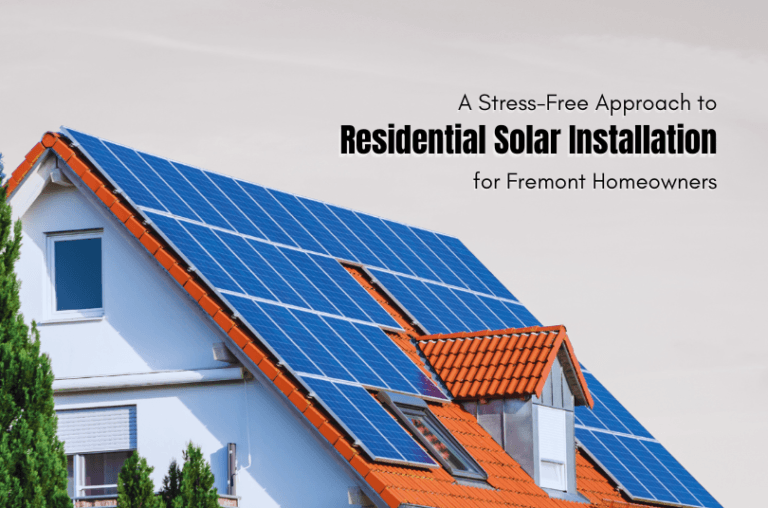
Solar panels for tile roofs can be installed when the mounting approach is properly designed for the roof type and the specific property.
However, tile roofing does require careful installation practices.
The installer needs to consider how the mounting hardware will interact with the roof structure, how tiles are handled around attachment points, waterproofing, flashing, roof penetrations, and the overall installation layout.
For a homeowner, this means the important question is not simply:
“Can solar panels go on my tile roof?”
It is:
“How will the proposed solar installation be integrated with my particular tile roof?”
A clear proposal should explain the installation approach rather than treating the roof material as an afterthought.
What If Your Roof Needs Replacement Soon?
This is an important question to address before installing solar.
If your roof is already approaching the end of its useful life, installing solar first can create unnecessary complications later.
Replacing a roof after solar panels have been installed may require the panels and mounting equipment to be removed and reinstalled.
That does not mean an older roof automatically rules out solar. It means the timing of the projects should be considered together.
If you are already planning a roof replacement, discuss it before finalizing the solar design.
A coordinated approach can be considerably more practical than treating roofing and solar as completely separate projects.
Step 2: Understand How Your Home Uses Electricity
A solar system should be connected to your household’s actual electricity needs.
Start by reviewing your historical electricity consumption rather than relying solely on the dollar amount of one recent utility bill.
Look for seasonal changes.
Does electricity use increase during summer cooling? Are there periods when the home is largely occupied? Are you already charging an EV? Are electric appliances being added?
These details help establish the household’s current energy profile.
They also provide a starting point for determining how much electricity a residential solar system may need to produce.
But current consumption is only half of the picture.
The other half is where your home is going.
Step 3: Plan Solar Around Your Future Electricity Needs
Future electrification is one of the most important reasons to think beyond today’s electricity bill.
A Fremont homeowner may currently use gas for water heating and home heating while driving a gasoline vehicle.
That same household could eventually move toward:
- An EV
- Home EV charging
- A heat-pump HVAC system
- An electric heat-pump water heater
- Induction cooking
- Battery storage
Each change can alter the home’s electricity demand.
If you already know that some of these upgrades are likely, they should be discussed before the solar system is sized.
Adding Solar and an EV Charger to Your Home
EV charging can create a significant new electrical load.
The actual impact depends on the vehicle, driving habits, charging frequency, charging schedule, and how much charging is performed at home.
For example, a homeowner who drives only a few miles each day may have a very different electricity requirement from someone with a long daily commute.
If you are adding solar and an EV charger to your home, the two projects should be considered together where practical.
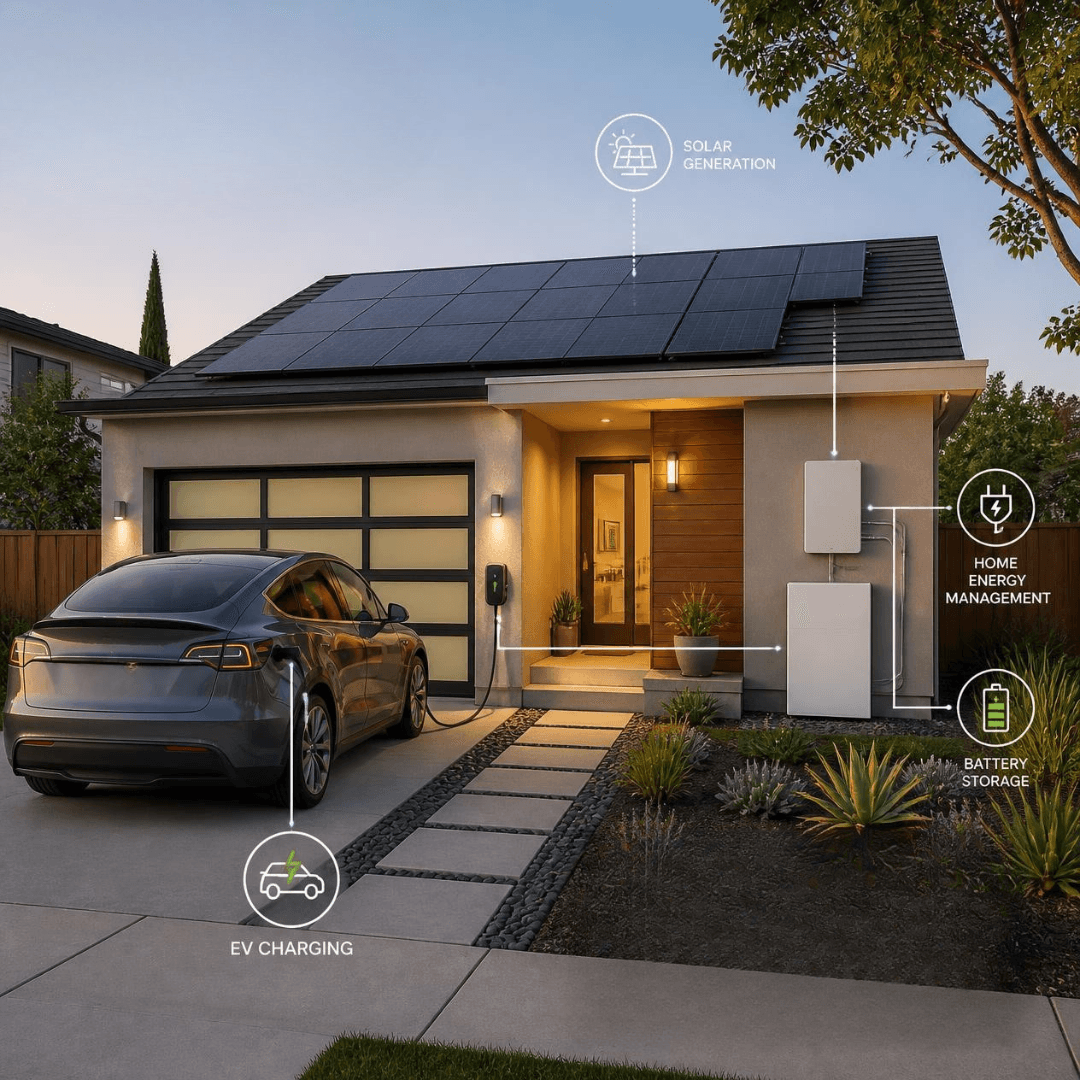
This can help you think about electrical capacity, charging location, future electricity consumption, and whether battery storage should be part of the broader plan.
The important point is simple:
Do not size tomorrow’s solar system solely around yesterday’s electricity usage.
Step 4: Check Your Electrical Service Before Finalizing the Design
Solar panels generate electricity, but the solar array is only one part of the home’s electrical system.
Your existing electrical service and equipment also need to be evaluated.
Depending on the home and the proposed system, the project may involve reviewing the main service panel, available electrical capacity, existing circuits, interconnection requirements, and space for additional equipment.
This becomes particularly important when multiple electrical projects are being considered.
For example, a homeowner planning solar, an EV charger, and an electric water heater may have different electrical requirements from someone installing solar alone.
In some homes, the existing electrical infrastructure may be sufficient.
In others, modifications may be necessary.
The important thing is to identify these requirements during the design stage rather than discovering them after installation work has already begun.
Step 5: Decide Whether Battery Storage Belongs in the Plan
Solar panels and batteries serve different purposes.
Solar panels generate electricity from sunlight.
A battery stores electrical energy for later use.
That distinction matters because a homeowner can have solar without battery storage, while a battery can change how electricity generated by the system is used within the home.
Residential solar battery storage may be worth considering if your priorities include backup power, greater control over when stored electricity is used, or creating a broader home-energy system.
But battery storage should not automatically be treated as mandatory.
The right question is:
What problem would a battery solve for my household?
If backup power is important, that should influence the battery discussion.
If your household has substantial evening electricity use, that should also be considered.
And if you are planning an EV and other major electric loads, those future requirements may affect how you evaluate storage.
What Does a Solar Power System With Battery Backup Actually Do?
A solar power system with battery backup combines solar generation with energy storage so that electricity can potentially be available from stored energy when solar production is unavailable.
However, homeowners should be careful about assuming that every solar-plus-battery system will automatically power every appliance in the house during an outage.
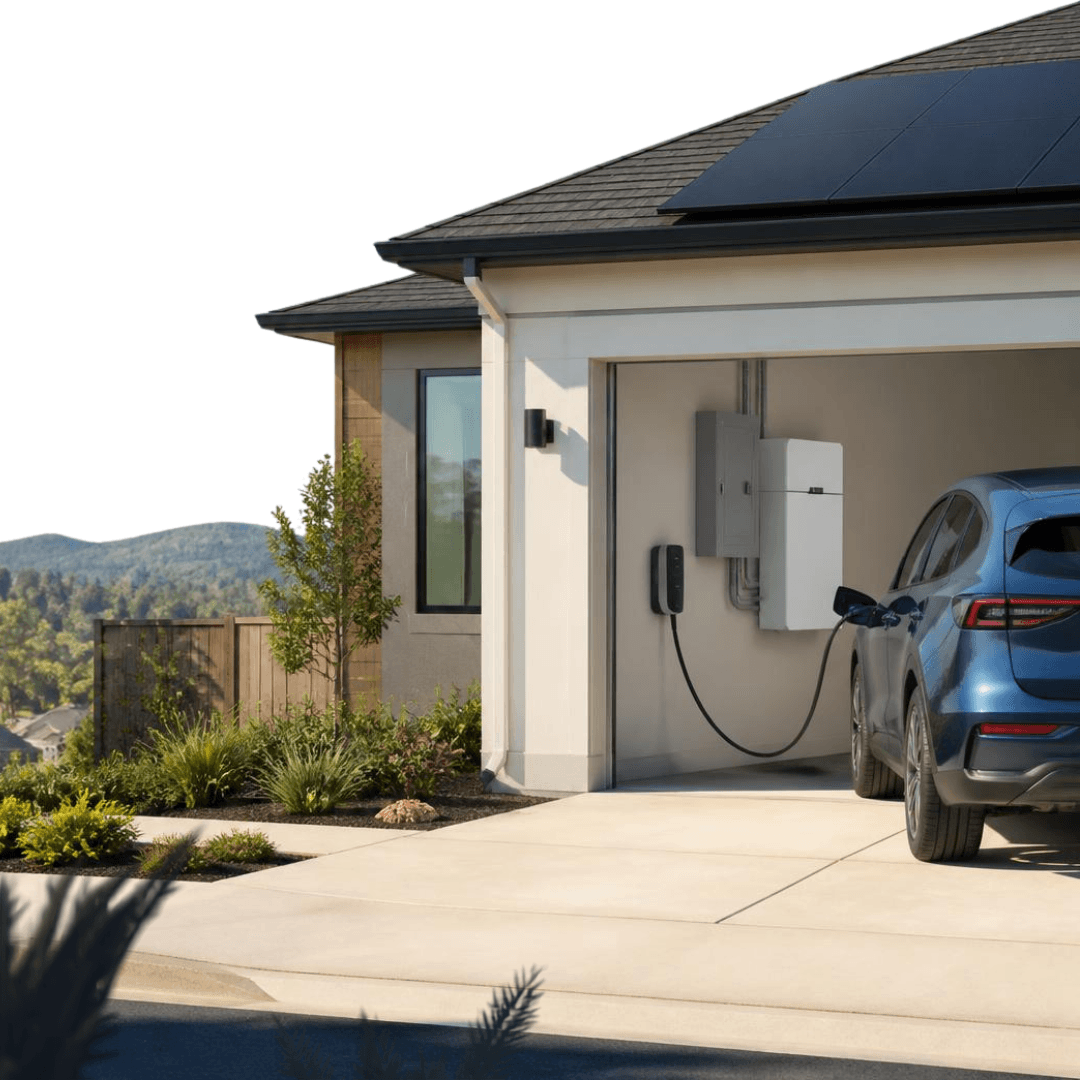
Backup capability depends on system configuration, battery capacity, electrical equipment, loads selected for backup, and installation design.
If backup power is one of your primary reasons for installing a battery, ask exactly what the proposed system is designed to support during an outage.
For example:
Will essential circuits be backed up?
Will the entire home be backed up?
How long could the battery support the expected loads?
Can the system recharge from solar during an extended outage?
Those questions are more useful than simply asking how many kilowatt-hours the battery contains.
When Does a Powerwall Make Sense for a Fremont Home?
Homeowners researching battery storage may encounter Tesla Powerwall systems as one option.
A Tesla Powerwall installation in Fremont should be evaluated in the context of the entire electrical system rather than as a standalone product decision.
The relevant questions include how much electricity the household uses, what backup loads matter, how much solar generation is expected, where the battery can be installed, and how the battery fits into the home’s electrical configuration.
The product brand matters, but the system design matters more.
A battery that looks impressive on a specification sheet still needs to be appropriately integrated with the home’s solar array, electrical service, backup loads, and homeowner objectives.
Step 6: Think About Where the Equipment Will Go
Solar panels are visible on the roof, but much of the system’s important equipment is located elsewhere.
Depending on the design, the home may require space for inverters, battery storage, electrical equipment, disconnects, and other components.
The location needs to be considered during the design stage.
A homeowner should understand where major equipment will be installed and whether the proposed location creates practical concerns involving access, clearances, appearance, heat, weather exposure, or future maintenance.
This is especially important when adding a battery.
A battery should not simply be placed wherever there happens to be an empty wall.
Its location needs to work with the applicable installation requirements and the home’s overall electrical design.
Step 7: Understand How Permitting and Interconnection Fit Into the Project
Residential solar installation involves more than physical construction.
The project may require engineering documentation, permits, inspections, and utility interconnection processes before the system can operate as intended.
For a homeowner, this part of the process can sometimes feel invisible because much of it happens between the installer, local authorities, and the utility.
Nevertheless, it is worth understanding what is included in the project scope.
Ask:
Who prepares the plans?
Who handles the permit process?
What inspections are required?
Who coordinates utility interconnection?
When can the system actually be turned on?
Understanding these steps can make the overall project timeline easier to follow.
Step 8: Understand the Solar Design Before You Approve It
A solar proposal should do more than tell you how many panels will be installed.
You should be able to understand why the system was designed the way it was.
Look at the proposed panel layout and ask why certain roof areas were selected.
Review the expected production and understand what assumptions were used.
If the system includes batteries, understand how storage is expected to operate.
If you plan to install an EV charger, ask whether future charging demand was considered.
The goal is not to become a solar engineer.
The goal is to understand the logic behind the system you are being asked to purchase.
What Makes a Residential Solar Panel System “Future-Proof”?
Future-proofing does not mean predicting exactly what your household will consume 10 or 20 years from now.
It means avoiding unnecessary limitations today.
For example, if you know an EV is likely to be purchased soon, it makes sense to discuss EV charging before the electrical and solar design is finalized.
If your home may move toward electric heating and water heating, those future loads should also be considered.
If backup power is important, battery planning should happen before the project is finalized rather than treated as an afterthought.
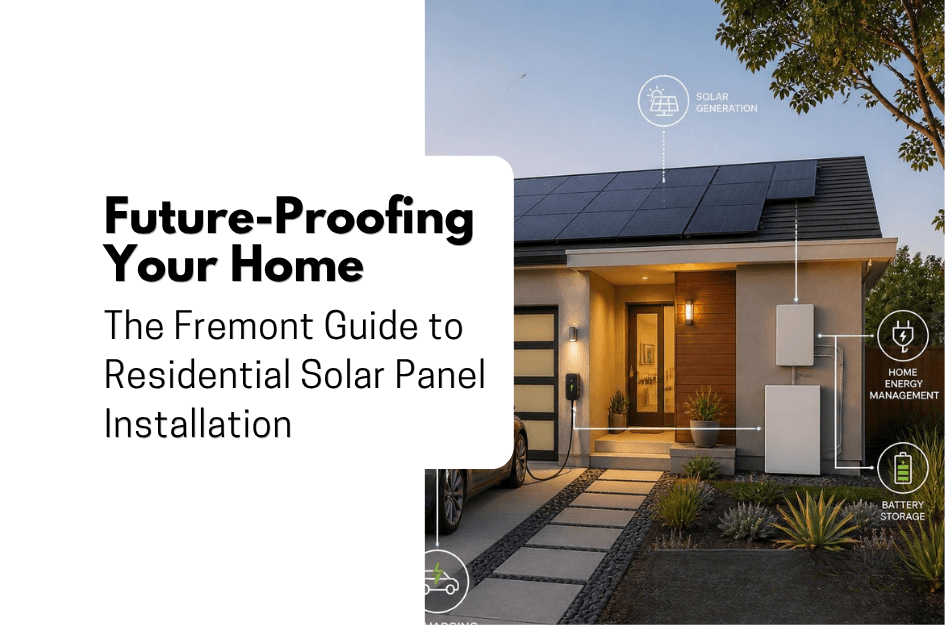
A future-ready design therefore considers:
Today’s electricity consumption + planned electrification + electrical infrastructure + solar production + storage needs.
That does not mean every homeowner needs the largest possible solar system or battery.
It means the system should be based on realistic household requirements rather than unnecessary assumptions.
Solar Installation Is Not Just About the Number of Panels
Two homes can have the same number of panels and still have very different solar systems.
Panel placement, orientation, shading, inverter configuration, roof layout, electrical design, and equipment selection all affect the overall system.
This is why comparing proposals solely by panel count can be misleading.
A proposal with more panels is not automatically better.
A proposal with fewer panels is not automatically worse.
The more useful comparison is whether the proposed system is appropriate for the home’s electricity needs and physical characteristics.
What Should Fremont Homeowners Ask Before Signing a Solar Contract?
Before approving a residential solar project, make sure you understand the complete scope.
Ask what equipment is included and where it will be installed.
Ask whether the roof condition was evaluated.
Ask whether your electrical service can accommodate the proposed system and any planned EV charger or other electrical upgrades.
Ask how future electricity consumption was considered.
If you are installing a battery, ask exactly which loads it will support during an outage.
And ask who is responsible for permits, inspections, utility coordination, and the final activation process.
A homeowner should not need to understand every technical detail to make a good decision.
But you should be able to get clear answers to reasonable questions.
Common Mistakes to Avoid When Adding Solar to a Home
Designing Only for Today’s Electricity Consumption
This can become a problem when an EV, heat pump, or electric water heater is added later. If those projects are already under consideration, bring them into the planning conversation.
Installing Solar on a Roof That May Soon Need Replacement
If your roof is near the end of its useful life, consider the timing of roofing and solar together.
Choosing Equipment Before Understanding the System
A recognizable equipment brand does not automatically mean the system is appropriate for your home. Start with the property’s requirements.
Assuming a Battery Automatically Means Whole-Home Backup
Battery capacity and backup configuration are not the same thing. Understand exactly what the system is designed to power during an outage.
Comparing Proposals Only by Price
The lowest initial price may not represent the same equipment, system capacity, installation scope, warranty coverage, or future planning as another proposal. Compare what you are actually receiving.
Treating EV Charging as a Separate Future Problem
If you already know an EV is coming, discuss home charging during solar planning. It is easier to consider the electrical requirements before the installation is finalized than after the system is already operating.
A Fremont Homeowner’s Solar Planning Checklist
| Planning Area | Question to Ask |
| Roof | Is the roof suitable for the expected solar installation period? |
| Roof material | If I have tile roofing, how will the mounting system be installed? |
| Roof space | Which roof areas will actually be used and why? |
| Shading | Were trees and nearby structures evaluated? |
| Electricity use | What does my historical electricity consumption look like? |
| Future EV | Am I likely to charge an EV at home? |
| Electrical service | Can my existing electrical infrastructure support the planned system? |
| Battery | Do I need backup power or other storage capabilities? |
| Equipment location | Where will the inverter, battery, and electrical equipment be installed? |
| Permitting | Who handles plans, permits, inspections, and utility coordination? |
| System design | Why was this particular system size recommended? |
| Future loads | Were planned heat pumps, electric water heating, or other upgrades considered? |
You do not need to have all the answers before contacting a solar installer.
The checklist is useful because it gives you a framework for evaluating the answers you receive.
⭐⭐⭐⭐⭐ Responsive Planning and Project Execution
“Nabu went all out when I approached them at the last moment before the federal credits were about to expire. Nabu not only was the only solar and battery contractor that took up the project, but they met the target and completed it before the end of Dec 2025 in a matter of weeks. The communication, planning, and implementation were all impeccable. I would recommend Nabu for your project.”
– Verified Fremont, Homeowner
How to Compare Residential Solar Panel Installation Proposals
Once you have multiple proposals, resist the temptation to immediately compare the total price. First, compare the underlying assumptions. One installer may propose a different system size because it has made different assumptions about your electricity consumption.
Another may include battery storage.
Another may design around future EV charging.
The proposals may therefore not be directly comparable until you understand what each one includes.
Look at the system design, expected production, equipment, battery configuration if applicable, electrical work, roof considerations, permitting, warranties, and installation scope. Then compare the total cost.
This approach gives you a much clearer picture than simply asking which company has the lowest quote.
Understanding the complete residential solar services included in each proposal can make the comparison much easier.
What Should Happen During the Installation?
Once the design and approvals are complete, the physical installation generally involves preparing the roof, installing the mounting equipment and panels, completing electrical work, installing associated equipment, and completing required inspections and commissioning.
The exact sequence varies by property and system design.
For homeowners, communication during this stage matters.
If the installation team encounters an unexpected condition, you should understand what changed, why it changed, and whether the change affects the system design or project scope.
A professional installation is not simply about finishing quickly.
It is about completing the work according to the approved design and addressing legitimate site conditions appropriately. If you want a more detailed look at the installation process, see our guide to solar panel installation in California, which explains the major stages homeowners can expect from design through system activation.
What Happens After Your Solar System Is Installed?
The project does not really end when the panels are physically mounted.
Your system needs to be commissioned and placed into operation according to the applicable utility and permitting requirements.
Once operating, monitoring can help you understand whether the system is producing as expected.
If your system includes a battery, monitoring can also provide information about battery charge, discharge, and energy usage.
Homeowners should take some time after activation to understand their monitoring platform.
Knowing what normal production looks like can make it easier to notice unusual changes later.
The Bigger Picture: Solar, Storage and Electrification
For many Fremont households, solar is becoming part of a broader transition toward an increasingly electric home.
The homeowner may begin with solar.
Then comes an EV.
Then home charging.
Then an electric water heater.
Then a heat pump.
Battery storage may eventually become part of the system as well.
Each project affects the home’s energy profile.
Rather than treating these as completely unrelated purchases, homeowners can benefit from thinking about how they fit together.
That is the real meaning of future-proofing your home.
It is not about installing the maximum amount of equipment today.
It is about making decisions today that do not unnecessarily restrict the options you may want tomorrow.
⭐⭐⭐⭐⭐ From Design Planning to Installation
“Nabu helped install our solar last year. From planning with engineers to actual installation was flawless. Pricing was very competitive. I highly recommend them.”
– Verified Fremont, Homeowner
Is Residential Solar Right for Your Fremont Home?
Residential solar can make sense for many Fremont homeowners, but the right system depends on the property and household.
A home with suitable roof space, manageable shading, a sound roof, meaningful electricity consumption, and reasonable access to the electrical infrastructure may be a strong candidate.
But the more important question is what your home will need over time.
If an EV is part of your plans, account for it.
If you expect to replace gas appliances with electric alternatives, account for them.
If backup power is important, consider battery storage early.
If your roof is tile, understand how the installation will be handled.
If your electrical service may need modification, identify that before the project begins.
The best residential solar panel systems are not necessarily the largest or most expensive.
They are the systems that have been designed around the actual home, the actual electricity needs, and the homeowner’s realistic future plans.
Frequently Asked Questions
How does residential solar panel installation work?
Residential solar panel installation generally involves property assessment, system design, permitting, equipment installation, electrical work, inspections, utility coordination, and system activation. The exact process varies according to the property, equipment, local requirements, and utility process.
Can I add solar to my existing Fremont home?
Yes. Existing homes can often accommodate solar, provided the roof, electrical infrastructure, available space, and other site conditions are suitable. The home should be assessed before determining the appropriate system design.
Can solar panels be installed on tile roofs?
Yes. Solar panels for tile roofs can be installed using appropriately designed mounting methods. The installer should account for the roof structure, tile handling, attachment points, waterproofing, and applicable installation requirements.
Should I install an EV charger at the same time as solar?
If an EV is already part of your near-term plans, it is worth discussing the charger during solar design. Considering both projects together can help identify electrical requirements and future electricity demand before the solar system is finalized.
Can I add an EV charger later?
Potentially, but the existing electrical infrastructure should be considered. If you already expect to purchase an EV, discussing the future charger before completing your solar design can provide a more complete picture of your home’s electrical needs.
What is residential solar battery storage?
Residential solar battery storage allows electricity to be stored for later use. Depending on the system configuration, a battery may provide backup power and help manage when stored energy is used.
Do I need a battery with solar?
No. A battery is not automatically required with a solar installation. Whether it makes sense depends on your goals, electricity usage, backup-power requirements, solar system, and utility circumstances.
What is a solar power system with battery backup?
It is a solar installation that combines solar generation with battery storage configured to provide electricity to designated loads or, depending on the design, a larger portion of the home during an outage. Backup capability depends on the equipment and electrical configuration.
What should I know about Tesla Powerwall installation in Fremont?
The Powerwall should be evaluated as part of the complete home’s energy system. The installation needs to account for battery location, electrical service, solar generation, backup loads, and applicable installation requirements.
Should I replace my roof before installing solar?
If your roof is nearing the end of its useful life, it may make sense to coordinate the roof and solar projects. Installing solar immediately before a roof replacement can create additional work because the solar equipment may need to be removed and reinstalled.
How many solar panels does a Fremont home need?
There is no standard number. System size depends on electricity consumption, available roof area, solar exposure, panel characteristics, expected production, and future electricity needs.
Should I install a larger solar system because I plan to buy an EV?
Not automatically. The expected EV charging demand should be estimated alongside your existing electricity use and other future electrical loads. The objective is to develop an appropriate system based on realistic future consumption.
Can I add a battery after installing solar?
In many situations, battery storage can be added later, but compatibility and electrical requirements need to be evaluated. If you already know that battery backup is important, discussing it before the initial solar design may provide more options.
How should I compare solar companies?
Compare the actual system proposals rather than company names alone. Review system size, production assumptions, equipment, roof installation approach, electrical work, battery configuration, warranties, permitting responsibilities, and total project scope.
Key Takeaways for Fremont Homeowners
A successful solar project begins well before panels reach the roof.
Start by understanding your home’s roof and electrical infrastructure.
Then consider how much electricity you use today and what you expect to use tomorrow.
If you are adding solar to your home, think about whether an EV, home EV charger, electric water heater, heat pump, or battery will become part of the property.
If you have a tile roof, ask how the mounting system will be installed.
If backup power matters, understand exactly what a proposed battery system will support.
And when comparing installers, evaluate the reasoning behind each proposal rather than simply comparing prices or panel counts.
Future-proofing does not mean buying every available piece of equipment.
It means designing today’s energy system with tomorrow’s household in mind.
⭐⭐⭐⭐⭐ Solar & Powerwall 3 Installation on a Concrete Tile Roof
“Getting a solar system installed can feel like a big task, but Nabu Energy made it straightforward. I had a two Powerwall system installed at my home, and the installation team was excellent. Nabu team kept the project on track and was always available whenever I needed to talk or had questions. The pricing was also very competitive. Overall, a very positive experience. Great job, Nabu Energy. ”
– Verified Fremont, Homeowner
Planning Residential Solar in Fremont?
If you have questions about whether solar, battery storage, or related electrical upgrades are appropriate for your Fremont home, you can contact Nabu Energy to discuss your project.
Your roof, electrical service, current electricity consumption, future EV plans, battery requirements, and potential home electrification projects can all influence the right approach.
Once those factors are understood, comparing residential solar panel systems becomes much easier because you can evaluate each proposal against your actual needs.
Nabu Energy provides residential solar, battery storage, and related electrical services for homeowners in Fremont and throughout the Bay Area.
Explore Nabu Energy residential solar services
Helpful Resources
For homeowners researching solar, batteries, EV charging, and home electrification, official utility and California resources can provide additional information.
California Air Resources Board
Disclaimer
This article is intended for general educational purposes only and should not be considered legal, financial, tax, engineering, electrical, or energy advice. Solar production and system suitability vary by property and depend on factors including roof condition, orientation, shading, equipment, system design, weather, electrical infrastructure, and household electricity consumption. Utility programs, electricity rates, permitting requirements, incentives, equipment specifications, and other regulations can change. Homeowners should obtain a property-specific assessment and consult appropriately qualified professionals before making installation decisions.
About the Author
Author: Nabu Energy Editorial Team
Position: Residential Solar & Home Electrification Education