
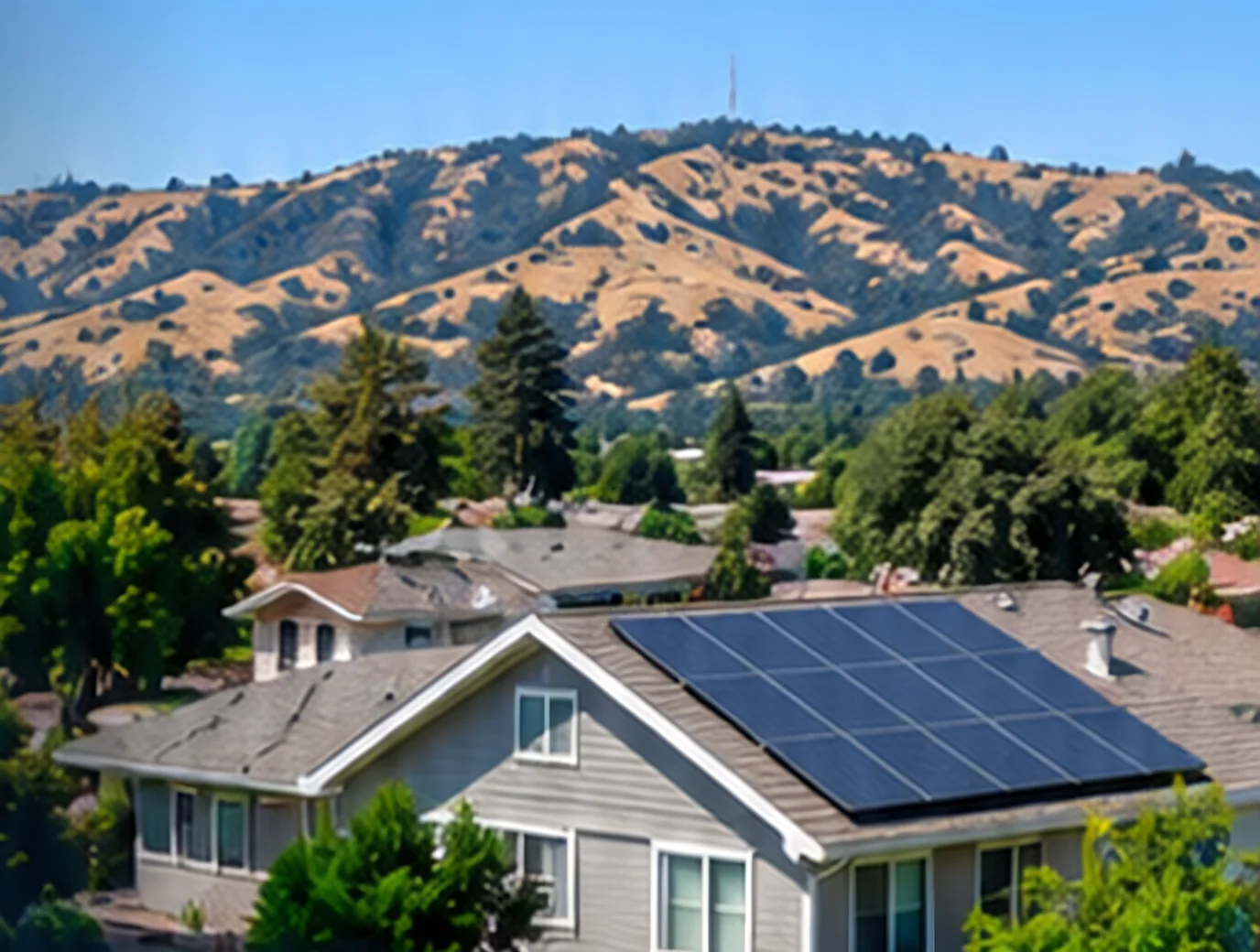
Solar Panel and Battery Installation Services in Alum Rock, CA
Explore residential solar panel installation and battery storage options for your Alum Rock property. We help you review your electricity usage, roof suitability, and electrical infrastructure before planning a solar photovoltaic (PV) system.
Nabu Energy LLC | CSLB License #1052356 (C-10 Electrical Contractor)
Solar and Battery Installation Services in Alum Rock
Considering solar panels for your home in Alum Rock, San Jose? We provide residential solar PV system design and installation, battery storage solutions, and related electrical services based on your property’s needs.
Homes in Alum Rock and East San Jose vary in roof layout, available installation space, electrical configuration, and electricity consumption. These differences help determine which solar and battery system may be suitable for a particular property.
Before recommending a system, we review your electricity usage, roof conditions, and existing electrical infrastructure. We then prepare a proposed system design and coordinate the permitting, installation, inspection, and utility interconnection requirements included in the project scope.
Whether you are considering rooftop solar panels, home battery storage, or EV charger installation, we can walk you through the available options and their technical requirements.

Why Consider Solar for Your Alum Rock Property?
Solar may be worth considering if you want to generate electricity at home and explore how onsite generation could support your household’s energy needs.
A system’s suitability and performance depend on your property’s conditions, available sunlight, electricity consumption, equipment, and utility billing arrangement. We review these factors when evaluating a potential installation.
Assess Your Roof and Available Sunlight
Roof orientation, shading, usable roof area, and structural condition all affect where solar panels can be installed and how much electricity they may generate.
Read moreRead less
Some Alum Rock properties have mature trees, limited roof space, or roof conditions that need closer attention during system design. The impact of shading depends on the location and height of nearby obstructions, as well as how their shadows move across the roof throughout the day.
During a property assessment, we look at:
- Available roof space for solar panels.
- Roof orientation and exposure to sunlight.
- Shading from nearby trees and surrounding structures.
- Roof condition and structural suitability.
- Equipment placement and electrical connection requirements.
If your roof needs repairs before installation, an appropriately licensed roofing contractor must complete that work. Roofing is outside our C-10 Electrical Contractor classification and is not included in our electrical installation scope. If needed, roofing work must be arranged separately with an appropriately licensed contractor.
Before pruning or removing a street tree, heritage tree, or ordinance-size tree, check the City of San José’s tree removal permit requirements. Certain tree categories and properties require approval before work can begin.
Understand Your Electricity Usage
Your household’s electricity use throughout the day helps determine the right solar system configuration.
Read moreRead less
Your electricity bills can help identify consumption patterns, time-of-use periods, and how much electricity you draw from the grid. This information gives us a starting point for evaluating a proposed solar PV system and estimating how much of your electricity demand could potentially be met by onsite generation.
Consider Battery Storage
Solar panels generate electricity during daylight hours. A home battery can store some of that electricity for use later.
Read moreRead less
Battery storage may be useful if you want to use more of your solar generation after sunset or have backup power available for selected household circuits during a utility outage.
The right battery configuration depends on your electricity use, equipment compatibility, storage capacity, utility billing arrangement, and backup-power needs.
Evaluate Your Electrical Infrastructure
Your existing electrical panel and infrastructure must be suitable for the proposed solar and battery equipment.
Read moreRead less
We check the available electrical capacity, equipment connection requirements, and whether an electrical panel upgrade may be needed. If you are also considering an EV charger, we can review your vehicle’s charging requirements and the available electrical capacity as part of the same project assessment.
Solar and Energy Solutions Available in Alum Rock
We offer solar and related electrical solutions based on your property’s needs and energy goals. The right configuration depends on available installation space, electricity consumption, electrical infrastructure, and project scope.
Residential Solar Panel Installation
A residential solar photovoltaic (PV) system converts sunlight into electricity that your home can use.
Read moreRead less
When designing a proposed system, we look at your electricity consumption, roof layout, available sunlight, shading, equipment options, and applicable electrical requirements.
For homes in Alum Rock, roof condition, usable installation space, and the electrical infrastructure needed to connect the system are also important considerations.
Your solar system should be sized around your actual electricity needs. Solar production and utility billing depend on several factors, so installing solar does not guarantee that your electricity bill will be eliminated.
Solar Battery Installation and Storage
A home battery stores electricity for use when your solar panels are not generating enough power to meet your home’s demand.
Read moreRead less
Depending on the system configuration, a battery may help you use more of your solar generation after sunset and provide backup power during a utility outage.
Backup power is not guaranteed during every outage. How much of your home a battery can support, and for how long, depends on its capacity, inverter configuration, electrical setup, backed-up circuits, connected appliances, and available stored energy.
When evaluating a battery installation, we consider:
- Which appliances or circuits you want to keep running.
- The battery capacity needed for your intended use.
- Whether the battery is compatible with your existing solar system.
- Your electricity consumption and applicable utility rate.
- Your backup-power needs.
If you want to add a battery to an existing solar installation, we first check the current equipment and electrical infrastructure for compatibility. Changes to an existing system may also affect how it is treated under applicable utility billing rules.

EV Charger Installation
We can evaluate EV charger installation alongside your solar and electrical system.
Read moreRead less
The installation requirements depend on your vehicle, charging schedule, charger specifications, and available electrical capacity.
If you plan to use rooftop solar to charge your vehicle, we also need to consider when your system generates electricity, when you typically charge, and how much electricity your home uses.
Electrical Panel Upgrades and Related Work
Some solar, battery storage, and EV charger installations require changes to your existing electrical infrastructure.
Read moreRead less
We check whether your electrical panel and service capacity can support the proposed equipment. Any required upgrades must meet the project’s technical needs and applicable electrical codes.
Your project proposal and written contract will explain the work included, any exclusions, and each party’s responsibilities.
Electricity Providers, Solar Billing, and PG&E in Alum Rock
Before choosing a solar system, it helps to understand who provides your electricity and how your utility handles solar generation and exported power.
PG&E and San José Clean Energy: What’s the Difference?
San José has a community-choice electricity program called San José Clean Energy (SJCE). If you are enrolled in SJCE, it provides your electricity generation service, while Pacific Gas and Electric Company (PG&E) delivers electricity through its distribution network.
PG&E also handles delivery-related services, including responding to power outages. Some customers choose PG&E for electricity generation instead of SJCE.
If you receive generation service from SJCE, your electricity bill may include charges from both SJCE and PG&E. Check your current bill to confirm your generation provider, delivery charges, and applicable rate schedule before evaluating a solar installation.
Official resources:
· San José Clean Energy – Frequently Asked Questions · San José Clean Energy – Understanding Your Bill
How Solar Generation Affects Your Electricity Bill
Your solar system can first supply the electricity your home is using at that moment.
If your system generates more electricity than your household needs, excess electricity may be exported to the grid, depending on the system configuration and utility interconnection arrangement.
The value of exported electricity depends on your utility’s billing program and export compensation rules. Export credits should not be assumed to equal the retail rate you pay for electricity drawn from the grid.
California’s Net Billing Tariff and NEM 3.0
California’s Net Billing Tariff (NBT), commonly known as the Solar Billing Plan and often called NEM 3.0, applies to qualifying new solar interconnections under the relevant utility rules.
Under this arrangement, electricity used by your home directly from your solar system reduces the amount of electricity you need to draw from the grid. Excess electricity exported to the grid receives credits based on the applicable energy export compensation rates. These rates may differ from the retail rates charged for electricity you consume from the grid.
If you receive generation service from SJCE, its solar billing arrangements also apply to qualifying systems. Review generation-related charges and export credits alongside PG&E delivery charges.
The applicable program and billing treatment depend on your electricity provider, existing solar arrangement, utility tariff, and system interconnection date. Check the relevant provider information before deciding on system size or battery storage.
Official resources:
· California Public Utilities Commission – Net Energy Metering and Net Billing · San José Clean Energy – Solar Billing and Net Energy Metering
Solar Permits and Installation Requirements in Alum Rock
If your property is within the City of San José, your solar panel or battery installation must meet the City’s applicable building, electrical, and permitting requirements.
The City requires a building permit before solar photovoltaic panels or stationary energy storage batteries can be installed.
City of San José Solar Permitting
For qualifying rooftop solar installations on single-family homes, duplexes, and townhouses, the City offers an online permitting process through SJPermits.
Eligibility depends on the property type and whether the proposed installation meets the City’s requirements. Projects that do not qualify for the online process may need to go through the City’s Standard Plan Review process.
Battery storage installations have additional requirements. These may include approved anchorage details and applicable inspections.
Permitting requirements for multifamily, commercial, ground-mounted, and other installations may differ based on the property and project scope. The City reviews each permit application and determines the required approvals and inspections.
Official resources:
· City of San José – Solar and Storage Battery Projects · City of San José – Online Building Permits · SJPermits
Our Solar Installation Process
For contracted projects, we coordinate the documentation and project requirements included in the agreed scope. Your contract explains the responsibilities of our team, you as the customer, the utility, and the permitting authority.
Our process generally follows these six steps:
1. Property Review: We review your electricity usage, roof condition, available sunlight, electrical infrastructure, and project requirements. 2. System Design: We prepare a proposed solar PV and battery configuration based on your property’s characteristics, equipment specifications, and electrical requirements. 3. Written Proposal: We provide details of the proposed equipment, project scope, pricing, included work, applicable warranties, and payment terms. 4. Permitting and Utility Coordination: We coordinate the permit documentation, inspections, and utility interconnection requirements included in the contracted work. Final permit approvals remain subject to the relevant authority. 5. Installation: Our installation team completes the work according to the approved design, project scope, and applicable requirements. 6. Inspection and Authorization: We coordinate the required inspections and utility interconnection steps. A grid-connected system must not be operated until the required approvals and permission to operate have been received.
The installation timeline depends on system design, permitting, equipment availability, project complexity, inspection scheduling, and utility approval. Once we have reviewed your project requirements, we can establish a schedule for the work.
Solar Installation Costs, Financing, and Incentives
The cost of solar panel installation in Alum Rock depends on your property’s needs and the system you choose.
A useful quote should account for your electricity usage, system size, roof condition, equipment, battery storage, and any required electrical work or permits.
What Affects the Cost of Solar Installation?
Factors that can affect the price include:
- Solar system size and equipment specifications.
- Roof layout, accessibility, and condition.
- Available sunlight and shading.
- Electrical panel capacity and any necessary upgrades.
- Battery storage capacity and configuration.
- EV charger installation or other electrical work.
- Permits, inspections, and utility interconnection requirements.
- Project complexity and installation conditions.
Our written proposal explains the proposed equipment, installation scope, included work, exclusions, pricing, applicable warranties, and payment terms.
Solar Panels With or Without a Battery
A solar-only system and a solar-plus-battery system have different costs and operating characteristics.
Adding a battery increases equipment and installation costs. Depending on how the system is configured, it may give you more flexibility in how you use electricity and provide backup power during an outage.
When comparing these options, consider the upfront cost, your electricity usage, utility billing arrangement, equipment requirements, and how important backup power is to your household.
Financing and Payment Options
Available payment arrangements depend on the project. Options may include a cash purchase, a loan through a third-party financing provider, or a prepaid power purchase agreement (PPA), if offered for the project.
We are not a lender. Independent third-party providers handle financing, and they determine approval and loan terms.
Cash Purchase
With a cash purchase, you pay for the proposed solar system and installation according to the written contract.
Before proceeding, review the total price, equipment specifications, installation scope, payment schedule, and applicable warranties.
Loan Financing
A loan may be available through an independent third-party financing provider.
Before signing, review the loan amount, interest rate, payment schedule, financing charges, total repayment obligation, and applicable terms.
Prepaid Power Purchase Agreement (PPA)
A prepaid PPA, if offered for your project, may involve a third party that owns the solar system.
The contractual responsibilities under this arrangement differ from those involved in purchasing a system directly.
Before signing, review who owns the system, the contract term, total payment obligation, maintenance responsibilities, warranty coverage, transfer conditions, and any applicable fees.
Federal Solar Tax Credits and Other Incentives
Under current federal law, the Residential Clean Energy Credit under Section 25D is not available for expenditures made after December 31, 2025. It should not be presented as an available benefit for new residential solar or battery installations in 2026.
Other state, local, utility, or program-specific incentives may have their own eligibility requirements, deadlines, and funding limits.
For example, California’s Self-Generation Incentive Program (SGIP) has specific eligibility requirements and program categories. Check the official program information to confirm current availability and funding before including an incentive in your financial calculations.
We do not provide tax advice. Consult a qualified tax professional about your individual tax circumstances and any applicable incentives.
Official resources:
· Internal Revenue Service – Residential Clean Energy Credit · California Public Utilities Commission – Self-Generation Incentive Program
Understanding Potential Electricity Bill Outcomes
We do not provide generalized or guaranteed electricity savings estimates for Alum Rock properties.
Your actual electricity bill depends on solar generation, how much electricity you use onsite, utility rates, export compensation, battery operation, and changes in household usage. Future electricity use and bill amounts cannot be predicted with certainty.
California’s required Solar Energy System Disclosure Documents include a standardized one-year bill savings estimate that must be provided before a residential solar contract is signed. This estimate is a required disclosure, not a guarantee of future savings. Review the assumptions and information in the documents carefully.
Why Choose Us for Your Alum Rock Project?
Choosing a solar contractor involves more than comparing equipment prices. You should understand the proposed system, the contractor’s credentials, who will carry out the installation, and the terms of the agreement.
In-House Design and Installation
We handle our projects in-house, from system design through installation, with our own team coordinating the work rather than subcontracted crews.
Zero Sales Commissions
Our sales staff do not earn commissions. We work directly with you to understand your electricity usage, property, and project goals.
That way, the discussion can focus on the proposed system, equipment, installation scope, and what your project requires.
Licensed California Electrical Contractor
We operate as Nabu Energy LLC under California Contractors State License Board (CSLB) License #1052356, with a C-10 Electrical Contractor classification.
The C-10 classification covers electrical work within its licensed scope, including the installation and connection of solar photovoltaic equipment.
You can check our license number, classification, and status through the California Contractors State License Board License Check.
Clear Scope, Coordination, and Contract Terms
Before moving forward, make sure you understand what the installation includes and which responsibilities belong to each party.
Our written project documentation explains the proposed equipment, system design, installation scope, pricing, applicable warranties, payment arrangements, and project responsibilities.
Your contract also sets out the responsibilities of our team, you as the customer, the utility, and the permitting authority. For contracted projects, we coordinate the permit documentation and installation activities included in the agreed scope. Final permit and utility approvals remain subject to the relevant authorities.
Your Rights as a California Solar Customer
California has consumer protection requirements for residential solar installations. Knowing what these requirements cover can help you review the proposed system, financial obligations, and contract before signing.
Solar Energy System Disclosure Documents
Before signing a residential solar contract, you have the right to receive the applicable Solar Energy System Disclosure Documents developed by the California Contractors State License Board (CSLB).
These documents include:
- Solar Energy System Disclosure Document – Cover Page.
- Solar Energy System Supporting Information.
They explain the total system cost, financial obligations, standardized one-year bill savings estimates, and applicable cancellation rights.
Read both documents and review the assumptions behind the financial information before signing.
For more information, visit the CPUC’s CSLB Solar Disclosure Documents page.
Written Solar Contract Requirements
Your residential solar installation contract should clearly identify:
- Contractor business information and license number.
- Description of the proposed project and equipment.
- Contract price, applicable financing charges, and down payment.
- Approximate project start and completion dates.
- Applicable cancellation notice and contractual terms.
Make sure the written agreement covers the equipment, work scope, payment arrangements, and any representations made during the sales process.
Depending on the circumstances and applicable California requirements, you may also have the right to receive a copy of the solar contract and financing agreement in the language in which the salesperson spoke to you.
Right to Cancel
California residential solar customers generally have at least three business days to cancel a qualifying contract after receiving a signed and dated copy.
Customers aged 65 or older generally have five business days in applicable circumstances. Certain exceptions may apply depending on where the contract was negotiated and the circumstances of the transaction.
Check the cancellation notice provided with your contract for the applicable deadline and instructions.
California Solar Consumer Protection Resources
You can find more information about your rights and the required documentation through these official resources:
· CPUC – California Solar Consumer Protection Guide · CPUC – CSLB Solar Disclosure Documents · CSLB – Solar Requirements and Disclosure Documents · CSLB – Contractor License Check
If you have a complaint about a contractor, you can contact the California Contractors State License Board at 800-321-CSLB (2752) or visit its Consumer Services page.
Frequently Asked Questions About Solar Installation in Alum Rock, CA
How much does solar panel installation cost in Alum Rock, CA?
The cost depends on your electricity usage, solar system size, equipment, roof condition, electrical requirements, and whether you include battery storage. We need to review your property and project requirements before preparing an accurate quote.
Will solar panels work on a shaded roof in Alum Rock?
They may, depending on how much sunlight reaches your roof throughout the day. Mature trees and nearby structures can affect solar production. We review roof orientation, usable space, and shading patterns to determine suitable panel placement. Before pruning or removing certain trees, check the City of San José’s tree permit requirements.
Does PG&E or San José Clean Energy provide electricity to Alum Rock homes?
Both may be involved in your electricity service. PG&E delivers electricity through its distribution network and handles delivery-related services. If you are enrolled in San José Clean Energy (SJCE), it provides your electricity generation service. Some customers choose PG&E for generation instead. Check your electricity bill to confirm your current generation provider and delivery charges.
For more information, visit SJCE’s FAQ page and Understanding Your Bill.
How does the Solar Billing Plan work for Alum Rock homeowners?
California’s Net Billing Tariff, commonly called the Solar Billing Plan or NEM 3.0, determines how eligible solar customers receive credits for electricity exported to the grid. Export credits may differ from the retail rate charged for electricity you draw from the grid. If you receive generation service from SJCE, review its solar billing arrangements alongside PG&E delivery charges. Your applicable tariff and system interconnection date also matter.
You can review the CPUC’s Net Energy Metering information and SJCE’s solar billing information.
Do I need a permit to install solar panels or a battery in Alum Rock?
For properties within the City of San José, a building permit is required before installing solar panels or stationary energy storage batteries. Qualifying rooftop residential projects may be eligible for the City’s online permitting process through SJPermits. Other projects may require standard plan review, depending on the property and installation.
For project-specific requirements, visit the City of San José’s solar and storage battery permitting page.
Will a home battery keep my Alum Rock property powered during a PG&E outage?
A battery can provide backup power if the system includes compatible equipment and is configured for backup operation. The appliances and circuits it can support, and how long power remains available, depend on battery capacity, inverter configuration, electricity use, and stored energy. A standard grid-connected solar system generally shuts down during an outage unless it has the required backup equipment.
Can I add a battery to my existing solar system in Alum Rock?
Possibly. Your existing solar equipment, inverter, and electrical infrastructure must be compatible with the proposed battery. The installation may also require permits and could affect how your system is treated under applicable utility billing rules. We need to review your existing system before confirming whether a battery can be added.
Explore Solar and Battery Installation Options for Your Alum Rock Property
Every property has different energy needs. Your electricity usage, roof condition, available sunlight, and electrical infrastructure can help determine whether solar panels, battery storage, or EV charging are suitable options.
Tell us a little about your property and what you want to achieve. We can discuss the solar, battery storage, and electrical installation options that may fit your project.
Important Information
The information on this page is provided for general informational purposes only. It does not constitute legal, tax, or financial advice, a property-specific system design assessment, or a project proposal. It is not a guarantee of system performance, electricity savings, or investment returns.
Solar generation, battery performance, utility billing, export credits, permitting requirements, and project costs depend on property conditions, equipment specifications, applicable utility tariffs, and current regulations. Final project designs, pricing, equipment specifications, financing arrangements, warranties, installation schedules, and applicable requirements are subject to individual assessment and written agreement.
Utility rates, incentive programs, permitting rules, and regulatory requirements may change. Check the applicable requirements before making a purchasing or financial decision.