
Solar Panel Installation in Los Altos, CA
Nabu Energy LLC | CSLB License #1052356 | C-10 Electrical Contractor
Explore residential and commercial solar PV systems, battery storage, and EV charging options for your Los Altos property. We help you evaluate your electricity use, review your property’s suitability for solar, and understand the design, permitting, and utility interconnection requirements involved in a project.
Solar and Battery Installation Services for Los Altos Properties
If you are considering solar panel installation in Los Altos, CA, we can help you evaluate residential and commercial solar PV systems, battery storage, and EV charging options.
Every property has different requirements. Roof orientation, available sunlight, shading from trees, electricity consumption, existing electrical infrastructure, and utility rates can all affect the proposed system design.
For contracted projects, we coordinate system design, installation, permitting, and utility interconnection requirements. We begin by understanding your property’s energy needs and assessing the work required.

What to Consider Before Installing Solar in Los Altos
Solar installation is a property-specific decision. Before selecting a system, we review the conditions that can affect its design, expected electricity generation, and installation requirements.
Roof Condition, Orientation, and Available Sunlight
The amount of sunlight reaching your roof affects the potential output of a solar PV system. During a property assessment, we consider roof orientation, slope, usable installation area, shading from trees, and roof condition.
Read moreRead less
Properties with significant shading may require additional evaluation to determine suitable panel placement and system configuration.
If your roof needs repairs, those repairs should be completed before solar installation. Roofing work is outside the C-10 Electrical Contractor classification and must be handled by an appropriately licensed contractor.
Household Electricity Consumption
Your electricity use throughout the day helps determine the appropriate solar system size.
Read moreRead less
We can review your electricity bills to understand:
- Average electricity consumption and seasonal changes.
- Daytime and evening electricity requirements.
- Existing electric appliances and equipment.
- Planned additions, such as EV charging or other electrical loads.
This information helps us evaluate a proposed system against your household’s energy requirements.
Battery Storage and Backup Requirements
Solar panels generate electricity when sunlight is available. A battery can store some of that electricity for later use.
Read moreRead less
If you want backup power during a grid outage, the system must include suitable backup equipment and an appropriate electrical configuration. The available backup power and its duration depend on battery capacity, inverter configuration, backed-up circuits, stored energy, and connected loads.
A battery does not guarantee power to every appliance or circuit during every outage. We assess your backup requirements when evaluating the proposed system configuration.
Existing Electrical Infrastructure
Your electrical panel and available service capacity must be evaluated before selecting solar, battery storage, or EV charging equipment.
Some projects may require an electrical panel upgrade or other electrical work. We assess the existing infrastructure to determine whether it can support the proposed equipment and identify any additional work that may be needed.
Solar and Energy Solutions Available in Los Altos
We provide solar PV system design and installation, battery storage solutions, commercial solar systems, and EV charging services. The proposed equipment and installation scope depend on the property’s requirements and the project assessment.

Residential Solar Panel Installation
A residential solar PV system converts sunlight into electricity that your home can use.
Read moreRead less
For residential solar installation in Los Altos, we consider:
- Roof orientation and available installation space.
- Shading and sunlight exposure.
- Household electricity consumption.
- Solar panel and inverter specifications.
- Existing electrical infrastructure.
- Applicable permitting and utility interconnection requirements.
We develop the proposed system around your property’s conditions rather than relying on a standard configuration.

Solar Battery Installation and Energy Storage
A home battery stores electricity generated by your solar panels for later use. Depending on the equipment and system configuration, battery storage may allow you to use more of your solar generation after sunset and provide backup power to selected circuits during an outage.
Read moreRead less
Before recommending a battery configuration, we consider:
- Household electricity consumption and expected solar generation.
- Battery capacity and inverter compatibility.
- The appliances or circuits you want to support.
- Backup-power requirements.
- Applicable utility billing arrangements.
The amount of backup power available depends on the complete system configuration and stored energy. A battery does not guarantee uninterrupted power to every part of your home.
Adding a Battery to an Existing Solar System
If you already have solar panels, we first assess the existing installation. This includes reviewing the inverter, electrical configuration, battery compatibility, and proposed system modifications.
Changes to an existing solar installation may affect its treatment under applicable utility billing rules. Before proceeding, confirm how the proposed modifications may affect your account and billing arrangement with the relevant utility.

Commercial Solar Installation in Los Altos
Businesses may evaluate commercial solar PV systems based on electricity demand, operating schedules, available installation areas, and existing electrical infrastructure.
Read moreRead less
For a commercial solar assessment, we review:
- Business electricity consumption and operating hours.
- Available roof or other approved installation areas.
- Roof condition and applicable structural requirements.
- Existing electrical infrastructure.
- Proposed solar system capacity.
- Equipment and installation requirements.
- Utility interconnection and permitting requirements.
We assess the proposed system size and expected generation using site conditions and the business’s electricity consumption. The final design depends on the property’s requirements and applicable approvals.

EV Charger Installation
We can evaluate EV charging requirements alongside your solar and electrical system.
Read moreRead less
Before installation, we consider:
- Vehicle and charger requirements.
- Charging frequency and expected electricity consumption.
- Available electrical capacity.
- Wiring and installation requirements.
- Whether an electrical panel upgrade is necessary.
- Whether solar generation can support part of your charging requirements.
The amount of EV charging supplied by solar depends on system generation, charging times, household or business electricity consumption, and battery configuration.
Electrical Panel Upgrades and Related Work
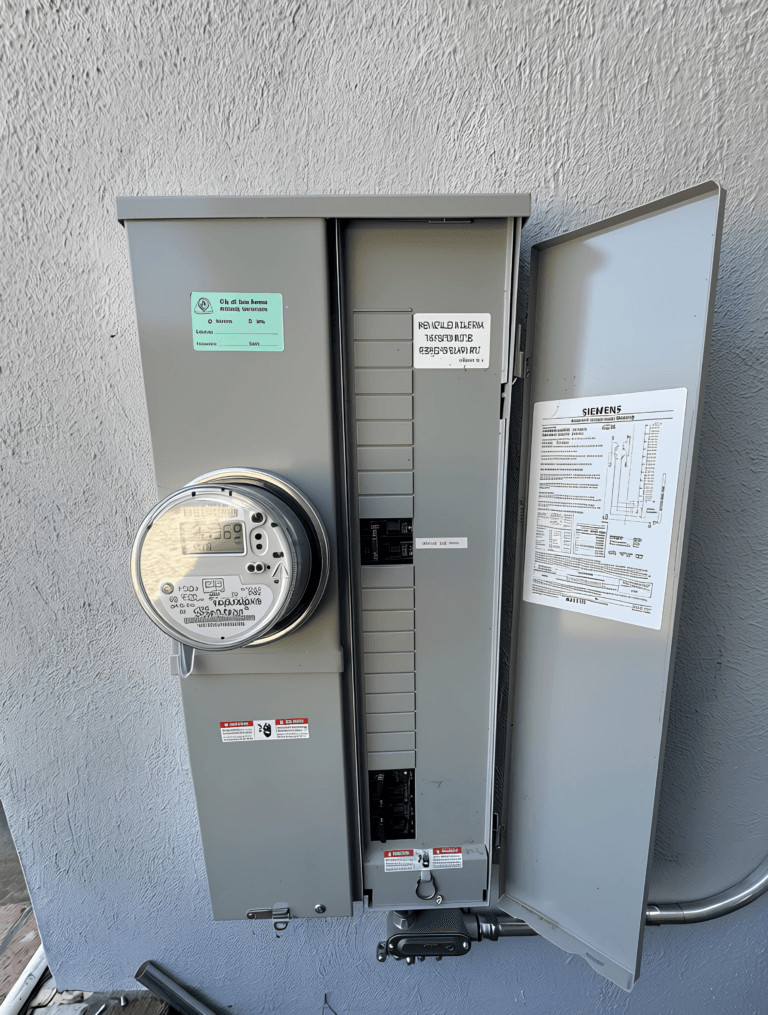
Some solar, battery, and EV charging installations require modifications to the existing electrical infrastructure.
Read moreRead less
We assess whether your electrical panel and available service capacity can support the proposed equipment. Any electrical upgrade must be based on the actual project requirements and applicable electrical codes.
We confirm the availability and scope of the proposed work before including it in a written proposal.
Silicon Valley Clean Energy, PG&E, and Solar Billing in Los Altos
Los Altos is within the Silicon Valley Clean Energy (SVCE) service area. For customers enrolled with SVCE, it generally provides electricity generation services, while Pacific Gas and Electric Company (PG&E) provides electricity transmission and delivery.
Customers who have opted out of SVCE may have a different electricity generation provider. Check your current electricity statement to confirm your generation provider, delivery charges, applicable rates, and account arrangements.
For more information, visit the City of Los Altos – Electricity Utility Information.
How Solar Generation Affects Your Electricity Bill
Your solar PV system can supply electricity directly to your property while the system is generating power. If the system generates more electricity than your property uses at that time, excess electricity may be exported to the grid.
The value of exported electricity depends on your applicable utility billing arrangement and export compensation rules. Export credits should not automatically be assumed to equal the retail price you pay for electricity.
Your overall electricity bill also depends on how much electricity you import from the grid, when you use electricity, applicable rates, and other charges.
California’s Net Billing Tariff (Solar Billing Plan / NEM 3.0)
California’s Net Billing Tariff (NBT) is commonly associated with the Solar Billing Plan and is sometimes referred to as NEM 3.0. It establishes how qualifying solar customers receive credits for electricity exported to the grid under applicable utility rules.
For eligible SVCE customers, the applicable solar billing arrangement depends on the solar application date and program requirements. SVCE states that customers who applied for solar after April 14, 2023, are enrolled in or will be enrolled in its Solar Billing Plan, subject to eligibility requirements.
Under the Net Billing Tariff framework:
- Solar electricity can first serve your property’s electricity consumption.
- Excess electricity may be exported to the grid.
- Exported electricity receives credits under applicable compensation rules.
- Export compensation may differ from the retail electricity rate.
- Battery storage may allow you to use more of your solar generation onsite rather than exporting it.
Your utility account, solar application and interconnection history, tariff eligibility, and system configuration help determine the applicable billing treatment.
For current program information, refer to:
- SVCE – Rooftop Solar and Solar Billing Plan
- SVCE – Rates and Billing
- City of Los Altos – Electricity Utility Information
- California Public Utilities Commission – Solar Consumer Protection Guide
Important information about savings estimates: We do not use standardized one-year electricity bill-savings projections as a general sales estimate or guarantee under the Net Billing Tariff framework. However, California-required Solar Energy System Disclosure Documents include a standardized one-year bill-savings estimate and must be provided before a solar contract is signed. We provide the applicable documents as required.
Actual electricity bills and savings depend on consumption patterns, utility rates, export compensation, solar generation, and the applicable billing arrangement. A projected estimate should not be treated as a guarantee of future savings.
Solar Permits and Installation Requirements in Los Altos
Solar installations in Los Altos must comply with applicable City building, electrical, permitting, and inspection requirements.
The City of Los Altos provides a SolarAPP+ automated plan-review pathway for eligible residential rooftop photovoltaic systems. Eligibility depends on the project design and the City’s current requirements.
SolarAPP+ Eligibility in Los Altos
The City’s published SolarAPP+ pathway is intended for eligible rooftop solar installations on permitted main dwelling residential structures.
The City’s listed requirements include:
- The installation must be on a permitted main dwelling residential structure.
- Ballasted and ground-mounted systems are not eligible under this pathway.
- The contractor must be appropriately licensed.
- An active Los Altos business license is required.
SolarAPP+ eligibility is limited to projects that meet the City’s requirements. Projects that do not qualify may need to follow the City’s standard permitting and plan-review process.
Battery storage, electrical panel upgrades, commercial installations, and other associated electrical work may require additional documentation, permits, and inspections depending on the project scope.
Automated plan review does not remove the requirement to comply with the approved design, City permitting requirements, and applicable inspections. The City retains responsibility for its permit and inspection process.
For current eligibility requirements and application instructions, visit the City of Los Altos – SolarAPP+ page.
Our Solar Installation Process
We follow a structured process to assess, design, and install solar systems according to each property’s requirements.
Step 1 – Property Review
We review your electricity consumption, roof condition, available sunlight, electrical infrastructure, and project objectives.
Step 2 – System Design
We develop a proposed solar PV system based on the property’s requirements, equipment specifications, layout, and electrical design.
Step 3 – Written Proposal
We provide a written proposal outlining the proposed system, equipment, installation scope, pricing, applicable terms, and project responsibilities.
Step 4 – Permitting and Utility Coordination
We coordinate the applicable permitting documentation and utility-related requirements for the contracted project. The required process depends on the project design, the City’s permitting pathway, and the utility’s interconnection requirements.
Step 5 – Installation
Our team carries out the installation according to the agreed project scope, approved design, equipment specifications, and applicable requirements.
Step 6 – Inspection and Authorization
The required inspections and utility interconnection steps must be completed. The system must not be operated until the required approvals and utility Permission to Operate (PTO) have been received.
How Long Does Solar Installation Take in Los Altos?
The overall timeline depends on the system design, permitting requirements, equipment availability, project complexity, inspection scheduling, and utility interconnection.
The process may involve separate design, permit review, installation, inspection, and utility authorization stages. We can discuss a project-specific schedule after assessing your property’s requirements and the applicable approval process.
Solar Installation Costs, Financing, and Incentives in Los Altos
The cost of solar panel installation in Los Altos depends on the design and requirements of each property.
A project quote should account for electricity consumption, system size, equipment specifications, roof condition, electrical work, battery storage, and applicable permitting requirements.
What Affects the Cost of Solar Installation?
Factors that can influence the proposed price include:
- Solar system size and equipment selection.
- Roof layout, condition, accessibility, and installation requirements.
- Available sunlight and shading.
- Existing electrical panel capacity.
- Necessary electrical upgrades.
- Battery storage capacity and configuration.
- EV charger installation, if included.
- Permitting, inspection, and utility interconnection requirements.
- Overall project complexity.
Our written proposal identifies the proposed equipment, included work, exclusions, pricing, warranties, and applicable contractual terms so you can review the project scope before proceeding.
Solar Panels With or Without Battery Storage
A solar-only system and a solar-plus-battery system have different equipment requirements, costs, and operating characteristics.
A battery adds equipment and installation costs. Depending on its configuration, it may provide more flexibility in how you use solar electricity and may provide backup power to selected circuits during an outage.
The appropriate configuration depends on your electricity consumption, utility billing arrangement, backup requirements, equipment compatibility, and available budget.
Financing and Payment Options
Payment and financing arrangements may vary depending on the project and available options.
We are not a lender. Where financing is available, it is provided through independent third-party providers. Approval, interest rates, payment terms, and eligibility are determined by the applicable provider.
Cash Purchase
You can evaluate a cash purchase based on the complete proposed system cost and included installation scope.
Third-Party Loan Financing
Loan financing may be available through independent financing providers. Review the provider’s terms, including the interest rate, repayment period, fees, and total payment obligation, before entering into an agreement.
Before signing any purchase or financing agreement, review:
- Total payment obligation.
- System ownership.
- Contract term.
- Warranty responsibilities.
- Maintenance obligations.
- Transfer or home-sale conditions.
- Applicable fees and other contractual requirements.
Review all applicable agreements carefully. Financing approval and terms are determined by the applicable provider.
Federal Solar Tax Credits and Other Incentives
The federal Residential Clean Energy Credit under Section 25D is not available for expenditures made after December 31, 2025. It should not be presented as an available federal residential tax credit for new solar or battery installations involving expenditures after that date.
For Section 25D, the expenditure is generally treated as made when the original installation is completed. Paying for equipment or making a deposit before the deadline does not, by itself, establish eligibility if the installation is completed after December 31, 2025.
Other state, local, utility, or program-specific incentives may have separate eligibility requirements and deadlines. Check current official program information before including any incentive in a financial calculation.
We do not provide tax advice. Consult a qualified tax professional regarding your individual tax circumstances.
Official resource: U.S. Code – Section 25D, Residential Clean Energy Credit
Understanding Potential Electricity Bill Outcomes
The financial impact of solar depends on actual system generation, electricity consumption, utility rates, export compensation, equipment costs, and payment arrangements.
Under the Net Billing Tariff framework, the value of exported electricity may differ from the retail electricity rate. Battery storage may change how much solar generation is consumed onsite rather than exported.
We do not guarantee a particular electricity bill reduction, savings amount, or investment return. Review the proposed system costs, applicable utility billing arrangements, required disclosure documents, and contractual obligations before making a purchasing decision.
Why Work With Our Team on Your Los Altos Solar Project?
Choosing a solar company involves more than comparing equipment prices. You should understand the proposed system, installation responsibilities, contractor credentials, and contractual terms before proceeding.
Project Design and Installation Coordination
We coordinate the design and installation requirements for each contracted project. Our process considers your property’s conditions, proposed equipment, electrical requirements, permitting responsibilities, and installation scope.
We explain the work included in the proposal so you can understand how the project will be assessed and coordinated.
Direct Communication About Your Solar Project
We work directly with customers to understand their property requirements and discuss proposed solar solutions.
Our discussions focus on property conditions, electricity consumption, equipment requirements, and the proposed installation scope. This helps ensure that the recommendations and written proposal address the requirements identified during the assessment.
Licensed California Electrical Contractor
We operate as Nabu Energy LLC under California Contractors State License Board (CSLB) License #1052356, classified as a C-10 Electrical Contractor.
You can verify our license number, classification, and current status through the California Contractors State License Board – License Check before entering into a contract.
All contracted work is subject to the applicable license classification, project requirements, and California regulations.
Clear Project Scope and Coordination
Every solar installation has different technical and contractual requirements.
Our project agreement sets out the responsibilities of our company, the customer, the utility, and the applicable permitting authority.
Before proceeding, review the proposed system design, equipment specifications, included work, exclusions, pricing, warranties, payment arrangements, and project responsibilities. We provide project information so you can understand the proposed installation and contractual scope before making a decision.
Your Rights as a California Solar Customer
California has consumer protection requirements for residential solar installations. Before signing a solar installation agreement, review the applicable disclosure documents, contract terms, financing arrangements, and cancellation provisions.
Solar Energy System Disclosure Documents
California requires solar providers to give customers the applicable Solar Energy System Disclosure Documents before a contract is signed.
These documents include the total system cost, important financial and contractual information, and a standardized one-year bill-savings estimate. Review the completed documents and supporting information before signing the solar installation contract.
Official resource: CPUC – CSLB Solar Disclosure Documents
Contract Language Requirements
Where required by California law, customers have the right to receive a copy of the solar contract and financing agreement in the language used by the salesperson during the sales presentation.
Review the contract and applicable documents carefully before signing. Ask for clarification about any terms, fees, responsibilities, or conditions you do not understand.
Right to Cancel a Solar Contract
Eligible residential solar customers generally have at least three business days to cancel a contract after receiving a signed and dated copy. Customers who are 65 years old or older generally have five business days.
Different rules may apply in certain circumstances, including contracts negotiated at a company’s place of business. Review the cancellation notice in your contract and follow the specified instructions if you decide to cancel.
Contractor Complaints and Consumer Resources
You can review California’s solar consumer protection requirements and contact the Contractors State License Board if you have a complaint concerning a licensed contractor.
Official resources:
Frequently Asked Questions About Solar Installation in Los Altos, CA
Which electricity providers serve Los Altos, CA?
Los Altos is within Silicon Valley Clean Energy’s (SVCE) service area. For customers enrolled with SVCE, it generally provides electricity generation, while PG&E provides electricity transmission and delivery. Customers who have opted out of SVCE may have a different generation provider. Check your electricity statement to confirm your arrangement.
Which solar billing plan applies to new solar installations in Los Altos?
Eligible SVCE customers who applied for solar after April 14, 2023, are enrolled in or will be enrolled in the Solar Billing Plan, subject to program requirements. Under this arrangement, exported electricity receives credits based on applicable compensation rules, which may differ from retail electricity rates. Your utility account, solar application, and interconnection history help determine the applicable billing arrangement.
Which residential solar systems qualify for SolarAPP+ in Los Altos?
The City of Los Altos offers a SolarAPP+ pathway for eligible rooftop solar installations on permitted main dwelling residential structures. The contractor must be appropriately licensed and hold an active Los Altos business license. Ballasted and ground-mounted systems are not eligible under this pathway. Projects that do not meet the requirements must follow the City’s applicable permitting process.
How are commercial solar installations permitted in Los Altos?
The City’s published SolarAPP+ pathway is for eligible residential rooftop photovoltaic systems. Commercial solar projects are subject to the applicable City plan-review, permitting, and inspection requirements. The required process and documentation should be confirmed with the City based on the specific project scope.
Explore Solar Options for Your Los Altos Property
Every property has different energy requirements. An assessment of your electricity consumption, roof, electrical infrastructure, and project objectives can help determine whether solar panels, battery storage, or EV charging may be suitable.
Contact us to discuss your Los Altos property, review your energy requirements, and understand the proposed installation scope.
Important Information
The information on this page is provided for general informational purposes only. It does not constitute engineering, legal, tax, or financial advice, a property-specific design assessment, a project proposal, or a guarantee of system performance, electricity savings, or investment returns.
Solar generation, battery performance, utility billing, export credits, permitting requirements, and project costs depend on individual property conditions, equipment specifications, applicable utility tariffs, and current regulations. All project designs, pricing, equipment specifications, financing arrangements, warranties, installation schedules, and applicable requirements are subject to individual assessment and written agreement.
Utility rates, incentive programs, permitting rules, and regulatory requirements may change. Verify applicable requirements before making a purchasing or financial decision.