Estimated Reading Time: 13 minutes
Last Updated: August 2026
Location: San Jose, California
Quick Summary
If you are considering solar panels for your home, the first question should not be which installer has the lowest quote or which equipment brand is most popular. The better starting point is understanding whether your home itself is a good candidate for solar.
For San Jose households, that assessment usually comes down to several practical factors: how much sunlight reaches your roof, the direction and type of your roof, shading from trees or nearby structures, your current PG&E electricity use, and how much electricity you expect to use in the future.
A home with strong sunlight exposure, suitable roof space, limited shading, and a meaningful electricity load may be well suited for solar. Homeowners whose PG&E electricity bills are in the roughly $125–$150 per month range or higher may have a particularly good reason to investigate solar, although that range is only a general starting point and not a qualification threshold.
Future electricity use is equally important. If you are considering an electric vehicle, electric water heater, heat pump, or other electrification upgrades, those future loads can change how much solar your household may need.
The goal is not to determine whether solar is right for every San Jose home. It is to determine whether solar is right for your home, based on the property you have and the way your household uses and is likely to use electricity.
Is Your San Jose Home Actually a Good Candidate for Solar?
A home can have a high electricity bill and still present solar challenges because of heavy shade or limited roof space. Conversely, a home with a relatively modest electricity bill may have excellent solar exposure and significant future electricity needs.
That is why the decision should begin with the property rather than the installer.
Before requesting proposals for solar panel installation, it is useful to understand four basic questions:
Does my roof receive enough sunlight?
Is enough of my roof usable for solar?
How much electricity does my household use today?
How much electricity will my household use in the future?
Once those questions are answered, it becomes much easier to evaluate whether household solar panels make sense and what type of system may be appropriate.
This also puts you in a stronger position when you eventually compare solar energy companies, because you can evaluate the proposed system rather than simply comparing company names and prices.
What Is Solar Irradiance and Why Does It Matter for a San Jose Home?
Solar irradiance is a technical term for the amount of solar power reaching a particular surface.
For a homeowner, you can think about it more simply as how much useful sunlight reaches your roof.
San Jose’s location provides generally favorable conditions for residential solar, but regional sunlight alone does not tell you how much electricity your particular roof can produce. Two homes in the same neighborhood can have very different solar potential because one may have an unobstructed roof while another is surrounded by mature trees or neighboring structures.
This distinction is important.
Solar panels do not generate electricity simply because a house is located in California. They generate electricity when sunlight reaches the panels. The amount, timing, and consistency of that sunlight affect the system’s production.
Why the Amount of Sunlight on Your Roof Matters
Imagine two San Jose homes with the same electricity consumption and the same number of panels.
If the first home has an open roof with strong sunlight throughout much of the day, its panels may have considerably better production conditions than the second home’s panels if those panels spend several hours under tree shade.
That is why a professional solar assessment looks at the specific roof, rather than relying only on San Jose’s general climate.
The assessment should consider the roof surfaces available for panels, their orientation, shading patterns, roof pitch, and the amount of sunlight those areas receive throughout the year.
Solar Irradiance Is More Than “Is My Roof Sunny?”
A homeowner looking at a roof from the ground might conclude that it receives plenty of sun because there are no obvious shadows at noon.
But solar access changes during the day and across seasons.
A tree might not shade the roof at midday but could cast a long shadow across it in the morning or afternoon. A nearby building might have little effect during summer but create more shading during a different season when the sun follows a lower path.
So when evaluating solar energy installation, the useful question is not simply whether your roof looks sunny.
It is:
How much of the roof receives useful sunlight, for how long, and throughout which parts of the year?
Does Your Roof Have the Right Orientation for Solar?
Once sunlight has been considered, the next question is your roof itself.
Roof orientation affects when sunlight reaches the panels and how much solar energy they can receive over the course of the day.
For many San Jose homes, south-facing roof surfaces are generally favorable, while southeast-, southwest-, and west-facing surfaces can also provide strong solar opportunities depending on the roof’s pitch, shading, and overall layout.
There is no requirement that every solar home have one perfectly positioned roof surface.
South-Facing Roofs
South-facing roof surfaces are often favorable because they can receive substantial sunlight across the day.
If a south-facing roof is also relatively free from shade and has sufficient usable area, it may provide a strong foundation for a residential solar system.
Southeast-Facing Roofs
Southeast-facing roofs can receive strong morning and daytime sunlight.
For a household that uses electricity earlier in the day, this orientation can be useful. However, the overall value depends on the entire household electricity profile and the specific roof.
Southwest-Facing Roofs
Southwest-facing roofs can provide useful afternoon and later-day solar production.
That can be particularly relevant for homes where electricity consumption increases later in the day, although the system should still be evaluated based on total annual production rather than one period of the day.
West-Facing Roofs
West-facing roofs can also be productive and can provide more of their generation later in the day.
This is important because homeowners should not automatically reject a west-facing roof simply because it is not south-facing. The best design may use one roof orientation, multiple orientations, or a combination of available roof surfaces.
What About a Flat Roof?
A flat roof does not automatically make a home unsuitable for solar.
Solar panels can be installed on flat roofs using appropriately designed mounting systems that establish a suitable panel angle and orientation. The design must take into account the roof structure, mounting method, wind considerations, drainage, equipment layout, and applicable building requirements.
A flat roof may therefore still offer useful solar space, but the mounting design becomes an important part of the installation.
The real question is not whether your roof looks like the ideal solar roof from a diagram. It is whether the usable portions of your actual roof can support a productive and practical system.
⭐⭐⭐⭐⭐ Challenging Roof, Thorough Design & Installation
“Two years ago they did solar with battery installation on a steep 45-degree second-story roof, which a lot of installers wouldn’t bother looking into. Bhushan, the initial contact, is very knowledgeable and easy to reach for concerns. I had changed the system size and configuration a few times, and they were accommodating. Shivam, the on-site engineer, is very meticulous. The installation team is very skilled and hardworking. The site survey and design went smoothly. They were communicative about changes in design. Overall, a great team to work with. The system has been working great after two years without any problems. Highly recommended.”
– Customer Review
Roof Orientation at a Glance
| Roof Orientation | General Consideration for Solar |
| South | Generally favorable for overall solar exposure |
| Southeast | Can provide strong morning and daytime production |
| Southwest | Can provide strong afternoon production |
| West | Can provide useful later-day production |
| Flat | Can work with appropriate mounting and design |
Roof orientation should never be evaluated by itself. Shading, roof pitch, available area, structural condition, and household electricity consumption all matter.
How Much Can Trees and Other Shade Affect Your Solar Panels?
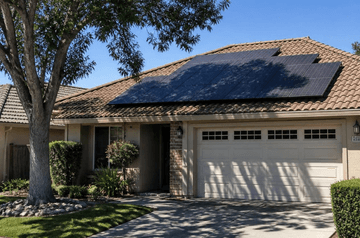
For San Jose homeowners, shading can be one of the most important property-specific issues to investigate before home solar installation.
Trees are common around residential properties, and mature landscaping can create substantial shade over a roof. Neighboring homes, buildings, chimneys, roof equipment, and other structures can also obstruct sunlight.
A roof can therefore appear suitable from the street while having sections that receive significantly less solar exposure than expected.
Why Trees Deserve Special Attention
Trees create a unique challenge because they change over time.
A tree that produces only limited shade today could become much larger several years from now. If you are planning a solar system that you expect to operate for many years, the future growth of nearby trees is worth considering.
This does not mean every tree near a home needs to be removed. In many situations, the better approach is simply to understand which portions of the roof are affected and design around the shading.
How Can You Spot Potential Shading Problems?
Walk around your property at different times of the day and observe where shadows fall.
Look particularly at trees or structures located toward the south, southeast, southwest, and west sides of your home because these areas can influence the sunlight reaching roof surfaces during different parts of the day.
Pay attention to whether:
- Tree branches extend above or near the roof.
- Neighboring buildings cast shadows onto your roof.
- Chimneys or rooftop equipment shade potential panel locations.
- Different roof sections receive noticeably different amounts of direct sunlight.
- Trees may grow substantially larger over the coming years.
A homeowner’s visual inspection is useful, but it should not be treated as a complete solar assessment.
Shading Changes With Time
The shadow you see at 10 a.m. may not be the shadow you see at 3 p.m.
Likewise, the solar conditions you observe during one season may not represent the entire year.
That is why professional solar design should consider the property’s solar access rather than relying on a single observation.
For a homeowner, the important point is simple:
More roof space does not necessarily mean more productive solar space.
A smaller, well-positioned area with strong solar access can sometimes be more useful than a larger area that is heavily shaded.
Is a $125-$150 PG&E Bill a Good Reason to Consider Solar?
Your electricity bill provides an important clue about whether solar is worth investigating.
As a general starting point, San Jose homeowners whose PG&E electricity bills are roughly $125–$150 per month or higher may be good candidates to explore residential solar.
But this should not be treated as a hard rule.
There is no electricity bill amount at which solar automatically becomes the right decision. A homeowner’s actual electricity consumption, rate structure, roof conditions, solar production potential, and future energy plans all need to be considered.
PG&E itself provides multiple residential rate plans and recommends that customers compare plans based on their actual usage. Its published 2026 rate information also shows that residential electricity costs can vary depending on the customer’s rate plan and circumstances.
Why the Dollar Amount Alone Isn’t Enough
Suppose two households each receive a $150 monthly bill.
That does not necessarily mean they use electricity in the same way.
One household could have a particular rate plan and relatively moderate electricity consumption. Another might consume more electricity because of air conditioning, an EV, electric appliances, or other loads.
Their solar requirements could therefore be quite different.
When evaluating solar electricity installation, it is more useful to review your electricity consumption in kilowatt-hours over multiple months than to look at one bill total.
A solar assessment should ideally consider your actual historical usage, seasonal patterns, and the electricity loads you expect to add in the future.
Your Bill Can Tell You When to Investigate – Not What to Buy
The $125–$150 range is best viewed as a screening signal.
If your household consistently has electricity bills around or above this range, it may be worthwhile to investigate how much electricity your home uses and whether solar could offset a meaningful portion of that demand.
It does not tell you how many panels you need.
It does not tell you whether your roof is suitable.
And it does not tell you which installer to choose.
Those questions require a property-specific evaluation.
Your Future Electricity Use May Matter More Than Today’s Bill
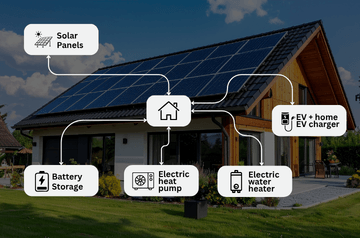
One of the most overlooked parts of solar planning is what your household will look like several years from now.
A solar system designed around today’s electricity consumption may not reflect your future electricity needs if you are planning major electrification.
Consider a household that currently has a gas water heater, gas heating, and a gasoline vehicle.
If that household later purchases an EV, installs a heat pump, and switches to an electric water heater, its electricity consumption could look very different.
That is why future electrification should be discussed before finalizing a solar design.
Planning Solar Around a Future EV
An EV can become one of the largest new electricity loads in a home.
The impact depends on how much you drive, how frequently you charge, the vehicle’s efficiency, and where you charge it. A homeowner who commutes a short distance may have a very different charging load from someone who drives long distances every day.
If you are considering purchasing an EV, tell the solar designer.
That information can help when evaluating the potential size of your future electricity load.
California’s New EV Rebate Makes This Planning Even More Relevant
California’s MyFirstEV program is scheduled to provide a $3,500 instant rebate for eligible first-time buyers or lessees of qualifying new zero-emission vehicles. The program also provides a $1,750 incentive for eligible used ZEVs through participating manufacturers’ pre-owned programs. The new-vehicle incentive applies to qualifying vehicles with an MSRP of up to $50,000, and the California Air Resources Board is overseeing the program. Eligibility, participating manufacturers, vehicle requirements, funding availability, and program rules apply.
If you are already considering an EV and the new California incentive could affect your purchase decision, that EV should also be part of your home-energy planning.
See the California EV rebate guide for more information about the incentive and what San Jose homeowners should know before purchasing an EV.
The important connection is not that the EV rebate makes solar mandatory. It is that an EV can increase your home’s electricity demand, and that additional demand may be relevant when determining how much solar capacity makes sense.
What About Electric Water Heaters and Heat Pumps?
EV charging is only one example of household electrification.
San Jose homeowners may also be considering electric heat-pump water heaters, heat-pump HVAC systems, induction cooking, or other electric appliances.
Each change can affect the home’s electricity consumption.
For example, replacing a gas water heater with an electric heat-pump water heater changes how the household uses electricity. Replacing gas heating with a heat pump can add another significant electrical load, particularly during periods of high heating or cooling demand.
Why This Should Be Discussed Before Solar Installation
Imagine installing a solar system based entirely on your current electricity consumption and then adding several major electric loads shortly afterward.
The solar system may still work exactly as designed, but your household’s electricity needs may now be greater than the assumptions used to size it.
If those electrification projects are already part of your plans, it makes sense to discuss them before the system is designed.
Instead of asking only:
“How much solar electricity does my home need today?”
consider asking:
“What is my home’s likely electricity demand after I make the upgrades I already expect to make?”
That is a much more useful question for long-term solar planning.
How Should Solar Be Sized for Your Home?
There is no universal number of solar panels that every San Jose home should have.
System size depends on the relationship between your household’s electricity needs and your property’s ability to generate solar electricity.
A system designer may need to consider your historical electricity use, roof area, orientation, shading, panel characteristics, expected solar production, and future electrical loads.
For example, a household with a large roof but modest electricity consumption may not need to cover every available roof surface with panels.
Another household with a smaller roof and substantial electricity use may need a more carefully optimized design.
This is why homeowners should be cautious when comparing proposals that simply advertise a fixed number of panels.
The more useful question is:
Why was this system size recommended for my household?
A good proposal should be able to explain the assumptions behind that recommendation.
⭐⭐⭐⭐⭐ Professional System Planning & Monitoring
“Nabu team members are excellent and attentive. We planned a great system. They were professional, always in contact, and a pleasure to work with. The job was done professionally, and the system has an app to track the production.”
– Customer Review
Should You Add Battery Storage to Your Solar System?
Solar panels and battery storage perform different functions, so adding a battery should be considered based on your household’s goals rather than treated as an automatic requirement.
Solar panels generate electricity when sunlight is available. Battery storage can store electricity for use later, depending on the system design and applicable utility arrangements.
Battery storage may become particularly relevant for homeowners who want backup power, have significant evening electricity use, are planning additional electric loads, or want to coordinate solar generation with their broader home-energy strategy.
For a household planning an EV, heat pump, and electric water heater, for example, the solar and storage conversation may be more useful when all of those future loads are considered together.
But there is no universal solar-plus-battery configuration that fits every home.
The right question is not:
“Do I need a battery because I am installing solar?”
It is:
“What do I want my energy system to do, and would battery storage help me achieve that?”
What If Your Roof Isn’t Perfect?
Many homeowners assume they cannot install solar because their roof does not look like the ideal example they have seen online.
Perhaps the roof is flat.
Perhaps it has several different sections.
Perhaps only part of it faces south.
Perhaps trees shade one side.
These conditions do not automatically rule out solar.
A well-designed system may use multiple roof surfaces, avoid heavily shaded areas, or use appropriate mounting on a flat roof.
The objective is not to make every square foot of the roof part of the solar array.
The objective is to identify the most productive and practical areas available.
A Roof Doesn’t Have to Be Perfect to Be Useful
A San Jose home might have a south-facing section with excellent solar access, a west-facing section with good afternoon exposure, and a shaded section that is not worth using.
That home may still have a viable solar opportunity.
Likewise, a flat garage roof may provide additional usable space if an appropriate mounting approach is possible.
This is why a site-specific assessment is more meaningful than a simple yes-or-no judgment based on roof direction.
What Should You Look for When Comparing Solar Energy Companies?
Once you understand your home’s solar potential, you can begin comparing installers.
This is where homeowners often search for terms such as solar energy companies, solar panel companies near me, or best solar companies near me.
Those searches can help you create a list of potential providers, but proximity or search position should not be the deciding factor.
The more important question is whether the company can explain how its proposed system fits your home.
Questions Worth Asking Before Choosing an Installer
When comparing proposals, ask how the company determined the system size and whether the design accounts for your actual electricity consumption.
Ask how shading was evaluated, which roof sections were selected, and why certain equipment was recommended.
If you plan to purchase an EV, ask whether that future electricity demand was considered.
If you expect to install a heat pump or electric water heater, ask how those loads affect the proposed system.
You should also understand what is included in the installation scope, how permitting and inspections are handled, what equipment warranties apply, and what workmanship coverage you receive.
The objective is not to find the company that tells you what you want to hear.
It is to find a proposal that you can understand and evaluate.
⭐⭐⭐⭐⭐ Clear, Unbiased & Engineer-Level Guidance
“I am very impressed with the customer service offered by the staff at Nabu Energy. I called for information and recommendations regarding a solar and battery system, and I was provided very professional information and easy-to-understand recommendations with very unbiased, engineer grade but, lay person level terminology. I very much appreciated their time, and I look forward to working with them in the future.”
– Customer Review
What About Tesla Solar Installation?
Homeowners searching for Tesla solar installation may naturally consider Tesla equipment because of its connection with electric vehicles, solar generation, and battery storage.
That can be a reasonable option to investigate, but brand recognition should not replace property-specific planning.
Whether Tesla equipment or another manufacturer’s equipment is appropriate depends on the system design, roof conditions, electrical requirements, future energy plans, equipment compatibility, warranties, and installation scope.
The same principle applies regardless of the equipment brand:
The equipment should fit the home rather than the home being forced to fit a particular equipment package.
When comparing solar proposals, look at the complete system and the reasoning behind the design rather than evaluating a panel or inverter solely by its brand name.
A Practical Solar Readiness Assessment for San Jose Homeowners
Before you request a solar panel installation proposal, take a step back and look at your home as a complete energy system.
| Factor | What You Should Consider |
| Solar exposure | Does the usable roof receive strong direct sunlight? |
| Roof orientation | Are south, southeast, southwest, or west-facing surfaces available? |
| Roof type | Can the roof accommodate panels and appropriate mounting? |
| Roof condition | Is the roof suitable for the expected installation period? |
| Shading | Are trees or structures blocking useful sunlight? |
| Electricity use | How much electricity does the household actually consume? |
| PG&E bill | Is the household consistently around $125–$150/month or higher? |
| Future EV | Will home charging increase electricity demand? |
| Electric water heating | Is an electric water heater planned? |
| Heat pump | Could HVAC electrification increase future consumption? |
| Battery storage | Is backup power or energy storage part of your goals? |
You do not need to answer every question perfectly before speaking with an installer.
But understanding these factors helps you ask better questions and recognize whether a proposal actually addresses your household’s needs.
Common Mistakes to Avoid Before Installing Solar
Looking Only at Your Current Electricity Bill
Your current bill is useful, but it does not necessarily represent your future electricity demand.
If you are planning an EV or major appliance electrification, those future loads should be part of the conversation.
Assuming a South-Facing Roof Is the Only Good Roof
South-facing roofs can be highly favorable, but southeast-, southwest-, and west-facing roof surfaces can also be productive.
The entire property should be evaluated rather than eliminating a home because it does not have a perfect south-facing roof.
Ignoring Tree Growth
A tree that creates manageable shade today may create substantially more shade in the future.
Consider the long-term condition of the property, not just what the roof looks like on the day you receive a solar quote.
Choosing a Solar Company Based Only on Price
A lower quote does not automatically mean a better system.
Compare the proposed system size, equipment, production assumptions, installation scope, warranties, permitting, and how the design accounts for your household’s future electricity use.
Treating Solar as a Standalone Project
If you already know that an EV, heat pump, electric water heater, or battery may be added, solar should be considered as part of a broader home-energy plan.
So, Is Solar Right for Your San Jose Home?
After looking at irradiance, roof orientation, shading, electricity use, and future electrification, you can begin to form a more realistic picture of whether solar deserves serious consideration.
A home may be a promising candidate when it combines good solar exposure with usable roof space, manageable shading, and enough electricity consumption to make a solar system relevant.
A household with a PG&E bill in the roughly $125–$150 monthly range or higher may have a useful reason to investigate solar, but that number should never be treated as a guarantee.
The same applies to your roof.
A south-facing roof may be favorable, but a southeast-, southwest-, or west-facing roof can also work. A flat roof may still be useful with appropriate mounting.
And if your home is likely to become more electric in the next few years, today’s electricity consumption may not be the best basis for your long-term system design.
The strongest solar decision is therefore not based on a generic rule.
It is based on understanding your home, your electricity use, and your future plans.
Solar Suitability at a Glance
| Home Factor | What It May Mean for Solar |
| Strong sunlight | Generally favorable for solar production |
| South-facing roof | Generally favorable orientation |
| Southeast-facing roof | Can provide strong daytime production |
| Southwest-facing roof | Can provide strong afternoon production |
| West-facing roof | Can provide useful later-day production |
| Flat roof | Can work with appropriate mounting |
| Heavy shading | May reduce usable solar production |
| High electricity use | Creates more electricity demand to offset |
| PG&E bill around $125–$150+ | Reasonable starting point for investigating solar |
| Future EV | May increase electricity demand |
| Future heat pump | May increase electricity demand |
| Future electric water heater | May increase electricity demand |
None of these factors should be considered independently. Solar suitability comes from how they work together.
Frequently Asked Questions
Are solar panels for your home worth considering in San Jose?
They can be, particularly when a home has good solar exposure, usable roof space, limited shading, and meaningful electricity consumption. However, there is no universal answer. The property’s solar potential and the household’s current and future electricity use should be evaluated together.
What does solar irradiance mean for a homeowner?
Solar irradiance describes the amount of solar power reaching a surface. In practical terms, it helps explain how much useful sunlight reaches your roof and therefore how much opportunity your solar panels have to generate electricity.
What roof direction is best for solar panels?
South-facing roof surfaces are generally favorable, while southeast-, southwest-, and west-facing surfaces can also perform well depending on the roof, shading, pitch, and system design. The best available roof area is not necessarily determined by compass direction alone.
Can solar panels be installed on a flat roof?
Yes. Flat roofs can support solar panels when an appropriate mounting system is used. The installation needs to account for the roof structure, mounting configuration, drainage, wind considerations, panel orientation, and applicable requirements.
How much shade is too much for solar?
There is no single shade percentage that applies to every home. The impact depends on where the shade occurs, how long it lasts, and which parts of the system are affected. Trees and other obstructions should therefore be evaluated as part of the overall solar design.
Is a $125–$150 PG&E bill enough to justify solar?
It can be a useful starting point for investigating solar, particularly when the bill is consistently in that range or higher. However, it is not a qualification threshold. Actual electricity consumption, roof conditions, solar production potential, rate structure, and future electricity needs matter more than a single monthly bill amount.
Should I tell a solar installer if I plan to buy an EV?
Yes. If an EV is part of your near-term plans, the expected charging load should be discussed before the solar system is finalized. Future electricity consumption can affect how you evaluate the appropriate system size.
Does California have a $3,500 EV rebate?
California’s MyFirstEV program provides a $3,500 instant incentive for eligible first-time buyers or lessees of qualifying new zero-emission vehicles. The program also includes a $1,750 incentive for eligible used ZEVs through participating manufacturers’ programs. Eligibility and vehicle requirements apply.
Will an electric water heater affect my solar needs?
It can. An electric water heater changes household electricity consumption compared with a gas water heater. If you already plan to make this change, it is worth including the expected electrical load when discussing solar system sizing.
Will a heat pump affect how much solar I need?
Potentially. A heat pump can increase household electricity consumption compared with some gas-based heating systems. If you expect to install one, discussing the project before finalizing solar can help create a more realistic long-term electricity plan.
Do I need battery storage if I install solar?
No. Solar and battery storage have different functions. A battery may be useful for backup power or other energy-management goals, but whether it makes sense depends on your electricity usage, solar system, utility arrangement, and personal priorities.
Should I compare several solar energy companies?
Comparing multiple proposals can be useful because system sizes, equipment, production estimates, warranties, installation scope, and design assumptions can differ. The goal should be to understand why each company recommended its particular system rather than simply choosing the lowest price.
Should I choose one of the “best solar companies near me”?
Search results can help you find potential installers, but rankings and proximity do not establish whether a company has proposed the right system for your home. Review the design, assumptions, equipment, installation scope, warranties, and future-energy planning before making a decision.
What should I know before solar panel installation?
Understand your electricity consumption, roof condition, roof orientation, shading, available roof space, future EV plans, potential electrification projects, and whether battery storage is relevant to your goals. This gives you a better basis for evaluating the installation proposal.
Key Takeaways for San Jose Homeowners
The question of whether to install solar is ultimately a question about fit.
Your home may be a good candidate if it receives strong sunlight, has usable roof space, has manageable shading, and has enough electricity consumption to make solar relevant.
But today’s electricity consumption is only part of the picture.
If an EV, electric water heater, heat pump, or other major electrical upgrade is in your future, those changes should be considered before deciding how much solar your home may need.
And while a PG&E bill in the roughly $125–$150-per-month range or higher can be a useful reason to investigate solar, it should be treated as a starting point rather than a rule.
Before comparing installers, understand your property.
Before comparing equipment, understand your electricity needs.
And before deciding on system size, think about the home you expect to have several years from now – not just the home you have today.
Planning Solar for Your San Jose Home?
If you are considering home solar installation but are unsure whether your roof, electricity consumption, or future plans make solar a sensible option, start with a property-specific evaluation.
Understanding your roof’s solar exposure, shading, usable space, current electricity consumption, and future electrical loads can help you determine what type of solar system – if any – makes sense for your household.
Once you understand those factors, comparing solar energy companies becomes much more meaningful because you can evaluate each proposal based on your home’s actual requirements.
Solar should not be about fitting your home into a standard package.
It should be about determining whether a properly designed solar system fits your home.
Considering Solar in San Jose?
Nabu Energy serves residential customers in San Jose and throughout the Bay Area with solar, battery storage, and related electrical services.
For homeowners who decide that solar is worth exploring, the next step is understanding how the proposed system fits the property’s roof, electricity consumption, and future energy plans.
Explore residential solar services from Nabu Energy
Helpful Resources
For homeowners researching solar, electricity rates, and future electrification, these resources can provide additional information:
- PG&E Residential Rate Plans – Information on residential electricity rate options and comparisons based on actual usage.
- PG&E 2026 Electric Rate Advisory – Published information on 2026 residential electricity rates.
- California Governor’s Office – MyFirstEV Program – Current information about California’s $3,500 first-time ZEV incentive.
Disclaimer
This article is intended for general educational purposes only and should not be considered legal, financial, tax, engineering, electrical, or energy advice. Solar production varies by property and depends on factors including solar exposure, roof orientation, shading, equipment, system design, weather, and household electricity consumption. Electricity rates, utility programs, incentives, permitting requirements, and other regulations can change. The California EV incentive discussed in this article is subject to program eligibility requirements, vehicle requirements, participating manufacturers, funding availability, and applicable state rules. Homeowners should obtain a property-specific assessment and consult appropriately qualified professionals before making installation decisions.
About the Author
Author: Nabu Energy Editorial Team
Position: Residential Solar & Home Electrification Education Team