
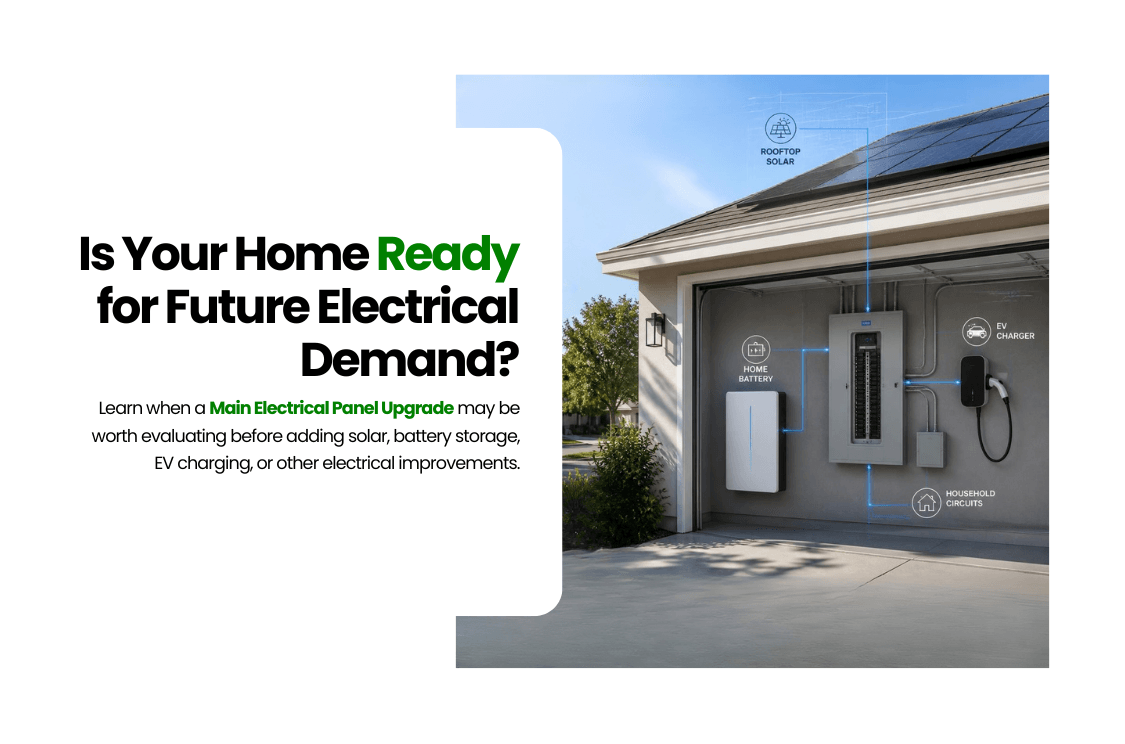
Why More Sunnyvale Homeowners Are Evaluating Main Electrical Panel Upgrades
As homes continue to adopt new electrical technologies, many homeowners are discovering that their existing electrical system may need to support far more than it was originally designed for. Electric vehicles, residential solar systems, battery storage, heat pumps, induction cooktops, and home offices have all contributed to increasing household electricity demand.
For homeowners in Sunnyvale, where many neighborhoods include homes built over several decades, electrical infrastructure can vary significantly from one property to another. Some homes already have modern electrical equipment capable of supporting additional electrical loads, while others may benefit from evaluating whether a main electrical panel upgrade is appropriate before adding new technologies.
A main electrical panel upgrade is not necessary for every home. The decision depends on factors such as the home’s existing electrical service, current energy usage, planned renovations, and future electrification goals. Understanding how the electrical panel functions and when it may require evaluation can help homeowners make informed decisions before starting major home improvement projects.
What Is a Main Electrical Panel?
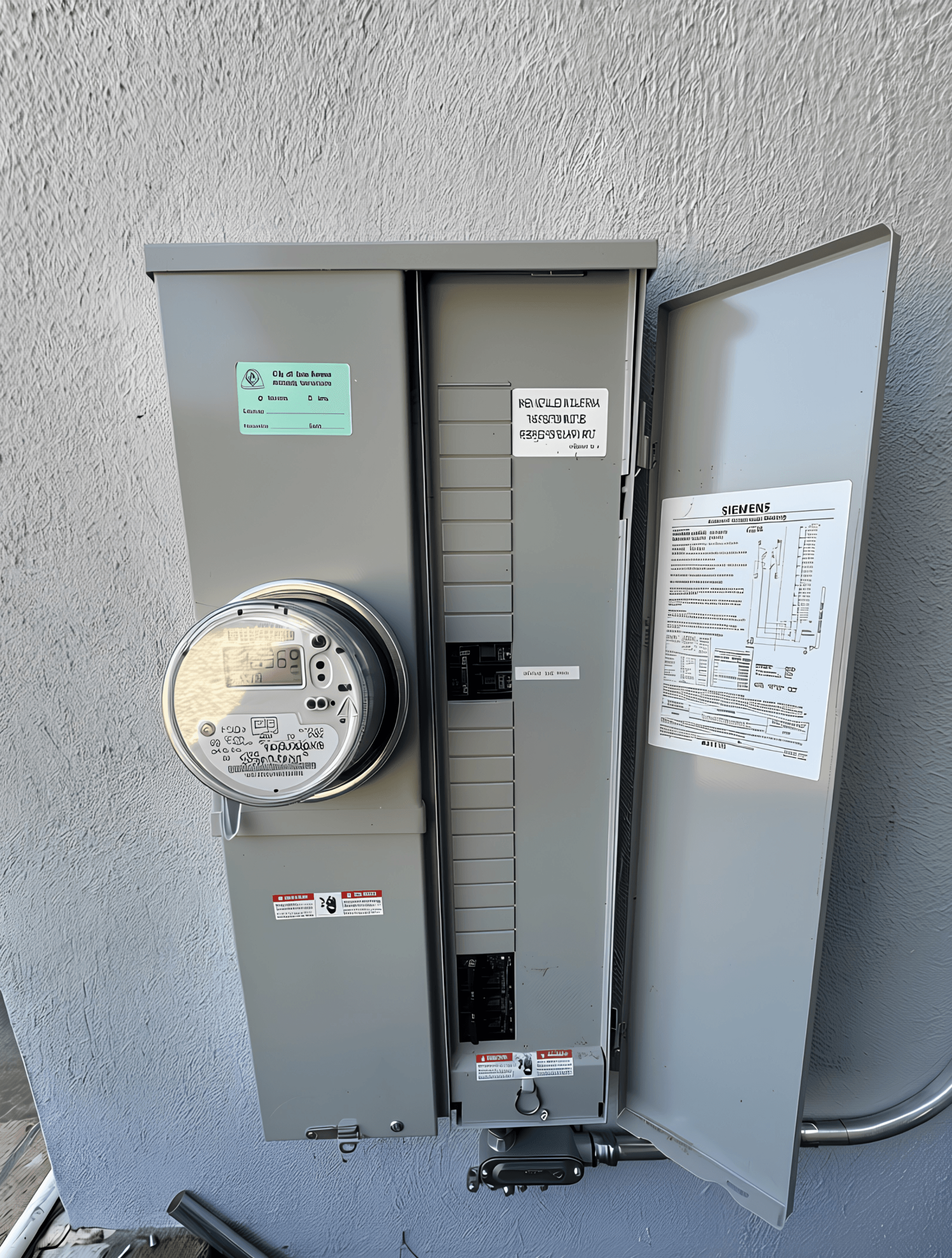
The main electrical panel, sometimes called the breaker panel or service panel, is the central distribution point for electricity throughout the home. Electricity supplied by the utility enters the panel and is distributed through individual circuit breakers to lighting, outlets, appliances, heating and cooling equipment, and other electrical devices.
The panel also provides overcurrent protection by automatically disconnecting a circuit if it becomes overloaded or experiences a fault.
Because nearly every electrical device in the home depends on the panel, it plays an important role in both electrical safety and the home’s ability to support new equipment.
Residential electrical panels are installed and maintained in accordance with applicable electrical safety standards and local building requirements. Homeowners interested in learning more about the National Electrical Code (NFPA 70) can review educational information published by the National Fire Protection Association (NFPA).
Why Electrical Demand Is Increasing in Modern Homes
Today’s homes often consume significantly more electricity than homes built several decades ago.
Common additions include:
- Electric vehicle charging
- Residential battery storage
- Rooftop solar systems
- Heat pump HVAC systems
- Heat pump water heaters
- Induction cooking appliances
- Home office equipment
- Smart home technology
- High-performance entertainment systems
California continues to lead the nation in electric vehicle adoption. According to the California Energy Commission, more than 2 million zero-emission vehicles have been sold in the state, and EV ownership continues to grow. As more households add Level 2 EV chargers, many homeowners are evaluating whether their existing electrical infrastructure can support increased demand before installing new equipment.
Source: California Energy Commission
Each new electrical load increases the demand placed on the home’s electrical infrastructure. In some cases, the existing panel can support these additions. In others, an evaluation may indicate that modifications or upgrades should be considered before new equipment is installed.
Signs Your Main Electrical Panel May Need Evaluation
A main electrical panel upgrade is not determined by age alone. Instead, licensed electrical contractors evaluate the overall condition, capacity, and suitability of the existing electrical system.
Homeowners may wish to schedule an evaluation if they experience:
- Circuit breakers that trip frequently
- Flickering or dimming lights when appliances operate
- Limited space for additional breakers
- Plans to install an EV charger
- Plans to add battery storage
- Plans to install residential solar
- Major home renovations
- Converting gas appliances to electric
- Replacing HVAC equipment with a heat pump
These situations do not automatically mean an upgrade is required, but they often justify a professional assessment.
Understanding the Difference Between Common Electrical Upgrades
Many homeowners use several electrical terms interchangeably, although they refer to different types of work.
| Electrical Project | Primary Purpose |
| Main Electrical Panel Upgrade | Increase the panel’s capacity or replace it with equipment better suited to the home’s electrical needs. |
| Panel Replacement | Replace aging, damaged, or outdated equipment without necessarily increasing electrical service capacity. |
| Service Upgrade | Increase the utility electrical service supplied to the home, often requiring coordination with PG&E. |
| Subpanel Installation | Add additional circuit capacity in another area of the home while using the existing main panel. |
Understanding these differences helps homeowners ask informed questions when comparing installation proposals.
How Solar, Battery Storage, and EV Charging Affect Electrical Planning
One of the most common reasons homeowners evaluate their electrical panel is because they are planning additional energy projects.
Examples include:
Residential Solar
Solar installations may require evaluating the home’s existing electrical equipment to ensure compatibility with the planned system.
Battery Storage
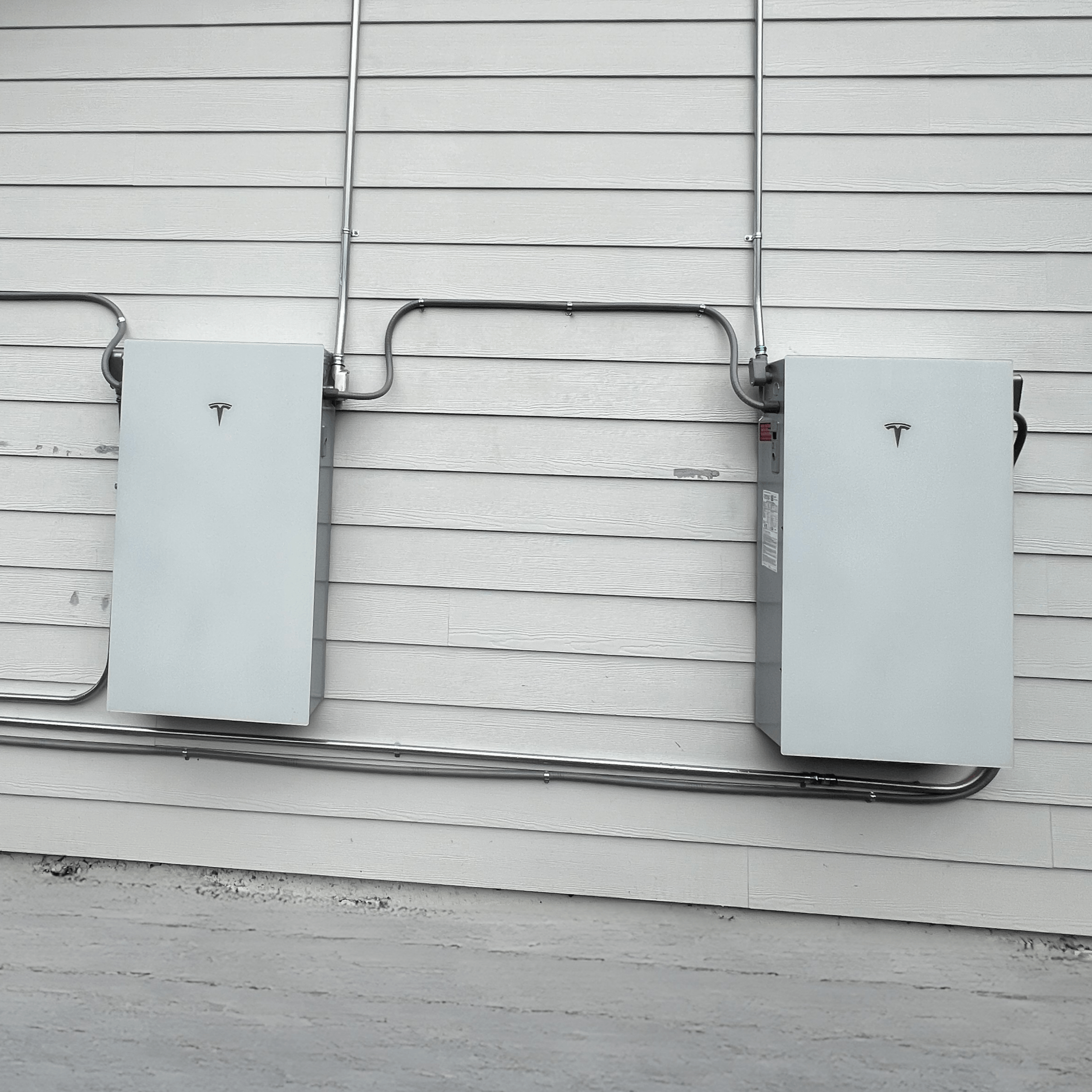
Battery storage systems integrate with the home’s electrical infrastructure. System design depends on the existing panel configuration, backup power objectives, and electrical capacity.
EV Charging
Level 2 EV chargers add a significant electrical load compared with standard household outlets. Depending on the home’s existing electrical service and overall load, an evaluation may determine whether additional electrical capacity should be considered.
Most residential Level 2 EV chargers operate on a 240-volt circuit and commonly deliver between 30 and 80 amps, depending on the vehicle, charger, and electrical installation. Because this represents one of the largest continuous electrical loads in many homes, a professional load calculation can help determine whether the existing electrical panel has sufficient capacity.
Source: U.S. Department of Energy
⭐⭐⭐⭐⭐ Professional EV Charger Repair & Installation
“Our builder-installed EV charging outlet developed a serious overheating issue due to loose wiring, eventually causing the wiring to melt. Nabu Energy quickly diagnosed the problem, replaced the charging outlet, rewired it correctly, and thoroughly tested everything before leaving. The technician was punctual, professional, and the pricing was fair. I would definitely recommend Nabu Energy for EV charger installation or repair work.”
– Verified Bay Area Homeowner
Home Electrification
Replacing gas appliances with electric alternatives can increase household electrical demand over time. Planning these projects together may help homeowners better understand future electrical requirements.
Homeowners who want to learn more about residential electrification, energy-efficient technologies, and modern home energy systems can also review educational resources published by the U.S. Department of Energy.
Why Professional Load Calculations Matter
A panel upgrade should never be recommended based solely on the age of the home or the amperage printed on the panel.
Licensed electrical contractors perform load calculations to evaluate how much electricity the home currently uses and how much additional demand future equipment may place on the system.
Factors commonly considered include:
- Existing electrical loads
- HVAC equipment
- Electric appliances
- Future EV charging
- Planned battery storage
- Solar integration
- Future home additions
- Local electrical code requirements
A load calculation helps determine whether the existing electrical service is adequate or whether modifications should be considered.
Before hiring a contractor, homeowners can verify active California contractor licenses and review consumer guidance through the California Contractors State License Board (CSLB).
Sunnyvale Homes Present Different Electrical Challenges
Sunnyvale’s housing stock includes both older homes and newer developments, meaning electrical systems can differ substantially between properties.
Some homeowners may have electrical panels with sufficient capacity for future projects, while others may need to evaluate upgrades before installing additional equipment.
Project planning may also involve:
- Local permitting requirements
- Electrical inspections
- Utility coordination with PG&E when applicable (Depending on the scope of the project, some electrical service upgrades may require coordination with PG&E for service changes, inspections, or meter-related work before the upgraded electrical service can be energized. )
- Existing service entrance equipment
- Available installation space
- Future expansion plans
Because every property is unique, recommendations should be based on a site-specific evaluation rather than general assumptions.
⭐⭐⭐⭐⭐ Battery Installation & Code Compliance
“We used Nabu Energy for our battery installation. During the project, they identified code violations in our existing solar installation and guided us through the entire process of getting everything corrected. Their team was knowledgeable, communicated regularly, completed the work on schedule, and handled the project professionally. I would highly recommend them.”
– Verified Bay Area Homeowner
Comparison Table: When Should a Homeowner Consider an Evaluation?
| Homeowner Situation | Evaluation May Be Appropriate |
| Installing an EV charger | ✓ |
| Adding battery storage | ✓ |
| Installing residential solar | ✓ |
| Frequent breaker trips | ✓ |
| Major kitchen remodel | ✓ |
| Converting to a heat pump | ✓ |
| Adding a home office | Depends |
| No planned electrical changes | May not be necessary |
Only a site-specific evaluation can determine whether modifications or upgrades are appropriate.
Planning for Future Electrical Needs
Rather than addressing one project at a time, many homeowners are choosing to develop a long-term electrical plan.
Homeowners interested in California’s broader clean energy and home electrification initiatives can also explore educational resources published by the California Energy Commission (CEC).
For example, a homeowner may be considering:
- Solar this year
- An EV next year
- Battery storage later
- Heat pump installation in the future
Evaluating these goals together can help determine whether the home’s electrical infrastructure should be designed with future expansion in mind.
Planning ahead may reduce the need for additional modifications later and provide a clearer understanding of the home’s long-term electrical requirements.
As more California homeowners transition to electric vehicles, heat pumps, induction cooking, and battery storage, home electrification is becoming an increasingly important part of long-term home improvement planning. Evaluating these projects together can help homeowners better understand future electrical capacity requirements before investing in new equipment.
Source: California Energy Commission; U.S. Department of Energy
Main Electrical Panel Upgrade Planning Checklist
Before deciding whether a main electrical panel upgrade is appropriate, homeowners should evaluate both their current electrical needs and future plans. A structured evaluation can help avoid unnecessary work while ensuring the home’s electrical system can safely support planned improvements.
Consider the following questions:
- Is your current electrical panel fully occupied with little or no room for additional circuits?
- Have you experienced breakers tripping more frequently than before?
- Are you planning to install an EV charger?
- Will you be adding residential solar or battery storage?
- Are you replacing gas appliances with electric alternatives?
- Is a major home renovation planned?
- Has a licensed electrical contractor evaluated your current electrical load?
- Do you expect your household electricity usage to increase over the next five to ten years?
Answering these questions can help determine whether a professional evaluation is appropriate before beginning a project.
Comparison Table: Common Electrical Projects
| Project | Primary Purpose | May Require PG&E Coordination |
| Panel Replacement | Replace aging or outdated electrical equipment | Sometimes |
| Main Electrical Panel Upgrade | Increase electrical panel capacity | Sometimes |
| Electrical Service Upgrade | Increase utility service supplied to the home | Often |
| Subpanel Installation | Add additional branch circuits | Usually No |
| EV Charger Installation | Support electric vehicle charging | Depends on existing service |
| Battery Storage Installation | Integrate residential energy storage | Depends on system design |
Actual project requirements depend on the property’s existing electrical infrastructure and local permitting requirements.
Comparison Table: Which Project Fits Your Situation?
| If You Are Planning To… | You May Need to Evaluate… |
| Install rooftop solar | Existing electrical panel compatibility |
| Add battery storage | Panel capacity and system integration |
| Install a Level 2 EV charger | Available electrical capacity |
| Replace a gas furnace with a heat pump | Electrical load requirements |
| Remodel your kitchen | Existing service capacity |
| Expand your home | Overall electrical infrastructure |
Frequently Asked Questions
1. What does a main electrical panel do?
The main electrical panel receives electricity from the utility and distributes it safely throughout the home using individual circuit breakers.
2. How do I know if my electrical panel needs evaluation?
Frequent breaker trips, limited breaker space, planned electrical additions, or major renovations are common reasons to have a licensed electrical contractor evaluate your panel.
3. Does every older home need a panel upgrade?
No. The age of a home alone does not determine whether an upgrade is necessary. A professional evaluation considers the condition, capacity, and electrical load of the existing system.
4. What is the difference between a panel replacement and a panel upgrade?
A panel replacement typically replaces existing equipment with similar capacity, while a panel upgrade may increase the electrical capacity available to the home.
5. What is an electrical service upgrade?
A service upgrade increases the amount of electrical service supplied to the property and may require coordination with PG&E, depending on the project.
6. Can I install an EV charger without upgrading my panel?
Some homes can support a Level 2 EV charger without upgrading the panel, while others may require modifications. This depends on the home’s available electrical capacity and overall load.
7. Will installing solar require a panel upgrade?
Not always. Some solar installations work with the existing electrical panel, while others may require modifications depending on the equipment and electrical configuration.
8. Can battery storage be installed on an older electrical panel?
It depends on the condition, capacity, and compatibility of the existing electrical equipment. A site evaluation helps determine whether modifications are necessary.
9. What is a load calculation?
A load calculation evaluates how much electricity a home currently uses and estimates future electrical demand. It helps determine whether the existing electrical service is adequate.
10. How long does a panel upgrade typically take?
Installation time varies depending on the complexity of the project, permitting requirements, utility coordination, inspections, and site conditions.
11. Will I need permits for a panel upgrade?
Most electrical panel upgrades require permits and inspections. Requirements vary depending on the project scope and local jurisdiction.
12. Can I add more circuits without replacing my main panel?
In some cases, installing a subpanel may provide additional circuit capacity. Whether this is appropriate depends on the home’s existing electrical service and panel capacity.
13. Should I plan for future electrification when upgrading my panel?
Many homeowners choose to consider future projects such as EV charging, battery storage, heat pumps, or additional electrical appliances during the planning process.
14. Why should I compare multiple proposals?
Comparing multiple written proposals allows homeowners to evaluate differences in project scope, equipment, warranties, installation methods, contractor experience, and long-term support.
15. How can I determine the right electrical solution for my home?
A licensed California electrical contractor can evaluate your home’s electrical system, perform load calculations, and recommend solutions based on your current needs and future plans.
Key Takeaways
- The main electrical panel is the central hub of your home’s electrical system.
- Modern homes often require more electrical capacity due to EV charging, heat pumps, battery storage, and other technologies.
- A panel upgrade is not automatically required for every home; decisions should be based on a professional evaluation and load calculation.
- Planning future electrical projects together can help homeowners better understand long-term infrastructure needs.
- Working with a licensed California electrical contractor and obtaining multiple proposals can help homeowners make informed decisions.
⭐⭐⭐⭐⭐ Engineering Expertise & Honest Guidance
“I’ve worked with Nabu Energy twice on a complex solar and battery project involving existing systems and NEM considerations. Rather than pushing for a sale, their engineering team took the time to understand my situation, answered detailed technical questions, and honestly advised that it wasn’t the right time to move forward. Their integrity, technical expertise, and customer-first approach are exactly why they’ll be my first call when I’m ready to proceed.”
-Verified Bay Area Homeowner
Why Homeowners Choose Nabu Energy
Nabu Energy is a licensed California electrical contractor serving homeowners throughout Sunnyvale and the Bay Area with residential electrical upgrades, solar installations, battery storage systems, and EV charging solutions.
The company completes both system design and installation using its in-house teams, helping maintain consistency throughout the project.
Nabu Energy follows a Zero Sales Commission business model, allowing recommendations to focus on the home’s electrical configuration, current capacity, future energy plans, and project requirements rather than sales incentives.
Whether a homeowner is planning an electrical panel upgrade, preparing for an EV charger, considering residential solar, or evaluating battery storage, the goal is to recommend solutions that align with the property’s specific needs rather than a one-size-fits-all approach.
Disclaimer
This article is provided for general informational purposes only and should not be considered legal, financial, tax, or engineering advice. Electrical panel requirements, service capacity, permitting, utility coordination, installation timelines, equipment compatibility, and applicable building codes vary by property, utility provider, manufacturer, and local jurisdiction. Homeowners should obtain multiple written proposals, verify contractor licensing, review all contract terms carefully, and consult a licensed California electrical contractor before making any purchasing decision.