Why More San Jose Homeowners Are Installing Battery Storage
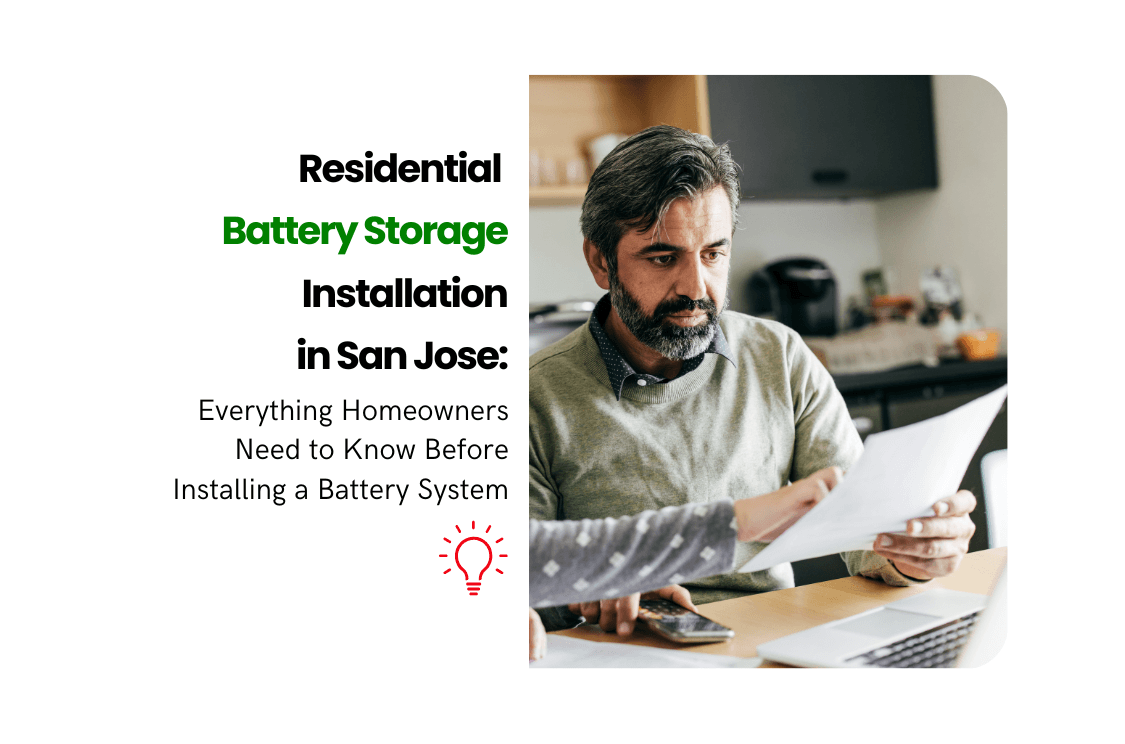
Residential battery storage is becoming an increasingly popular investment for homeowners in San Jose. Many homes in the city are served by PG&E, where homeowners have experienced Public Safety Power Shutoff (PSPS) events, changing electricity rates, and growing interest in improving energy resilience. Whether installed alongside a new solar system or added to an existing one, a properly designed battery storage system can provide backup power and help homeowners manage energy more effectively during both planned and unexpected utility interruptions.
Battery Storage Considerations for San Jose Homes
San Jose neighborhoods vary widely in home age, electrical infrastructure, and energy usage. Older homes may require electrical upgrades before a battery system can be installed, while newer homes may already have electrical equipment capable of supporting battery storage. Local permitting requirements, utility interconnection processes, and inspection schedules can also influence overall project timelines. Working with an installer familiar with residential battery storage installation in San Jose can help homeowners better understand these project requirements before installation begins.
Choosing the Right Battery System for Your Home
Every home has different energy requirements, which means there is no one-size-fits-all battery solution. The appropriate battery system depends on factors such as the home’s electrical service, existing or planned solar system, daily energy consumption, backup power priorities, and future energy goals. Evaluating these factors before selecting equipment can help homeowners choose a system that is compatible with their property and lifestyle.
Why the Installer Matters as Much as the Equipment
Selecting the right installer is just as important as selecting the battery itself. Homeowners should look for a company with experience in residential battery storage installation, in-house design capabilities, qualified installation teams, and familiarity with San Jose permitting requirements and PG&E interconnection processes. Asking about warranties, project timelines, and contractor licensing can also help homeowners make an informed decision before signing a contract.
The Importance of an In-House Design and Installation Team
Some companies outsource portions of a project to third-party contractors, while others manage the entire process internally. Nabu Energy completes both system design and installation with its own in-house teams. The in-house design team evaluates the home’s electrical service, existing solar equipment, energy usage patterns, and backup power objectives to develop a battery storage solution tailored to the property’s requirements. Managing both design and installation through one company may help provide a more coordinated project experience.
A Manufacturer-Agnostic Approach to Battery Storage
Battery technology continues to evolve, and different manufacturers offer different features and capabilities. Nabu Energy follows a manufacturer-agnostic approach, helping homeowners evaluate solutions based on compatibility and project requirements rather than recommending a single brand for every installation. The company specializes in battery storage systems from Tesla, Enphase, and SolarEdge, allowing homeowners to choose equipment that aligns with their home’s electrical configuration and long-term energy objectives.
Transparent Recommendations with Zero Sales Commission
Another consideration when comparing installers is how recommendations are made. Some residential battery storage companies use commission-based compensation models, which may influence product or system recommendations. Nabu Energy operates with a Zero Sales Commission business model, allowing battery storage recommendations to focus on the home’s electrical configuration, energy usage, backup power objectives, and overall project requirements rather than individual sales commissions.
What to Expect During Residential Battery Storage Installation
A typical residential battery storage installation includes an evaluation of the home’s electrical system, system design, permitting, equipment installation, inspections, testing, and final system commissioning. In San Jose, project timelines may vary depending on permit review, inspection scheduling, PG&E requirements where applicable, equipment availability, and the complexity of the installation. Homeowners should discuss each stage of the project with their installer before work begins.
Questions Every Homeowner Should Ask Before Hiring an Installer
Before selecting a residential battery storage installer in San Jose, homeowners should request multiple written proposals, compare the total scope of work, review warranty coverage, understand permitting responsibilities, verify contractor licensing, and carefully review contract terms. Asking these questions can help homeowners compare installers based on experience, transparency, and the services included with the project.
Frequently Asked Questions
Do I need solar panels to install a residential battery system?
No. Several residential battery systems can be installed without solar panels. Whether a battery-only installation is appropriate depends on the home’s energy objectives, backup power expectations, and electrical configuration.
How long does residential battery storage installation take in San Jose?
Project timelines vary depending on permit approvals, inspection scheduling, equipment availability, utility coordination, and the complexity of the installation. After evaluating the property, the installer should provide an estimated project schedule.
Which battery brand is best for my home?
There is no single battery that is best for every property. The most suitable option depends on factors such as electrical service capacity, existing solar equipment, desired backup duration, energy consumption, and future expansion plans. A battery should be selected because it fits the home’s requirements, not simply because it is the most popular brand.
Will my home need an electrical upgrade before battery installation?
Some homes require electrical upgrades before a battery system can be installed, while others do not. This can only be determined after evaluating the property’s existing electrical service and equipment.
How much backup power will a battery provide?
Backup duration varies from one home to another. It depends on battery capacity, the number of appliances being powered during an outage, household electricity usage, and the overall system design. Two homes using the same battery may experience different backup times because their energy consumption is different.
Why should I obtain multiple installation proposals?
Comparing multiple proposals allows homeowners to review differences in equipment selection, system design, warranty coverage, project scope, installation experience, contractor licensing, and long-term service support. Understanding these differences can help homeowners make a more informed purchasing decision.
Why Homeowners Choose Nabu Energy
Nabu Energy is a licensed California electrical contractor and a trusted battery storage system installer in San Jose, specializing in residential solar, battery storage systems, electrical upgrades, and EV charging solutions. The company follows a Zero Sales Commission business model, completes both system design and installation with its in-house teams, and recommends solutions based on each homeowner’s energy needs rather than a one-size-fits-all approach.
Nabu Energy specializes in battery storage solutions from leading manufacturers, including Tesla, Enphase, and SolarEdge, allowing homeowners to select equipment that best fits their home’s electrical configuration, existing solar system, and long-term energy goals. Nabu Energy is also a Tesla Powerwall 3 Certified Installer in San Jose, California, while continuing to provide manufacturer-agnostic recommendations based on project compatibility rather than promoting a single battery brand.
Disclaimer
This article is provided for general informational purposes only and should not be considered legal, financial, tax, or engineering advice. Battery storage system performance, costs, available equipment, permitting requirements, utility programs, installation timelines, and code requirements vary by property, utility provider, manufacturer, and local jurisdiction. Homeowners should obtain multiple written proposals, verify contractor licensing, review all contract terms carefully, and consult a licensed California contractor before making any purchasing decision.