Why Cupertino Homeowners Are Looking Beyond Solar Panels
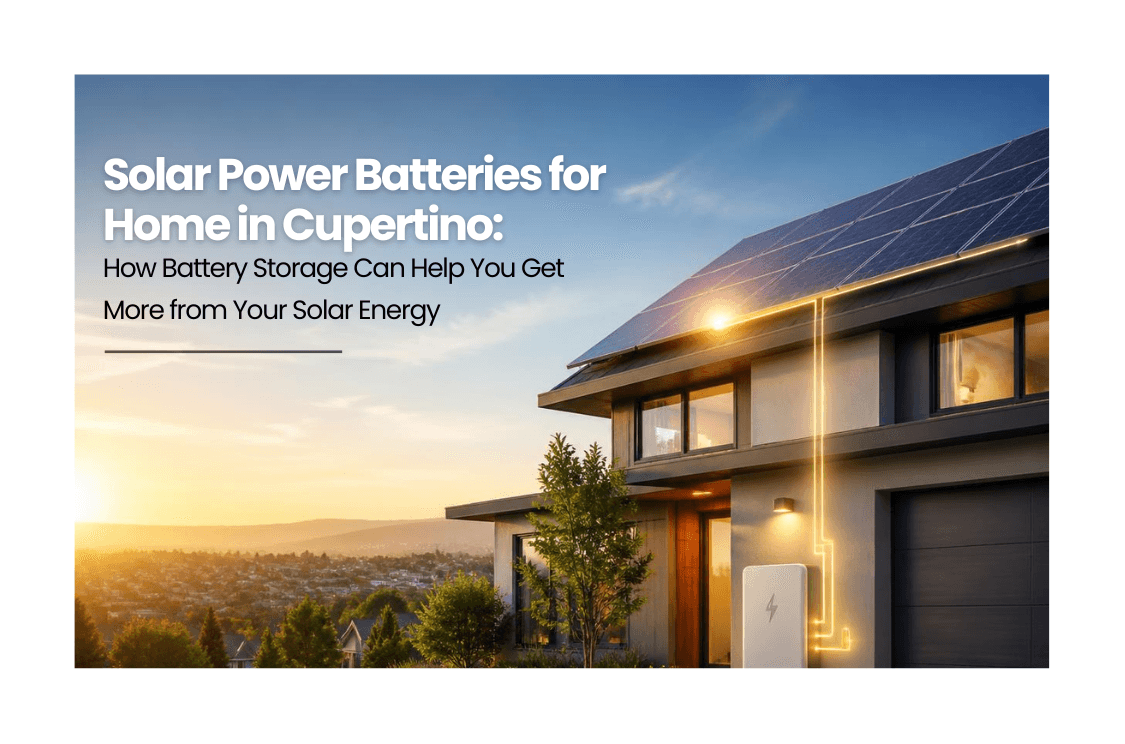
Cupertino has been one of the Bay Area’s leading communities for residential solar adoption, with many homeowners already generating electricity from rooftop solar systems. As household energy needs continue to evolve, the conversation is shifting from simply producing solar energy to making better use of it. Many homeowners are now exploring solar power batteries for home as a way to store available solar energy for use later in the day, creating a more flexible and resilient residential energy system.
Making Better Use of the Solar Energy Your Home Already Produces
Residential solar panels typically produce the most electricity during the middle of the day, when many households are using relatively little electricity. Depending on the home’s configuration and applicable utility program, excess solar energy may be exported to the grid. Battery storage gives homeowners the opportunity to store available solar energy and use it later when household electricity demand increases. For homeowners who already have solar, battery storage is often evaluated as a way to improve overall solar self-consumption rather than relying solely on daytime production.
Time-of-Use Energy Management Matters More Than Ever
Many Cupertino homeowners receive electric service from PG&E, where electricity rates can vary depending on the time of day under applicable rate plans. A properly designed battery system can become part of a broader home energy strategy by storing available solar energy during periods of higher solar production and making that stored energy available later, depending on the battery configuration and operating settings. Every home’s electricity usage pattern is different, so battery storage should be designed around the property’s specific energy needs rather than a standard configuration.
Supporting Cupertino’s Smart Homes and Connected Lifestyles
Cupertino is home to many technology-focused households where electric vehicles, home offices, high-speed networking, smart appliances, home automation systems, and connected devices are part of everyday life. As residential electricity consumption grows, many homeowners are looking for integrated energy solutions rather than treating solar, battery storage, EV charging, and electrical upgrades as separate projects. Planning these systems together can help homeowners prepare for changing energy needs over time.
Planning for Electric Vehicle Charging
Electric vehicle ownership continues to increase throughout Cupertino neighborhoods such as Monta Vista, Rancho Rinconada, Seven Springs, and surrounding residential communities. Homeowners planning to install or expand EV charging often review their home’s electrical capacity at the same time they evaluate battery storage. While battery storage does not replace EV charging equipment, integrating residential solar, battery storage, and EV charging into one long-term energy plan can simplify future upgrades and improve overall system compatibility.
Already Have Solar? Battery Storage May Be Your Next Step
Many Cupertino homeowners installed solar panels years ago and are now evaluating whether battery storage is a logical next step. In many cases, an existing residential solar system can be upgraded with battery storage. Compatibility depends on the existing solar equipment, inverter configuration, electrical service, available installation space, and the home’s overall energy objectives. A professional evaluation helps determine the most appropriate battery solution for the property’s current and future energy needs.
Choosing the Right Battery Size for Your Home
Battery sizing is not determined by square footage alone. The appropriate battery capacity depends on factors such as household electricity consumption, the number of electric vehicles, backup power priorities, existing solar production, major electrical appliances, and future home electrification plans.
When determining the appropriate battery size, homeowners typically consider:
- Daily household electricity usage
- Existing or planned solar system capacity
- Electric vehicle charging requirements
- Backup power priorities during outages
- Major electrical appliances that may require backup
- Future home electrification plans, such as heat pumps or additional EVs
Rather than selecting the largest available battery, homeowners should choose a system designed around their actual energy requirements and long-term objectives.
Why Professional System Design Is Essential
Battery storage works best when it is designed as part of the home’s complete electrical system. Proper planning considers solar production, electrical service capacity, backup power priorities, future expansion opportunities, and equipment compatibility. Homeowners should compare installers based on system design capabilities, installation experience, contractor licensing, warranty coverage, and familiarity with Cupertino permitting requirements before making a purchasing decision.
Smart Energy Solutions Instead of One-Size-Fits-All Recommendations
Every home’s electrical infrastructure and energy goals are different. Nabu Energy completes both system design and installation using its in-house teams and specializes in developing customized residential energy solutions rather than recommending the same battery configuration for every property. The company follows a manufacturer-agnostic approach and specializes in battery storage systems from Tesla, Enphase, and SolarEdge, allowing homeowners to evaluate multiple technologies based on compatibility with their existing or planned solar system. As a Tesla Powerwall 3 Certified Installer, Nabu Energy also supports homeowners interested in Tesla’s energy ecosystem while continuing to recommend the solution that best fits each home’s requirements.
Transparent Recommendations with Zero Sales Commission
Choosing battery storage is an important long-term decision. Nabu Energy follows a Zero Sales Commission business model, allowing recommendations to focus on the home’s electrical configuration, energy usage, solar compatibility, backup priorities, and future expansion plans rather than individual sales incentives. This approach helps homeowners evaluate solutions based on technical suitability and project requirements instead of sales-driven recommendations.
Frequently Asked Questions
Can I charge my electric vehicle using battery storage?
Many residential battery systems can work alongside EV charging equipment as part of a home’s overall energy strategy. How energy is prioritized depends on the battery system, electrical configuration, charging equipment, and household electricity usage.
Can I expand my battery storage in the future?
Some battery systems support future expansion, while others have different design requirements. Expansion depends on the battery manufacturer, existing equipment, electrical capacity, and the overall system configuration.
How many batteries does a typical home need?
The appropriate number of batteries depends on household electricity usage, backup power priorities, existing solar production, electric vehicle charging, major appliances, and future electrification plans. A professional system evaluation helps determine the appropriate battery capacity.
Can battery storage reduce my dependence on grid electricity?
Battery storage allows homeowners to use stored solar energy when solar production decreases. The amount of electricity supplied by the battery instead of the utility grid depends on battery capacity, system configuration, operating settings, and household energy consumption.
Do battery systems work with smart home technology?
Many modern battery systems offer monitoring capabilities and can integrate with compatible energy management platforms. Available features vary by manufacturer, equipment configuration, and the home’s electrical infrastructure.
Why Homeowners Choose Nabu Energy
Nabu Energy is a licensed California electrical contractor specializing in residential solar, battery storage systems, electrical upgrades, and EV charging solutions throughout the Bay Area. The company completes both system design and installation using its in-house teams and follows a Zero Sales Commission business model. Rather than evaluating solar panels, battery storage, EV charging, and electrical upgrades as separate projects, Nabu Energy designs integrated residential energy systems that consider the home’s electrical configuration, existing solar production, battery operation, future electrification plans, and long-term energy goals before recommending a solution.
Disclaimer
This article is provided for general informational purposes only and should not be considered legal, financial, tax, or engineering advice. Battery storage performance, utility programs, electricity rates, permitting requirements, installation timelines, available equipment, and applicable regulations vary by property, utility provider, manufacturer, and local jurisdiction. Homeowners should obtain multiple written proposals, verify contractor licensing, carefully review all contract terms, and consult a licensed California contractor before making any purchasing decision.