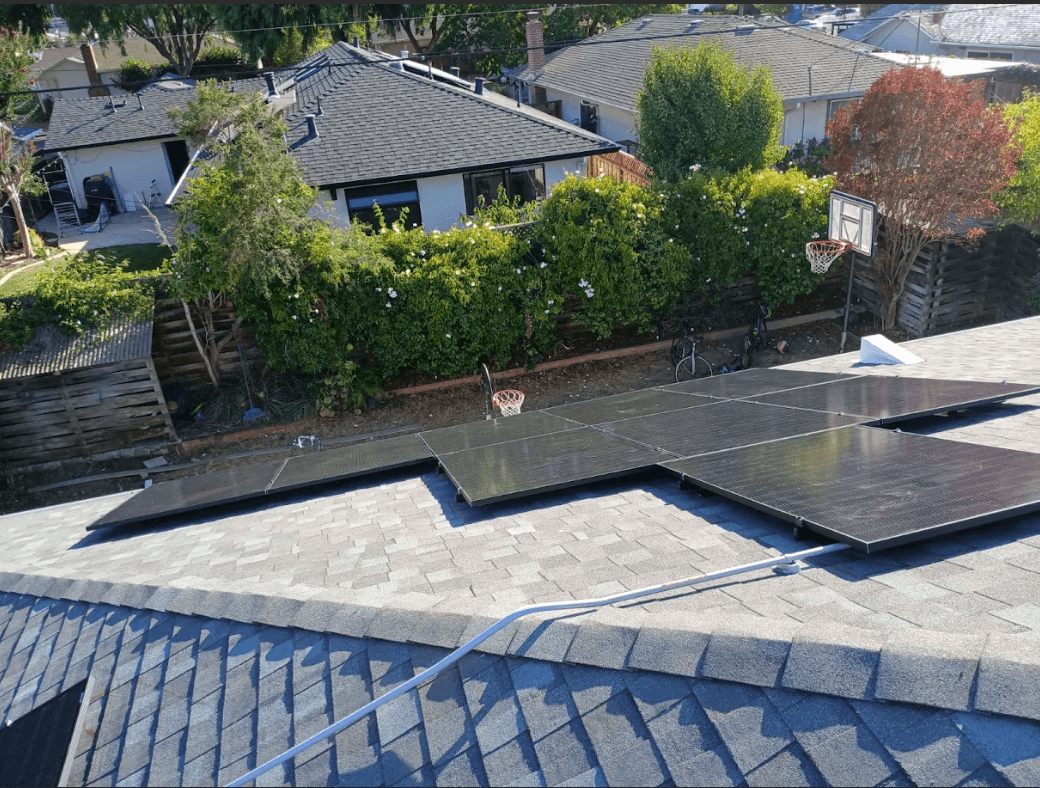
If you’re researching solar panels, home batteries, EV chargers, or smart electrical panels in Sunnyvale, you’ve probably come across the term Distributed Energy Resources (DERs). While it sounds technical, DER simply refers to modern technologies that help homeowners generate, store, and manage electricity more efficiently.
Although the term may sound technical, most homeowners are already familiar with several examples of distributed energy resources. Residential solar panels, battery storage systems, electric vehicle (EV) chargers, smart electrical panels, and energy management systems all fall under the DER umbrella.
For homeowners in Sunnyvale, where residential solar adoption, EV ownership, and smart home technology continue to grow, distributed energy resources are becoming an increasingly important part of long-term home energy planning. Rather than focusing on a single product, homeowners are beginning to evaluate how multiple technologies can work together to create a more flexible and resilient home energy system.
Distributed Energy Resources (DERs).
Direct Answer: Distributed Energy Resources (DERs) are technologies installed close to where electricity is used, including residential solar panels, home batteries, EV chargers, smart electrical panels, and home energy management systems.
Distributed Energy Resources are smaller energy technologies that are located close to where electricity is used rather than being generated at a large, centralized power plant.
Homeowners interested in learning more about California’s clean energy policies, residential energy programs, and statewide energy planning can explore resources published by the California Energy Commission (CEC)
Unlike traditional electricity generation, which sends power over long distances before it reaches a home, DERs allow homeowners to produce, store, or manage electricity directly at their property.
Examples of residential distributed energy resources include:
- Residential solar photovoltaic (PV) systems
- Home battery storage systems
- Electric vehicle charging equipment
- Smart electrical panels
- Home energy monitoring systems
- Demand response technologies
- Energy management software
These systems can operate independently or work together as part of a connected home energy ecosystem. For additional information about residential clean energy technologies, home energy efficiency, and battery storage, homeowners can also review educational resources from the U.S. Department of Energy
Why Distributed Energy Resources Matter for Sunnyvale Homes
Sunnyvale is one of Silicon Valley’s most technology-focused communities. Many homeowners already own electric vehicles, use smart home devices, or have installed rooftop solar systems.
Because most Sunnyvale homeowners receive electric service from PG&E, it’s also helpful to stay informed about utility programs, grid services, and available customer resources when evaluating residential energy upgrades. As household electricity demand continues to grow, many homeowners are looking beyond individual products and considering how different energy technologies can complement one another.
For example:
- A solar system generates electricity during daylight hours.
- A battery stores available energy for later use.
- An EV charger supports electric vehicle charging.
- A smart electrical panel helps manage how electricity is distributed throughout the home.
Together, these technologies can form an integrated home energy system designed around the homeowner’s specific needs rather than relying on a single solution.
The Building Blocks of a Modern Home Energy System
Many homeowners think of solar panels as the starting point of residential energy independence. While solar remains an important component, a modern home energy system often includes several interconnected technologies.
Residential Solar
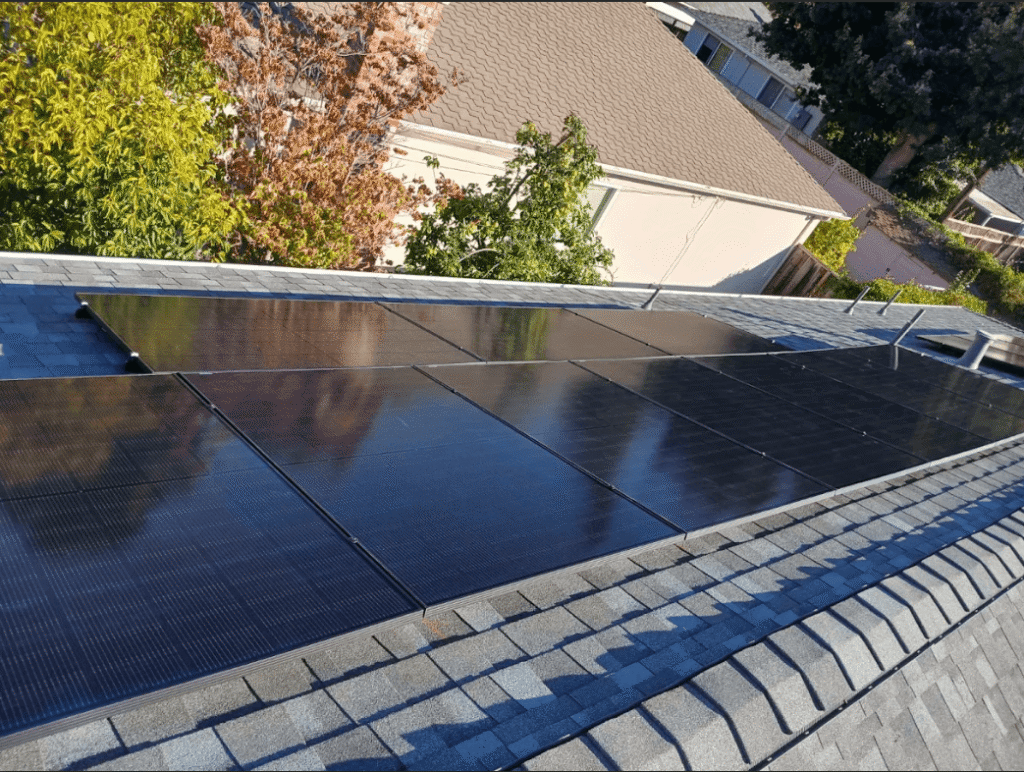
Solar panels convert sunlight into electricity that can be used by the home during the day. A properly designed solar system considers roof orientation, available sunlight, household electricity usage, and future energy requirements
Battery Storage
Battery systems store available electricity for later use. Depending on the system design and homeowner objectives, batteries may support backup power, help manage energy usage, or complement an existing solar installation.
Modern home battery systems, including products such as the Tesla Powerwall, are designed to integrate with compatible solar installations or, in some cases, operate independently depending on the home’s electrical configuration and energy goals.
Electric Vehicle Charging
Electric vehicles are becoming a significant source of household electricity demand. Planning for an EV charger during the design phase allows homeowners to prepare for future transportation needs while ensuring the home’s electrical infrastructure can safely support additional charging capacity.
Smart Electrical Panels
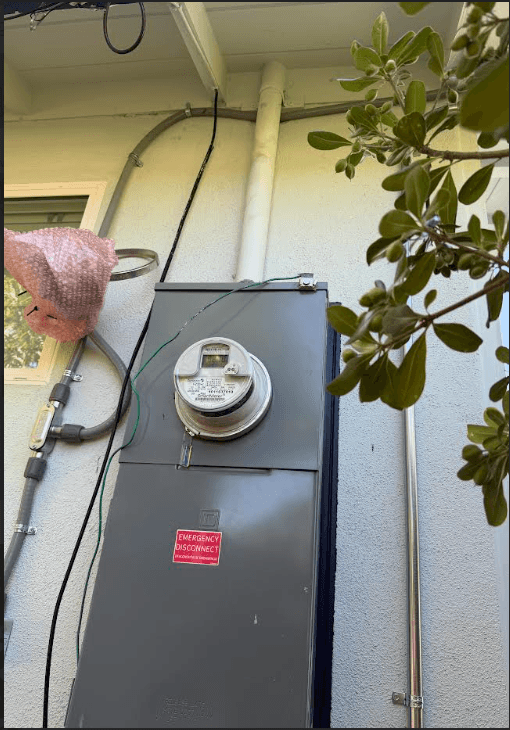
Smart panels provide greater visibility into household energy usage and can help homeowners monitor or prioritize electrical loads. As homes become increasingly electrified, smart electrical equipment can play a larger role in overall energy management.
When upgrading appliances or planning home electrification projects, homeowners may also consider looking for products certified by ENERGY STAR to help identify energy-efficient equipment for their home.
How Distributed Energy Resources Work Together
One of the greatest advantages of distributed energy resources is that they do not need to operate independently.
Instead, they can work together.
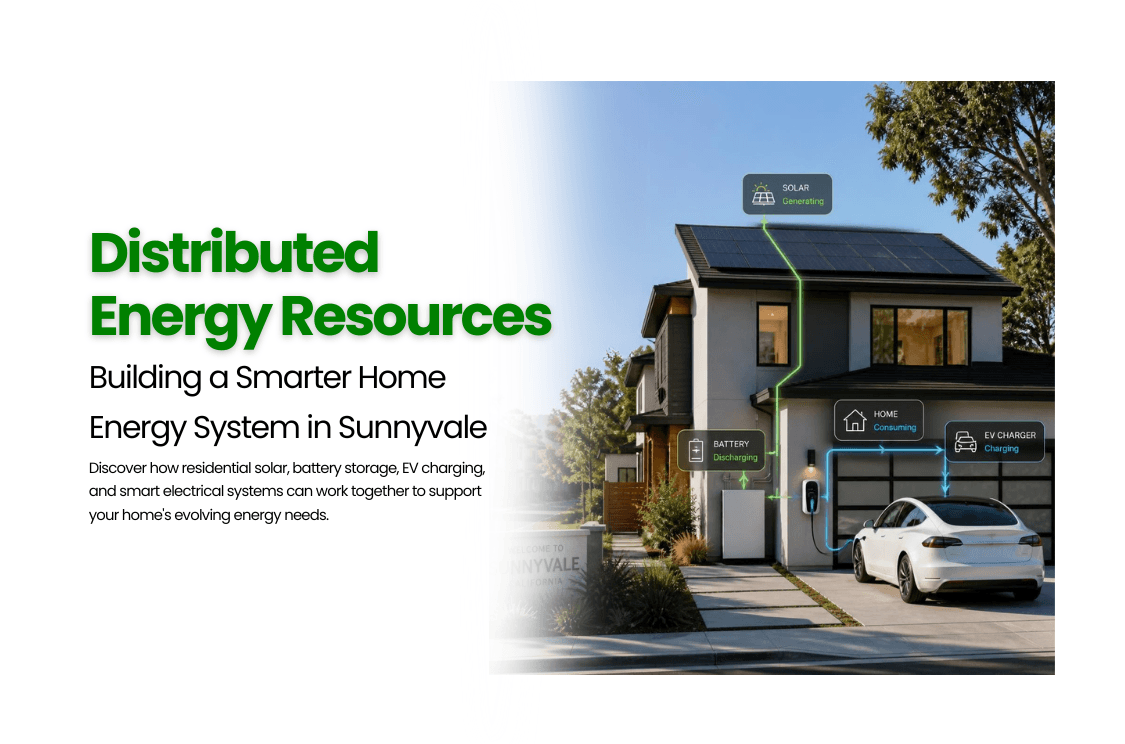
Imagine a typical Sunnyvale home:
- Solar panels generate electricity during the afternoon.
- The home uses part of that electricity immediately.
- Additional available energy is stored in a battery.
- Later in the evening, stored energy can be used for selected household loads.
- An electric vehicle is charged according to the homeowner’s preferences.
- A smart electrical panel provides visibility into household energy usage.
Rather than thinking about individual products, homeowners are increasingly viewing their property as one connected home energy system, where residential solar, home battery solutions, solar batteries, an EV charger, and a smart electrical panel work together to improve overall energy management.
Why Energy Planning Is Becoming More Important
Household electricity demand today looks very different than it did ten years ago.
Many homes now include:
- Electric vehicles
- Home offices
- Heat pump HVAC systems
- Electric water heaters
- Induction cooktops
- Smart appliances
- Home automation systems
As electricity usage grows, planning future electrical capacity becomes increasingly important. As more homeowners embrace home electrification through electric vehicles, heat pumps, and electric appliances, evaluating the entire home energy system before installing new equipment can simplify future upgrades. Instead of adding equipment one project at a time, many homeowners choose to evaluate their long-term energy goals before making major electrical investments.
Is Every Distributed Energy Resource Necessary?
No.
One of the most common misconceptions is that every homeowner needs every available energy technology.
The right combination depends on:
- Household electricity consumption
- Existing electrical infrastructure
- Future home electrification plans
- Budget
- Existing solar equipment
- Backup power priorities
- Electric vehicle ownership
For some homeowners, residential solar may be the appropriate first step.
Others may already have solar and want to explore battery storage.
Some may simply need additional electrical capacity before adding new technologies.
There is rarely a one-size-fits-all solution.
Comparison Table: Understanding Distributed Energy Resources
| Distributed Energy Resource | Primary Purpose | Typical Residential Benefit |
| Residential Solar | Generate electricity | Produces electricity from sunlight |
| Battery Storage | Store electricity | Makes stored energy available later |
| EV Charger | Charge electric vehicles | Supports home EV charging |
| Smart Electrical Panel | Manage electrical loads | Greater visibility into household energy usage |
Planning for the Future Instead of Solving Today’s Problem
Many homeowners begin researching distributed energy resources because of a single question, such as whether they should install solar or purchase a battery.
However, the bigger opportunity is understanding how today’s decisions affect future home energy needs.
For example, a homeowner who plans to purchase an electric vehicle next year, install a heat pump in the future, and expand an existing solar system may benefit from considering all of those projects together rather than separately.
A long-term approach can help homeowners understand compatibility, electrical capacity, and future expansion opportunities before equipment is selected.
Choosing the Right Partner Matters
Installing distributed energy resources often involves more than purchasing equipment. Proper planning requires evaluating the home’s electrical system, existing infrastructure, and long-term objectives.
Homeowners should compare installers based on:
- Experience with residential energy systems
- In-house design capabilities
- Installation expertise
- Knowledge of local permitting requirements
- Contractor licensing
- Long-term service and support
Working with a company that understands how multiple energy technologies integrate can help homeowners evaluate options based on their property’s needs rather than focusing on a single product.
What Homeowners Are Saying
⭐⭐⭐⭐⭐ Long-Term Energy Planning
“What an excellent, professional and timely job Nabu Energy did! They helped us plan out a system to last us for years, and we couldn’t be happier with it. We’re basically net-zero, even with two electric cars.”
— Verified Bay Area Homeowner
⭐⭐⭐⭐⭐ Thoughtful Design & Professional Installation
“From the beginning, there was no high-pressure sales pitch. The engineering team explained every option clearly, answered all of our questions, and presented multiple system designs based on both our current and future energy needs. The installation was completed professionally, on schedule, and the system has performed exactly as expected.”
— Verified Bay Area Homeowner
How Sunnyvale Homeowners Can Evaluate Distributed Energy Resources
Every home has different energy goals, so there is no universal combination of distributed energy resources that fits every property. Before investing in any system, homeowners should evaluate how they currently use electricity and how those needs may change in the future.
Questions worth considering include:
- Are you planning to purchase an electric vehicle?
- Do you already have rooftop solar?
- Is backup power important during utility outages?
- Will your household electricity usage increase over the next few years?
- Does your existing electrical panel have the capacity for future upgrades?
- Are you planning home renovations that include electrification?
Answering these questions can help homeowners determine whether they should start with one technology or develop a phased energy plan.
Comparison Table: Which Distributed Energy Resource Supports Your Goals?
| Homeowner Goal | Solar | Battery Storage | EV Charger | Smart Panel |
| Generate electricity at home | ✓ | — | — | — |
| Store available electricity | — | ✓ | — | — |
| Charge an electric vehicle | Partial | Partial | ✓ | Partial |
| Monitor household energy usage | — | Partial | — | ✓ |
| Prepare for future electrification | ✓ | ✓ | ✓ | ✓ |
| Support backup power planning | Limited | ✓ | — | Partial |
Comparison Table: Choosing the Right Approach
| If You Want To… | You May Consider Evaluating… |
| Install solar for the first time | Residential solar system |
| Add storage to an existing solar system | Battery storage compatibility |
| Prepare for an electric vehicle | EV charger and electrical capacity |
| Modernize an older electrical system | Electrical panel evaluation |
| Improve visibility into home energy usage | Smart electrical panel and monitoring |
Frequently Asked Questions
1. What are Distributed Energy Resources (DERs)?
Distributed Energy Resources are technologies installed close to where electricity is used. For homeowners, these can include solar panels, battery storage, EV chargers, smart electrical panels, and home energy monitoring systems.
2. Why are DERs becoming more popular in Sunnyvale?
Many Sunnyvale homeowners are adopting electric vehicles, smart home technology, and residential solar. As electricity usage grows, homeowners are looking for integrated energy solutions that support current and future household needs.
3. Is residential solar considered a Distributed Energy Resource?
Yes. Residential solar PV systems are one of the most common examples of distributed energy resources because they generate electricity at the home rather than relying solely on centralized power generation.
4. Is a home battery considered a Distributed Energy Resource?
Yes. Battery storage systems are classified as distributed energy resources because they store electricity close to where it is consumed and can work alongside other home energy technologies.
5. Can I install a battery if I already have solar?
In many cases, yes. Compatibility depends on the existing solar equipment, inverter type, electrical panel, and overall system design. A site evaluation is recommended before adding battery storage.
6. Do I need solar before installing a battery?
Yes, in many cases a battery can be installed without solar, although compatibility depends on the home’s electrical system, the battery technology, and the homeowner’s energy objectives.
Not always. Some battery systems can be installed independently of solar panels. The appropriate approach depends on your home’s electrical configuration and energy goals.
7. How do Distributed Energy Resources work together?
Each technology performs a different function. Solar generates electricity, batteries store energy, EV chargers support vehicle charging, and smart panels help manage household electrical loads. Together, they can form a coordinated home energy system.
8. Can Distributed Energy Resources support future EV ownership?
Yes. Homeowners planning to purchase an electric vehicle often evaluate solar, battery storage, and charging equipment together to ensure the home’s electrical system can support future demand.
9. Will every home benefit from all Distributed Energy Resources?
No. The most appropriate combination depends on household electricity usage, future plans, property characteristics, and homeowner priorities. Not every home requires every technology.
10. Do older Sunnyvale homes require electrical upgrades?
Some may. Older homes can have electrical systems that require upgrades before additional energy equipment is installed. This should be determined during a professional evaluation.
11. Can Distributed Energy Resources increase the complexity of my home?
Modern energy systems can involve multiple technologies, but a properly designed system is intended to integrate those components in a coordinated manner. Planning and system design play an important role.
12. Should I install everything at once?
No, many homeowners choose a phased approach by installing one technology first and adding battery storage, EV charging, or other energy upgrades as their needs evolve. Some homeowners prefer a phased approach, starting with solar or electrical upgrades and adding batteries or EV charging later. Planning ahead can make future expansion easier.
13. How important is system design?
System design is a critical part of any residential energy project. A well-designed system considers the home’s electrical service, energy usage, equipment compatibility, and long-term goals rather than focusing only on individual products.
14. Why should I compare multiple installation proposals?
Comparing proposals allows homeowners to evaluate differences in equipment, project scope, warranties, installation methods, contractor experience, and long-term support before making a decision.
15. How can I determine which Distributed Energy Resources are right for my home?
A professional evaluation of your home’s electrical system, current energy usage, future plans, and property characteristics can help identify which technologies best align with your goals.
Key Takeaways
- Distributed Energy Resources (DERs) include residential solar, battery storage, EV chargers, smart electrical panels, and home energy management technologies.
- Sunnyvale homeowners are increasingly evaluating how these technologies can work together as electricity usage evolves.
- There is no one-size-fits-all energy solution. The right approach depends on your home’s electrical infrastructure, energy consumption, and long-term plans.
- Planning for future electrification can help homeowners make informed decisions before investing in new equipment.
- Comparing multiple proposals and working with a licensed California electrical contractor can help homeowners better understand their options.
Why Homeowners Choose Nabu Energy
Nabu Energy is a licensed California electrical contractor specializing in residential solar, battery storage systems, EV charging solutions, electrical upgrades, and smart home energy systems throughout Sunnyvale and the Bay Area.
The company completes both system design and installation using its in-house teams and follows a Zero Sales Commission business model, allowing recommendations to focus on the homeowner’s electrical configuration, energy goals, and long-term plans rather than sales incentives.
Nabu Energy also follows a manufacturer-agnostic approach and specializes in energy solutions from leading manufacturers, including Tesla, Enphase, and SolarEdge, helping homeowners choose technologies based on compatibility with their home rather than a one-size-fits-all recommendation.
Planning Your Home Energy System for the Future
Whether you’re considering residential solar, a home battery, battery storage, solar batteries, an EV charger, or a smart electrical panel, understanding how these technologies work together can help you make more informed long-term decisions. Every property has unique electrical requirements, future energy goals, and infrastructure considerations, so evaluating your options before investing in new equipment is an important first step.
⭐⭐⭐⭐⭐ Planning for Future Expansion
“We wanted to expand our existing solar system with additional capacity and battery storage. Nabu Energy helped us size and design the system, communicated clearly throughout the project, met every timeline, and made the entire process straightforward. We’d confidently recommend them to anyone considering solar or battery upgrades.”
— Verified Bay Area Homeowner
If you’d like to better understand how a modern home energy system could work for your Sunnyvale home, consider scheduling a consultation with a qualified residential energy professional. A comprehensive evaluation of your existing electrical system, future home electrification plans, and long-term objectives can help identify solutions that are appropriate for your property while supporting future expansion as your energy needs evolve.
Homeowners researching residential solar, battery storage, or other distributed energy resources may also find it helpful to review consumer information published by the California Public Utilities Commission (CPUC), which oversees investor-owned electric utilities in California.
Disclaimer
This article is provided for general informational purposes only and should not be considered legal, financial, tax, or engineering advice. Equipment compatibility, battery performance, solar production, permitting requirements, utility programs, installation timelines, and applicable building codes vary by property, utility provider, manufacturer, and local jurisdiction. Homeowners should obtain multiple written proposals, verify contractor licensing, review all contract terms carefully, and consult a licensed California contractor before making any purchasing decision.