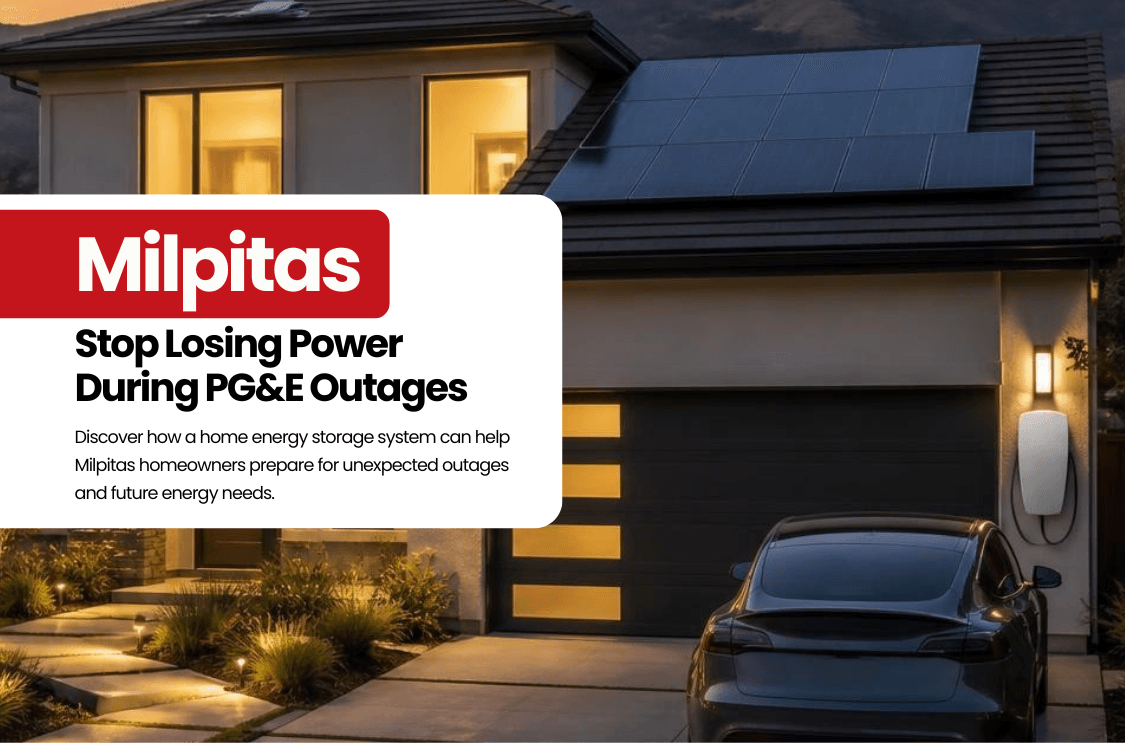
Why More Milpitas Homeowners Are Planning for Power Outages
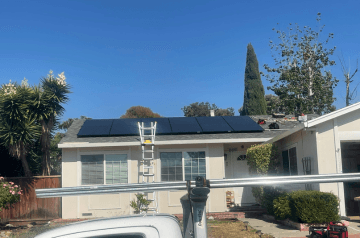
Reliable electricity has become essential for modern households. From remote work and online learning to electric vehicle charging, smart home devices, medical equipment, and home security systems, many homeowners depend on continuous power throughout the day.
For homeowners in Milpitas, preparing for a power outage is becoming an increasingly important part of long-term home planning. While PG&E works to maintain and improve California’s electrical grid, outages can still occur due to Public Safety Power Shutoff (PSPS) events, severe weather, equipment maintenance, or unexpected infrastructure issues. Depending on the situation, these interruptions may last from a few minutes to several hours or, in some cases, longer.
Rather than reacting after the next outage occurs, many homeowners are exploring home energy storage systems as part of a broader strategy to improve energy resilience.
A home battery system can provide backup power during qualifying outages, but it is not the right solution for every property. The decision should be based on the home’s electrical infrastructure, energy usage, backup priorities, existing or planned solar system, and future electrification goals.
Understanding how home energy storage works can help homeowners determine whether it aligns with their long-term energy needs.
In This Guide You’ll Learn
This guide is designed to help Milpitas homeowners understand how home energy storage fits into today’s evolving energy landscape. You’ll learn:
– Why more homeowners are considering battery storage for backup power
– The difference between essential backup and whole-home backup
– Whether battery storage can be installed with or without solar panels
– How existing solar systems may be upgraded with battery storage
– Why electrical panel evaluations and load calculations are important
– How to plan for future projects such as EV charging and home electrification
– Questions to ask before comparing battery installation proposals
Whether you’re experiencing frequent PG&E outages, planning to install solar, or simply looking ahead to future energy needs, understanding these fundamentals can help you make more informed decisions.
Why Power Outages Matter More Than They Did a Decade Ago
The impact of losing electricity has changed significantly over the past several years.
Today’s homes often rely on electricity for far more than lighting and household appliances.
Modern households may also depend on electricity for:
- High-speed internet and remote work
- Electric vehicle charging
- Smart home automation
- Security and surveillance systems
- Refrigeration for food and medications
- Medical equipment
- Heat pumps and electric heating systems
- Home offices
- Mobile device charging
As California continues to transition toward home electrification, household electricity demand is expected to increase over time. According to the California Energy Commission (CEC), technologies such as electric vehicles, heat pumps, and residential battery storage are becoming increasingly common throughout the state.
For many homeowners, maintaining access to electricity during an outage is no longer simply a convenience; it has become an important part of everyday life.
What Is a Home Energy Storage System?
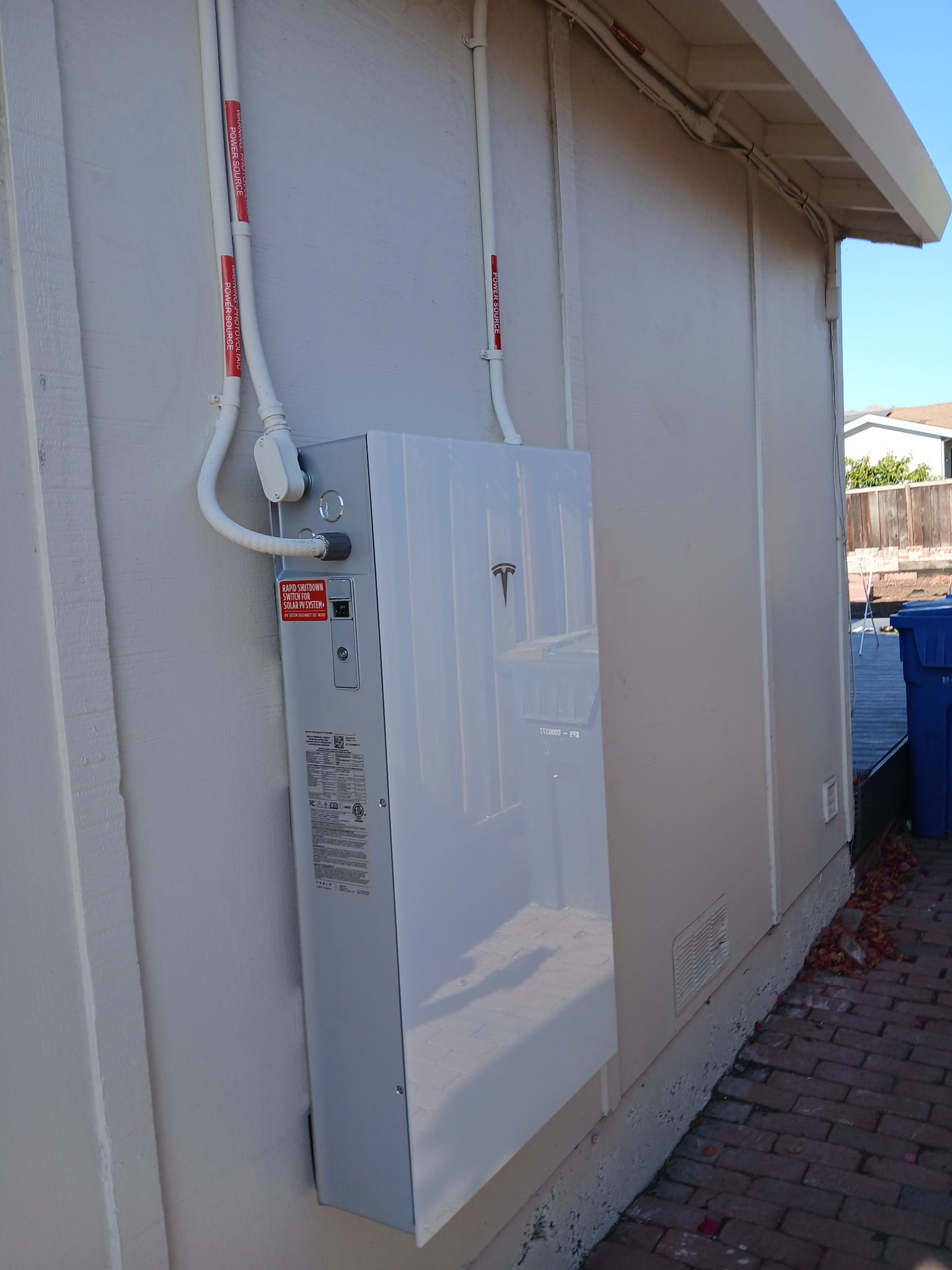
A home energy storage system is designed to store electricity for later use.
Depending on the system configuration, stored energy may come from:
- Residential solar panels
- The electrical grid
- A combination of both
When utility power is interrupted, qualifying battery systems can automatically provide electricity to designated household circuits based on how the system has been designed and configured.
Unlike portable generators, battery storage systems operate quietly, require no gasoline or diesel fuel, and can integrate with modern home energy management software.
However, not every battery system functions the same way. Features, backup capabilities, expandability, and software integration vary among manufacturers and depend on the overall system design.
How Does a Home Battery Respond During a PG&E Outage?
One of the most common homeowner questions is what actually happens when the power goes out.
Although the exact sequence varies by equipment manufacturer and system configuration, a properly designed home energy storage system continuously monitors the home’s connection to the electrical grid.
When an outage is detected, the system automatically isolates the home from the utility grid and begins supplying electricity to the designated backup circuits.
This process typically occurs automatically and does not require the homeowner to manually operate switches or start equipment.
The battery does not attempt to power every electrical device unless it has been specifically designed for whole-home backup. Instead, the system delivers electricity according to the approved backup configuration developed during the design process.
Understanding this difference helps homeowners set realistic expectations before selecting a battery system.
Essential Backup vs. Whole-Home Backup
A common misconception is that every residential battery automatically powers the entire house during an outage.
In reality, backup strategies are customized based on each home’s electrical infrastructure, battery capacity, and homeowner priorities.
Many homeowners choose to back up only the circuits they rely on most during an outage.
These often include:
- Refrigerator
- Internet modem and Wi-Fi router
- Interior lighting
- Garage door opener
- Medical equipment
- Security system
- Selected kitchen outlets
Other homeowners may prefer a larger system designed to support additional household loads, depending on the home’s electrical demand and project goals.
Because every property uses electricity differently, selecting the appropriate backup strategy is just as important as choosing the battery itself.
Comparison Table: Essential Backup vs. Whole-Home Backup
| Feature | Essential Backup | Whole-Home Backup |
| Powers selected circuits | ✓ | ✓ |
| Powers most household loads | Limited | ✓ |
| Battery capacity required | Lower | Higher |
| Typical project complexity | Lower | Higher |
| Designed around homeowner priorities | ✓ | ✓ |
Neither approach is universally better. The appropriate solution depends on the home’s electrical configuration, backup expectations, and long-term energy goals.
Why Battery Capacity Matters
Choosing a home battery involves much more than selecting a brand.
One of the most important decisions is determining how much energy storage the household actually requires.
A larger battery does not automatically mean a better system.
Instead, battery sizing should consider:
- Daily household electricity usage
- Number of occupants
- Appliances requiring backup
- Existing or planned solar installation
- Future EV charging
- Home electrification plans
- Desired backup duration
For example, two homes using the same battery may experience very different backup times because their electricity consumption differs significantly.
Rather than asking, “Which battery is the biggest?” homeowners should first ask, “What do I want my battery to power?”
That question forms the foundation of a properly designed energy storage system.
Battery Storage With Solar vs. Battery Without Solar
Many homeowners assume batteries can only be installed alongside solar panels.
In reality, battery-only systems have become increasingly common.
Some homeowners install battery storage primarily for backup power, while others combine batteries with residential solar to create a more comprehensive home energy system.
Each approach has different considerations.
Comparison Table: Battery Only vs. Solar + Battery
| Feature | Battery Only | Solar + Battery |
| Backup power during qualifying outages | ✓ | ✓ |
| Generates electricity from sunlight | No | ✓ |
| Stores available solar energy | No | ✓ |
| Can support future home electrification | ✓ | ✓ |
| Can often be added to an existing home | Depends on site conditions | Depends on system compatibility |
The most appropriate option depends on the home’s existing electrical equipment, future energy plans, roof suitability, and overall project objectives, not simply whether solar panels are already installed.
Can Existing Solar Systems Add Battery Storage?
Many Milpitas homeowners installed residential solar before battery storage became widely adopted.
In many situations, a battery can be added to an existing solar system. However, compatibility depends on several factors, including the inverter technology, electrical panel capacity, available installation space, manufacturer compatibility, and the overall design of the existing system.
A professional evaluation helps determine whether a battery can be integrated with the current equipment or whether modifications may be necessary before installation.
This evaluation also provides an opportunity to consider future projects such as EV charging, home additions, or increased household electrification so that the system is designed with long-term flexibility in mind.
⭐⭐⭐⭐⭐ Expert Guidance for Solar & Battery Projects
“Nabu had been nothing short of amazing. They’ve helped me with both my solar and my battery separately. Not only did they accomplish everything I needed, but they also provided great knowledge and insight throughout each project. If you’re on the fence about moving forward, definitely take some time to talk to Nabu about your options.”
– Verified Bay Area, Homeowner
Why Electrical Evaluations Matter Before Installing a Home Energy Storage System
Installing a home energy storage system involves more than selecting a battery and choosing an installation date. Every home has a unique electrical infrastructure, and understanding how the existing system is configured is an important step before any equipment is installed.
A licensed California electrical contractor typically evaluates several aspects of the property, including:
- Existing electrical panel capacity
- Available breaker space
- Current household electrical load
- Existing or planned solar equipment
- Future EV charging requirements
- Backup power objectives
- Local permitting requirements
This evaluation helps determine whether the home’s existing electrical system can support battery storage or whether modifications should be considered before installation.
Rather than assuming every home requires an electrical upgrade, recommendations should be based on site-specific conditions and a professional load calculation.
Why Professional Load Calculations Are Important
One of the most important parts of planning a home energy storage system is understanding how much electricity the home actually uses.
Instead of estimating, licensed electrical contractors perform a load calculation to evaluate both current electrical demand and anticipated future usage. This process helps determine whether the home’s existing electrical service can support additional equipment safely and efficiently.
A professional load calculation commonly considers:
- Existing electrical appliances
- Heating and cooling equipment
- Electric water heaters
- Planned EV charging
- Existing or future solar installation
- Battery storage integration
- Home additions or remodels
- Future home electrification projects
Because every household uses electricity differently, two homes of similar size may have very different electrical requirements. A load calculation provides homeowners with information that supports informed planning rather than relying on assumptions.
⭐⭐⭐⭐⭐ Professional Installation & Long-Term Support
“We completed two projects with Nabu Energy—Solar PV and a backup battery—and had a great experience. The pricing was fair, the installation was efficient, and both projects passed inspection on the first attempt. More importantly, when our system experienced a few hardware issues, their team responded quickly, diagnosed the problem, and managed the entire warranty replacement process from start to finish. We plan to continue working with Nabu for future solar and battery projects.”
– Verified Bay Area, Homeowner
Planning for Future Home Electrification
Many Milpitas homeowners are planning more than one energy-related project over the next several years.
For example, a homeowner may install:
- A Level 2 EV charger this year
- Residential solar panels next year
- Battery storage after that
- A heat pump water heater during a future renovation
Evaluating these projects together can help homeowners better understand how their electrical needs may evolve over time.
Instead of upgrading electrical infrastructure one project at a time, long-term planning can help determine whether the home’s electrical system should be designed to accommodate future expansion.
As California continues to encourage transportation and building electrification, planning for future electrical demand has become an increasingly important part of home improvement projects.
Milpitas Homes Present Unique Energy Planning Opportunities
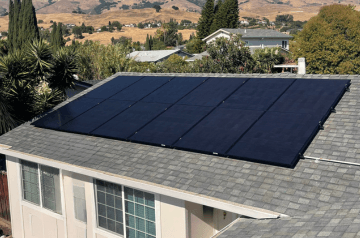
Milpitas homeowners live in one of Silicon Valley’s fastest-growing communities, where technology adoption, electric vehicle ownership, and home electrification continue to increase. Many households are looking beyond simply installing solar panels and are instead planning complete home energy systems that can adapt to changing energy needs over time.
The city’s neighborhoods include homes built across several decades, which means electrical infrastructure varies considerably from one property to another. Some newer homes may already have electrical systems capable of supporting battery storage, EV charging, and additional electrical loads. Older homes, however, may benefit from a professional evaluation to determine whether electrical upgrades should be considered before adding new equipment.
Many homeowners are also planning multiple projects over several years rather than completing everything at once. For example, a homeowner may begin with solar panels, later add battery storage, install a Level 2 EV charger, and eventually upgrade to electric heating or a heat pump water heater. Evaluating these projects together allows the electrical system to be designed with future expansion in mind rather than making multiple upgrades over time.
Because every property has different electrical characteristics, equipment compatibility, energy usage, and homeowner priorities, recommendations should always be based on a professional site evaluation rather than assumptions based on the home’s age or square footage.
Depending on the scope of the project, homeowners may also need to consider:
- Local permitting requirements
- Electrical inspections
- Utility coordination with PG&E where applicable
- Existing service entrance equipment
- Available installation space
- Future system expansion
Because every property is different, recommendations should always be based on an on-site evaluation rather than assumptions based on the home’s age alone.
Comparison Table: Which Home Energy Solution Fits Your Goals?
| Homeowner Goal | Solar | Battery | Solar + Battery |
| Generate electricity from sunlight | ✓ | No | ✓ |
| Backup power during PG&E outages | Limited | ✓ | ✓ |
| Store available solar energy | No | ✓ | ✓ |
| Reduce reliance on utility electricity | ✓ | Partial | ✓ |
| Support future EV charging | ✓ | ✓ | ✓ |
| Prepare for home electrification | ✓ | ✓ | ✓ |
| Improve household energy flexibility | Partial | Partial | ✓ |
This comparison demonstrates why many homeowners evaluate solar and battery storage together. The right solution depends on the home’s electrical infrastructure, daily energy usage, backup priorities, and long-term energy plans.
Home Energy Storage Planning Checklist
Before deciding whether a home energy storage system is appropriate, homeowners should consider both their current electrical needs and future plans.
Ask yourself:
- Have you experienced PG&E power outages that disrupted your household?
- Do you work remotely and depend on a reliable internet connection?
- Are there medical devices in your home that require continuous electricity?
- Do you already have solar panels?
- Are you planning to install solar in the future?
- Will you be purchasing an electric vehicle?
- Do you know which appliances you would want to power during an outage?
- Has your home’s electrical panel been evaluated recently?
- Do you expect your household electricity usage to increase over the next five to ten years?
- Have you compared multiple installation proposals?
Answering these questions can help determine whether a professional evaluation is appropriate before investing in a home energy storage system.
Key Takeaways
- Home energy storage systems can provide backup power during qualifying PG&E outages when properly designed and installed.
- Every home has different electrical requirements, so battery storage should be planned around the property’s specific energy needs.
- Selecting backup circuits is just as important as selecting the battery itself.
- Battery storage can often be installed with a new solar system or integrated with many existing solar installations, depending on system compatibility.
- A professional electrical evaluation and load calculation help determine whether the home’s existing electrical infrastructure can support battery storage safely.
- Planning future projects such as EV charging, heat pumps, or additional solar panels can help homeowners design an energy system that supports long-term electrification goals.
Planning Your Home Energy System Instead of Individual Projects
One of the biggest changes in residential energy planning is that homeowners are increasingly viewing solar panels, battery storage, EV charging, and electrical upgrades as parts of a single integrated energy system rather than separate home improvement projects.
For example, installing a battery today may influence the electrical panel capacity needed for a future EV charger. Likewise, homeowners planning to install solar panels may benefit from considering battery storage during the design phase, even if the battery is added later. Planning these projects together can reduce future modifications and help ensure the home’s electrical infrastructure is prepared for changing energy needs.
Rather than asking, “Should I install a battery?” many homeowners are now asking a broader question:
“What will my home’s energy needs look like over the next ten years?”
Considering future electricity usage, planned appliances, electric vehicles, and household growth during the initial planning process can help create a more flexible energy system that evolves with the homeowner’s needs.
Frequently Asked Questions
1. What is a home energy storage system?
A home energy storage system stores electricity for later use and can provide backup power to designated household circuits during qualifying outages, depending on the system configuration.
2. Will a home battery automatically work during a PG&E outage?
Many modern battery systems automatically detect qualifying outages and switch to backup power without requiring manual intervention, provided they have been designed and configured accordingly.
3. Can a battery power my entire home?
Some systems are designed for whole-home backup, while others are configured to power only essential circuits. The appropriate design depends on the home’s electrical demand and backup objectives.
4. How long can a battery keep my home running?
Backup duration depends on battery capacity, household electricity usage, the number of appliances being powered, and the overall system configuration.
5. Can I install a battery without solar panels?
Yes. Some homeowners install battery storage primarily for backup power, while others pair batteries with new or existing solar systems.
6. Can battery storage be added to an existing solar system?
In many cases, yes. Compatibility depends on the existing equipment, inverter technology, electrical panel capacity, and overall system design.
7. How do I decide which appliances should receive backup power?
Most homeowners prioritize refrigerators, internet equipment, lighting, medical devices, garage door openers, and security systems. The final selection depends on household priorities and battery capacity.
8. Will my electrical panel need to be upgraded?
Some homes require electrical upgrades before battery installation, while others do not. A professional evaluation and load calculation help determine whether modifications are necessary.
9. Should I plan for future EV charging when installing a battery?
If an electric vehicle is part of your long-term plans, discussing future charging requirements during system design may help reduce the need for future electrical modifications.
10. Why should I compare multiple proposals?
Comparing written proposals helps homeowners evaluate differences in equipment, warranties, system design, project scope, contractor experience, and long-term support.
⭐⭐⭐⭐⭐ Clean Installation & Reliable Performance
“The installation was professional and exceptionally clean. Our system has operated without any issues for more than a year and a half. While the installation took a little longer than expected, the quality of the workmanship made it worthwhile.”
– Verified Bay Area, Homeowner
Planning for Reliable Energy Starts With Understanding Your Home
Every home has different electrical requirements, energy usage patterns, and long-term goals. The most appropriate battery storage solution depends not only on the equipment being installed but also on how the home’s electrical system is designed today and how it may change in the future.
At Nabu Energy, our licensed in-house team evaluates each property individually, considering existing electrical infrastructure, solar compatibility, backup priorities, future EV charging, and long-term electrification plans before making recommendations. This approach helps homeowners understand the options available so they can choose a solution that fits both their current needs and future plans.
Whether you’re exploring battery storage for backup power, planning your first solar installation, or preparing your home for future electrification, a professional evaluation provides the information needed to make an informed decision with confidence.
For homeowners interested in learning more about residential energy storage and home electrification, these resources provide helpful information:
– PG&E – Information about Public Safety Power Shutoff (PSPS) events, outage preparedness, and electrical service updates.
– California Energy Commission (CEC) – Resources on residential energy efficiency, renewable energy, and home electrification.
– U.S. Department of Energy – Guidance on home battery storage systems, solar energy, and energy resilience.
– ENERGY STAR – Information about energy-efficient appliances and home energy improvements.
Disclaimer
This article is provided for general informational purposes only and should not be considered legal, financial, tax, or engineering advice. Home energy storage performance, battery capacity, backup duration, utility programs, permitting requirements, installation timelines, equipment compatibility, and applicable building codes vary by property, utility provider, manufacturer, and local jurisdiction. Homeowners should obtain multiple written proposals, verify contractor licensing, review all contract terms carefully, and consult a licensed California electrical contractor before making any purchasing decision.