Why Bay Area Homeowners Are Paying Closer Attention to PG&E Electricity Rates
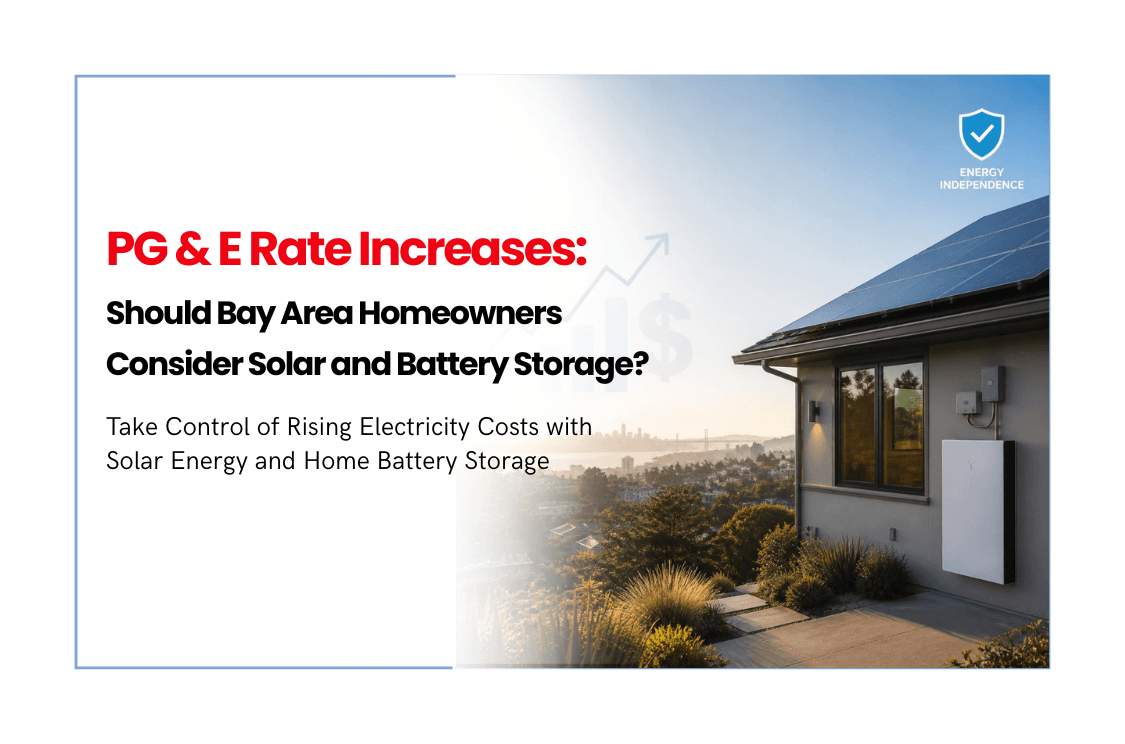
Electricity costs have become an important consideration for many Bay Area homeowners. As utility rates change over time, homeowners are increasingly looking for ways to better understand their energy usage and evaluate whether investing in residential solar and battery storage makes sense for their property.
For many homeowners served by PG&E, the question is no longer only about generating electricity, it is about having more visibility and control over how energy is produced, stored, and used at home.
However, solar and battery storage are not one-size-fits-all solutions. Whether they are appropriate depends on several factors, including the home’s electricity consumption, existing solar system, electrical infrastructure, future energy plans, and personal energy goals.
Understanding Why PG&E Rate Changes Matter for Homeowners
PG&E electricity rates can change due to multiple factors, including utility operations, infrastructure investments, energy market conditions, wildfire mitigation efforts, and regulatory decisions. These changes can affect how homeowners evaluate their long-term energy choices.
Rather than focusing only on current electricity costs, many homeowners are looking at how their energy needs may change over the coming years.
Factors influencing future electricity usage may include:
- Electric vehicle charging
- Home office equipment
- Heat pumps and electric heating systems
- Induction cooking
- Electric water heaters
- Increased household electricity consumption
As homes become more electrified, understanding energy usage becomes increasingly important. Instead of reacting only to changes in utility bills, many homeowners are beginning to evaluate how their homes may consume electricity over the next 10 to 20 years. Planning ahead can make future electrical upgrades, renewable energy adoption, and battery storage integration easier when household energy demands increase.
Can Solar Help Homeowners Manage Changing Electricity Costs?
Residential solar allows homeowners to generate electricity from their own property instead of relying entirely on electricity purchased from the utility.
However, solar production and household electricity usage do not always happen at the same time. Solar panels typically produce the most electricity during daylight hours, while many households use more electricity in the evening.
This difference between solar production and household demand is one reason many homeowners are exploring battery storage alongside solar.
The right solar system design depends on:
- Roof conditions
- Available sunlight
- Household electricity consumption
- Existing electrical equipment
- Future energy plans
A properly designed solar system begins with understanding how a household currently uses electricity and how that usage may evolve in the future. Every home has different energy patterns, and designing a system based on actual needs can help homeowners build a solution that supports their long-term energy objectives rather than simply maximizing panel capacity.
How Battery Storage Fits Into the Energy Conversation
A battery storage system allows homeowners to store available electricity for later use. When paired with solar, batteries can become part of a broader home energy strategy.
Homeowners may consider battery storage for reasons such as:
- Maintaining power to selected household circuits during qualifying outages
- Using stored energy when solar production is unavailable
- Preparing for future home electrification
- Creating a more flexible residential energy system
Battery storage is not designed the same way for every home. Some homeowners may prioritize backup power, while others may focus on integrating solar, EV charging, and future electrical upgrades.
Another important consideration is that battery storage can provide homeowners with greater flexibility in how electricity is used throughout the day. Rather than relying solely on real-time solar production, stored energy may be available for use when household demand changes, depending on system configuration and operating settings.
Modern battery systems also continue to evolve with software updates, energy management capabilities, and integration with smart home technologies. Understanding these features can help homeowners evaluate whether battery storage aligns with their long-term energy plans.
Is Solar and Battery Storage Right for Every Bay Area Home?
Not necessarily.
A responsible evaluation should consider both the benefits and limitations.
Solar and battery storage may make sense for homeowners who:
- Have high electricity usage
- Already have solar or are planning solar installation
- Want backup power capability
- Own or plan to purchase electric vehicles
- Are preparing for future electrification
On the other hand, some homeowners may choose to wait if:
- Their electricity usage is currently low
- They are planning major home renovations
- Their roof or electrical system requires future updates
- Backup power is not a priority
The best decision depends on the individual home rather than a general recommendation.
Which Energy Solution May Fit Your Home?
Comparison Table: Solar Only vs. Battery Only vs. Solar + Battery
| Feature | Solar Only | Battery Only | Solar + Battery |
| Generates electricity from sunlight | ✓ | No | ✓ |
| Stores electricity for later use | No | ✓ | ✓ |
| Supports backup power | Limited | ✓ | ✓ |
| Can work with an existing solar system | — | ✓ | ✓ |
| Supports future EV charging plans | ✓ | ✓ | ✓ |
| Helps manage household energy usage | Partial | Partial | ✓ |
| Can be expanded in many cases | Depends on design | Depends on manufacturer | Depends on design |
This comparison illustrates why many homeowners evaluate solar and battery storage together rather than viewing them as competing technologies. The right solution depends on each property’s electrical setup, household energy usage, and future plans. The most appropriate solution depends on the home’s electrical infrastructure, electricity usage, energy goals, and future plans.
Why Battery Design Matters as Much as Battery Selection
Choosing a battery is not only about selecting a brand or capacity. Proper planning requires understanding what the homeowner wants the system to accomplish.
Important considerations include:
- Which circuits should receive backup power?
- How much electricity does the household typically use?
- Are EV chargers or electric appliances planned?
- Does the existing electrical panel support the equipment?
- Can the system be expanded in the future?
A properly designed system should match the homeowner’s actual energy needs.
System design also influences future flexibility. Homeowners planning additional solar panels, home additions, or increased electrical demand may benefit from considering expansion possibilities during the initial planning stage rather than making significant modifications later.
Bay Area Homes Have Different Electrical Requirements
The Bay Area includes a wide variety of homes, from older properties with original electrical panels to newer construction with modern electrical infrastructure.
Before installing solar or battery storage, homeowners should evaluate:
- Electrical service capacity
- Existing solar equipment
- Available installation space
- Panel configuration
- Local permitting requirements
Some homes may require electrical upgrades before additional energy equipment can be installed, while others may already be prepared.
Because every property is different, an on-site evaluation often provides the most accurate understanding of installation requirements. Factors such as roof layout, electrical equipment, available wall space, and local permitting standards can all influence the overall project approach.
Choosing the Right Solar and Battery Installer
The installer you choose plays an important role in the success of a solar and battery project.
Homeowners should consider:
- Experience with residential solar and battery systems
- System design capabilities
- Installation experience
- Contractor licensing
- Warranty support
- Knowledge of local permitting requirements
Comparing multiple proposals can help homeowners understand differences in equipment recommendations, project scope, and installation approach.
In addition to pricing, homeowners should also evaluate how thoroughly each installer explains the proposed system, answers technical questions, and assesses the home’s electrical infrastructure. A comprehensive evaluation can often provide greater confidence throughout the planning and installation process.
Frequently Asked Questions
1. Why do PG&E electricity rates increase?
PG&E electricity rates can change due to factors such as infrastructure investments, wildfire mitigation programs, grid maintenance, energy procurement costs, and regulatory decisions. Rate adjustments are subject to approval through California’s regulatory process.
2. How do PG&E rate increases affect Bay Area homeowners?
Higher electricity rates may increase monthly energy costs, particularly for households with higher electricity usage. Many homeowners review their long-term energy consumption and explore ways to better manage future electricity needs.
3. Will PG&E electricity rates continue to change in the future?
Utility rates can change over time based on regulatory decisions, infrastructure investments, operational costs, and broader energy market conditions. While future rate changes cannot be predicted with certainty, many homeowners plan with long-term energy needs in mind.
4. What can homeowners do to prepare for future PG&E rate increases?
Homeowners often begin by reviewing their historical electricity usage, improving energy efficiency, and evaluating whether solutions such as residential solar, battery storage, or other electrical upgrades align with their long-term energy goals.
5. Are PG&E rate increases the only reason to consider solar and battery storage?
No. Homeowners may also evaluate solar and battery storage based on backup power needs, future home electrification, EV charging plans, increased energy independence, and long-term household energy usage.
6. Do PG&E rate increases mean I should install solar immediately?
Not necessarily. Solar decisions should be based on your home’s electricity usage, energy goals, property conditions, and long-term plans rather than utility rates alone.
7. Can battery storage reduce my electricity costs?
Battery storage can help homeowners use stored energy at different times depending on system configuration and applicable utility rules. Results vary based on household energy usage, battery settings, and utility programs.
8. Do I need solar panels before installing a battery?
Not always. Some battery systems can operate without solar panels, while others are commonly paired with solar depending on the homeowner’s objectives.
9. Will my home need electrical upgrades for solar or battery installation?
Some homes may require electrical upgrades, while others may not. This depends on the existing electrical service, panel capacity, and project requirements.
10. Should I install solar, battery storage, or both?
The right choice depends on your energy usage, backup power priorities, future electrification plans, and your home’s electrical infrastructure.
11. Can I add battery storage to my existing solar system?
In many cases, yes. Compatibility depends on your existing solar equipment, inverter configuration, electrical panel, and available installation options.
12. Can a battery power my entire home during a power outage?
It depends on the battery’s capacity, household electricity demand, and how the backup circuits are designed. Many systems are configured to support selected essential loads.
13. What appliances can be backed up with a home battery?
The answer depends on battery capacity and system design. Homeowners often prioritize important household circuits based on their backup power needs.
14. Is battery storage only useful during power outages?
No. Battery storage can also become part of a broader home energy strategy by storing available electricity for use later, depending on system configuration and operating settings.
15. Will installing solar eliminate my PG&E bill?
Not necessarily. Utility bills depend on electricity usage, solar production, applicable utility tariffs, and other fixed or non-energy charges.
16. How do I know what size solar system my home needs?
A professional assessment typically considers historical electricity usage, roof characteristics, available space, future electricity needs, and household energy goals.
17. Can solar or battery systems be expanded in the future?
Some systems can be expanded depending on equipment compatibility, available installation space, and the home’s electrical infrastructure.
18. How does owning an electric vehicle affect solar or battery system design?
Charging an EV increases household electricity usage and may influence the recommended solar system size, battery capacity, or overall electrical design.
19. What should homeowners compare when reviewing solar and battery proposals?
Compare equipment options, system design, warranties, installer qualifications, project scope, installation approach, and long-term support—not just the total project cost.
20. How can homeowners determine whether solar and battery storage are right for their property?
A professional site evaluation that reviews the home’s electrical infrastructure, historical electricity usage, future plans, roof characteristics, and energy goals is typically the best way to determine the most suitable solution.
Why Homeowners Choose Nabu Energy
Nabu Energy is a licensed California electrical contractor specializing in residential solar, battery storage systems, electrical upgrades, and EV charging solutions throughout the Bay Area.
The company completes both system design and installation using its in-house teams, allowing the project process to remain coordinated from planning through installation.
Nabu Energy follows a Zero Sales Commission business model, meaning recommendations are focused on the home’s electrical configuration, energy goals, and project requirements rather than individual sales incentives.
The company follows a manufacturer-agnostic approach and specializes in battery storage solutions from Tesla, Enphase, and SolarEdge, helping homeowners evaluate different technologies based on compatibility with their property.
Rather than recommending a single solution for every homeowner, Nabu Energy focuses on evaluating each property’s existing electrical infrastructure, energy usage patterns, and future objectives before developing a customized system design.
Disclaimer
This article is provided for general informational purposes only and should not be considered legal, financial, tax, or engineering advice. Solar production, battery performance, utility rates, available incentives, permitting requirements, installation timelines, and equipment options vary by property, utility provider, manufacturer, and local jurisdiction. Homeowners should obtain multiple written proposals, verify contractor licensing, review all contract terms carefully, and consult a licensed California contractor before making any purchasing decision.