Why More Milpitas Homeowners Are Preparing Their Homes for Electric Vehicles
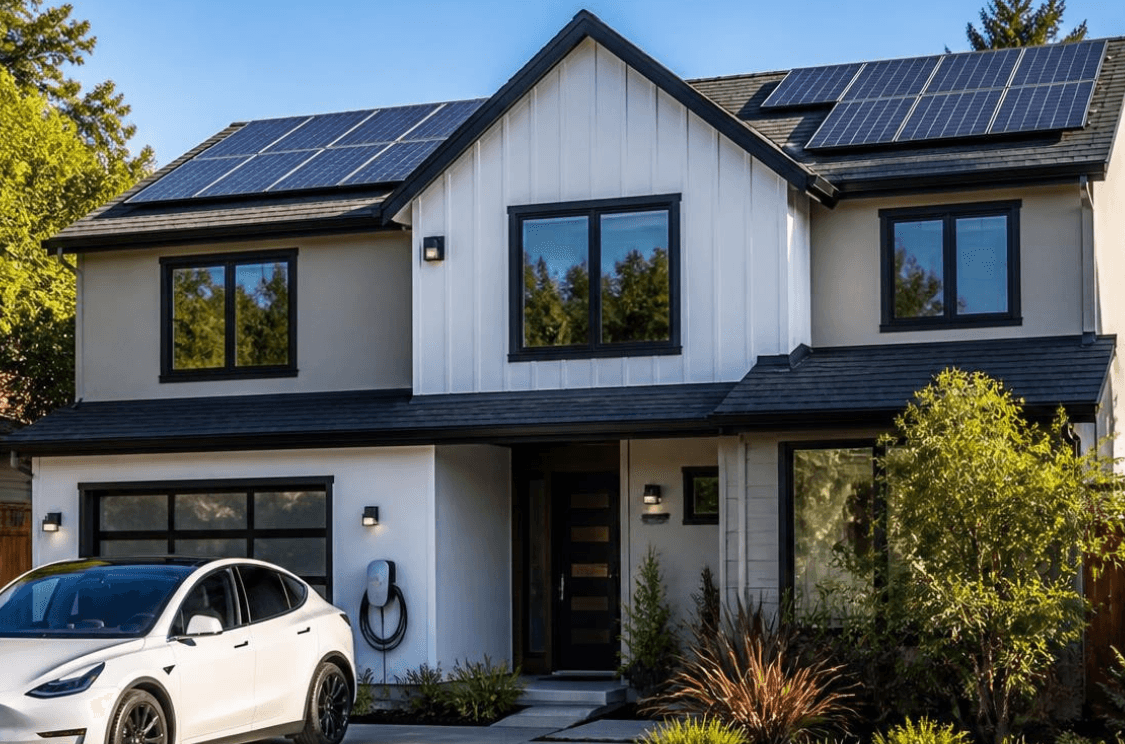
Electric vehicles (EVs) have become increasingly common throughout Milpitas and the broader Silicon Valley region. As more homeowners transition from gasoline-powered vehicles to electric transportation, many are discovering that purchasing an EV is only one part of the journey. Preparing the home to support reliable, convenient, and efficient charging is equally important.
For many households, the conversation begins with installing a Level 2 EV charger. However, charging equipment is only one component of a modern home energy system. The home’s electrical panel, available electrical capacity, future electricity usage, residential solar, and battery storage all play important roles in determining how well the home can support an electric vehicle over the long term.
Rather than treating EV charging as a standalone project, many Milpitas homeowners are taking a broader approach by evaluating how their electrical infrastructure can support both today’s needs and tomorrow’s technologies. This is particularly relevant in a city where technology adoption, home electrification, and electric vehicle ownership continue to grow.
Whether you are purchasing your first EV or planning for a second electric vehicle, understanding how your home’s electrical system fits into the equation can help you make informed decisions before installation begins.
In This Guide You’ll Learn
This guide is designed to help Milpitas homeowners understand how electric vehicle ownership connects with the broader home energy system. You’ll learn:
- Why buying an EV is only part of the planning process
- Whether your home’s electrical panel can support EV charging
- The differences between Level 1 and Level 2 charging
- How residential solar can complement EV charging
- Why many EV owners also consider battery storage
- How to plan for future home electrification
- Questions to ask before comparing EV charging installation proposals
Whether you’re purchasing your first electric vehicle or planning a long-term home energy upgrade, understanding these fundamentals can help you make confident, informed decisions.
Buying an EV Is Only Part of the Planning Process
One of the most common misconceptions among first-time EV buyers is that charging simply involves plugging the vehicle into the nearest outlet.
While every electric vehicle includes options for basic charging, many homeowners quickly discover that their daily driving habits, household electricity usage, and future plans influence which charging solution is most appropriate.
Instead of viewing EV charging as a single installation project, homeowners should consider how it fits within the home’s overall electrical system.
Questions worth asking include:
- Does the existing electrical panel have available capacity?
- Is a Level 2 charger appropriate for daily driving needs?
- Will another electric vehicle be purchased in the future?
- Is rooftop solar being considered?
- Would battery storage provide additional flexibility during PG&E outages?
- Are additional electric appliances planned over the next several years?
Looking at these projects together often results in a more flexible and scalable home energy plan than addressing each one independently.
Why EV Ownership Is Growing Across Milpitas
Milpitas is one of Silicon Valley’s rapidly evolving communities, where homeowners continue adopting new technologies that improve convenience, efficiency, and long-term sustainability. Electric vehicles have become a natural part of that transition.
California continues to lead the nation in electric vehicle adoption. According to the California Energy Commission, more than 2 million zero-emission vehicles (ZEVs) have been sold across the state, reflecting California’s continued transition toward cleaner transportation. As EV ownership grows, many homeowners are also evaluating whether their homes are prepared to support reliable charging and future electrical demand.
Source: California Energy Commission
Many households are replacing gasoline-powered vehicles with EVs while also planning additional projects such as:
- Residential solar installations
- Home battery storage systems
- Heat pump HVAC systems
- Heat pump water heaters
- Smart home energy management
- Induction cooking appliances
Rather than completing each project separately, many homeowners are evaluating how these technologies can work together as part of one integrated home energy strategy.
Planning ahead can also help homeowners understand whether today’s electrical infrastructure will continue supporting future household electricity demands.
Does Your Home Have Enough Electrical Capacity?
Before installing an EV charger, it is important to understand whether the home’s existing electrical system can safely support the additional load.
Not every home requires an electrical upgrade before EV charger installation. However, the answer depends on several property-specific factors rather than the age of the home alone.
A licensed California electrical contractor typically evaluates:
- Existing electrical service capacity
- Main electrical panel condition
- Available breaker space
- Current household electrical demand
- Existing major appliances
- Planned future electrical projects
- Local permitting requirements
Some homes already have sufficient electrical capacity for EV charging, while others may benefit from modifications before new equipment is installed.
While electricity usage varies by household, adding an electric vehicle can significantly increase a home’s overall electrical demand. The impact depends on annual driving distance, charging habits, and the number of electric appliances already in use. Evaluating current electricity consumption alongside future plans provides a more accurate picture of whether the existing electrical system is prepared for additional demand.
Source: U.S. Energy Information Administration (EIA)
Rather than making assumptions, a professional load calculation provides homeowners with the information needed to determine the most appropriate solution for their property.
Why Professional Load Calculations Matter
Installing an EV charger is not simply about selecting the charger itself. It also requires understanding how much electricity the home currently uses and how future electrical demand may change.
Licensed electrical contractors perform load calculations to evaluate whether the existing electrical service can safely accommodate additional equipment.
A professional load calculation commonly considers:
- Existing electrical loads
- Heating and cooling systems
- Electric water heaters
- Kitchen appliances
- Home office equipment
- Planned EV charging
- Residential solar
- Battery storage
- Future home additions
Because every household uses electricity differently, two homes with similar square footage may require different electrical solutions.
A professional evaluation helps homeowners plan with confidence rather than relying on estimates.
Contrary to a common misconception, installing a Level 2 EV charger does not automatically require a main electrical panel upgrade. Many newer homes already have sufficient electrical capacity, while some older homes may require modifications depending on available breaker space, existing electrical loads, and future energy plans. A professional load calculation determines the appropriate solution for each property.
Choosing the Right EV Charger for Your Home
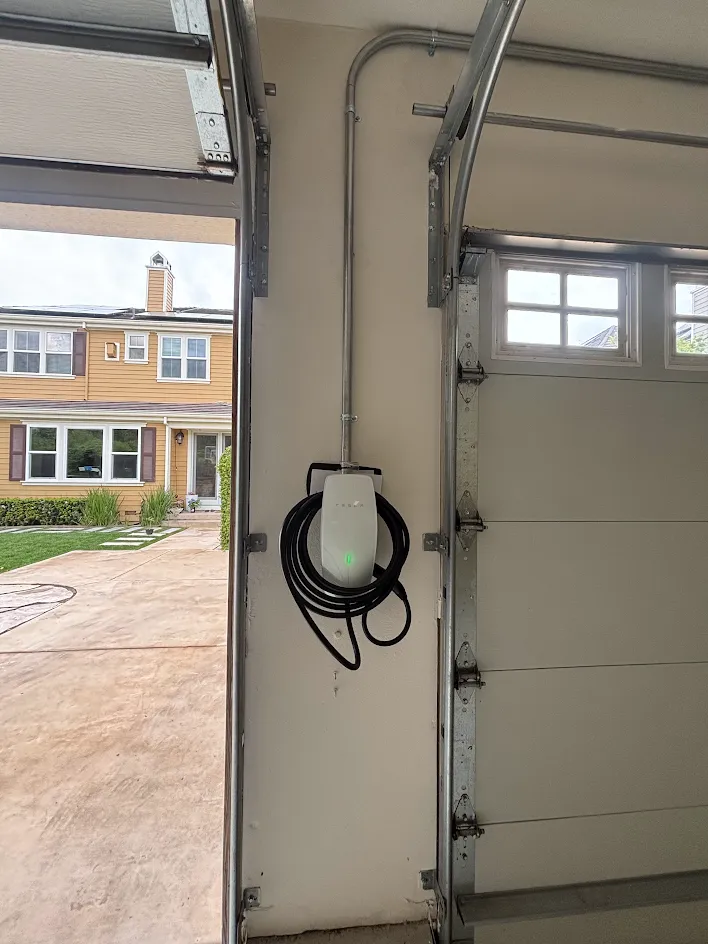
Once the home’s electrical capacity has been evaluated, the next step is selecting the charging solution that best matches the homeowner’s driving habits.
Most residential Level 2 EV chargers operate on a dedicated 240-volt circuit and typically provide 20–50 miles of driving range per hour of charging, depending on the vehicle and charger specifications. This makes Level 2 charging the preferred option for homeowners who drive regularly or own multiple electric vehicles.
Source: U.S. Department of Energy
Most homeowners compare two primary charging options.
Comparison Table: Level 1 vs. Level 2 EV Charging
| Feature | Level 1 Charging | Level 2 Charging |
| Uses standard household outlet | ✓ | No |
| Requires dedicated 240V circuit | No | ✓ |
| Charging speed | Slower | Faster |
| Best for short daily driving | Sometimes | ✓ |
| Common residential installation | Limited | ✓ |
Level 1 charging may be appropriate for homeowners with relatively low daily mileage and sufficient overnight charging time.
However, many households choose Level 2 charging because it provides greater convenience, supports longer daily driving distances, and better accommodates households with multiple drivers or future EV ownership.
The most appropriate charging solution depends on driving habits, available electrical capacity, and long-term household plans rather than simply choosing the fastest charger available.
Why Many EV Owners Also Consider Residential Solar
Installing an EV charger solves one part of the equation, making it convenient to charge your vehicle at home. However, many Milpitas homeowners soon begin asking another important question:
Where will the electricity for charging come from?
For households that charge an electric vehicle several times each week, electricity usage may increase compared with previous driving habits. Rather than relying entirely on utility-supplied electricity, many homeowners explore whether residential solar could become part of their long-term energy strategy.
Residential solar systems generate electricity during daylight hours, allowing homeowners to produce electricity directly from their property. While every home’s production and electricity usage are different, many homeowners appreciate having greater visibility into how electricity is generated and consumed throughout the day.
Whether solar is appropriate depends on several factors, including:
- Roof orientation and available sunlight
- Household electricity consumption
- Planned EV charging habits
- Existing electrical infrastructure
- Future electrification plans
- Available roof space
A professional site evaluation helps determine whether solar aligns with the home’s current and future energy needs rather than assuming every property will benefit equally.
Can an Existing Solar System Support EV Charging?
Many Milpitas homeowners already have rooftop solar installed before purchasing an electric vehicle. In these situations, an important consideration is whether the existing solar system was originally designed to support additional electrical demand.
Adding an EV changes how a household consumes electricity, particularly if charging occurs several times each week. Some existing solar systems may already have sufficient production capacity, while others may require modifications or expansion depending on household energy usage.
Before making changes, homeowners should evaluate:
- Current annual electricity consumption
- Existing solar system production
- Planned EV charging frequency
- Future household electricity demand
- Available roof space for additional panels
- Existing inverter compatibility
Because every solar installation is unique, recommendations should always be based on actual production data and future household plans rather than assumptions.
For homeowners considering expanding an existing solar system, reviewing the current system alongside future electrical goals often provides a clearer picture than evaluating the EV project independently.
Many homeowners discover that purchasing an EV changes the way their existing solar system performs relative to household electricity usage. Reviewing annual solar production alongside projected EV charging requirements helps determine whether the current system remains appropriately sized or whether future expansion should be considered.
⭐⭐⭐⭐⭐ Customized Solar Design & Professional Installation
“Nabu Energy delivered an excellent experience from start to finish. They are a no-frills company who took the time to design the right-fit solar configuration tailored to my needs, rather than a one-size-fits-all solution. Communication was clear, timely, and consistent throughout the entire process, making everything feel smooth and stress-free. The installation was well-organized and efficient, and the team kept every step on schedule. Overall, Nabu Energy made going solar easy and confidence-inspiring, and I highly recommend them for their professionalism and attention to detail.”
– Verified Bay Area, Homeowner
How Battery Storage Completes the Home Energy System
As homeowners begin combining EV charging with residential solar, many also explore whether battery storage should become part of the overall system.
Unlike solar panels, which generate electricity during daylight hours, a home battery stores electricity for later use based on the system’s design and operating configuration.
For many homeowners, battery storage is not only about backup power. It is also about creating a more flexible home energy system that can adapt to changing electricity needs over time.
Battery storage may be considered for several reasons, including:
- Providing backup power to selected household circuits during qualifying PG&E outages
- Storing available solar energy for later use
- Supporting future home electrification projects
- Increasing overall energy flexibility
- Integrating multiple home energy technologies into a coordinated system
Because every property has different energy goals, battery systems are designed differently depending on how homeowners intend to use them.
Comparison Table: Solar vs. Battery vs. Solar + Battery
| Homeowner Goal | Solar | Battery | Solar + Battery |
| Generate electricity from sunlight | ✓ | No | ✓ |
| Store electricity for later use | No | ✓ | ✓ |
| Backup selected circuits during qualifying outages | Limited | ✓ | ✓ |
| Support future EV charging | ✓ | ✓ | ✓ |
| Increase home energy flexibility | Partial | Partial | ✓ |
| Expand in the future (where appropriate) | Depends on design | Depends on manufacturer | Depends on design |
Every home is different. Rather than viewing solar and battery storage as competing technologies, many homeowners evaluate how both systems can work together to support their long-term energy goals.
Can Battery Storage Power an Electric Vehicle During an Outage?
This is one of the most common questions homeowners ask after purchasing an EV.
The answer depends on several factors, including:
- Battery capacity
- System design
- Backup configuration
- Household electrical loads
- Charger power requirements
Many residential battery systems are primarily designed to supply essential household circuits during qualifying outages, such as:
- Refrigeration
- Lighting
- Internet equipment
- Medical devices
- Selected outlets
- Garage door openers
Whether an EV charger is included in the backup configuration depends on the homeowner’s priorities and the overall system design.
For households where maintaining transportation during an outage is important, these considerations should be discussed during the planning process rather than after installation.
⭐⭐⭐⭐⭐ Technical Guidance Without Sales Pressure
“Highly recommend Nabu Energy for solar installation and battery storage systems. They provided detailed technical information about every product and recommended the best PV system by considering both our current and future energy needs. The best part was that there was no aggressive sales pitch—only honest technical guidance that helped us make an informed decision.”
– Verified Bay Area, Homeowner
Planning Your Home as One Complete Energy System
One of the biggest advantages of planning ahead is avoiding unnecessary modifications later.
Rather than completing individual projects over several years without coordination, many homeowners are evaluating their long-term energy goals before installing new equipment.
For example, a homeowner may plan to:
- Purchase an electric vehicle this year
- Install rooftop solar next year
- Add battery storage later
- Upgrade to electric heating in the future
- Replace a gas water heater with a heat pump
- Purchase a second EV several years from now
Evaluating these projects together allows electrical infrastructure to be designed with future expansion in mind instead of modifying the system each time a new project begins.
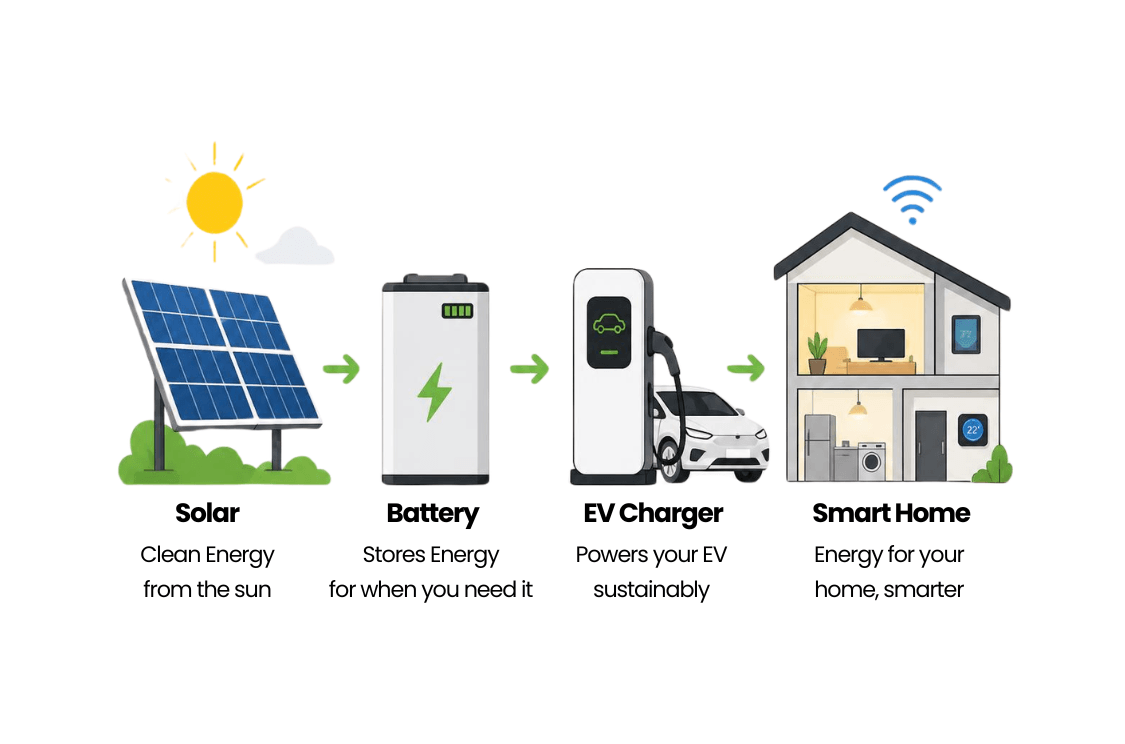
Planning ahead can also help homeowners understand how each improvement interacts with the others, resulting in a more coordinated home energy strategy.
Home electrification is becoming increasingly common across California as homeowners adopt electric vehicles, battery storage, heat pumps, induction cooking, and smart energy management technologies. Evaluating these projects together can reduce future electrical modifications and create a more coordinated long-term energy strategy.
Milpitas Homes Present Unique Energy Planning Opportunities
Milpitas homeowners live in one of Silicon Valley’s fastest-growing communities, where technology adoption, electric vehicle ownership, and home electrification continue to increase. As power reliability and energy resilience become greater priorities, many households are looking beyond simply installing solar panels and are instead planning complete home energy systems that can adapt to changing energy needs over time.
The city’s neighborhoods include homes built across several decades, which means electrical infrastructure varies considerably from one property to another. Some newer homes may already have electrical systems capable of supporting battery storage, EV charging, and additional electrical loads. Older homes, however, may benefit from a professional evaluation to determine whether electrical upgrades should be considered before adding new equipment.
Many homeowners are also planning multiple projects over several years rather than completing everything at once. For example, a homeowner may begin with solar panels, later add battery storage, install a Level 2 EV charger, and eventually upgrade to electric heating or a heat pump water heater. Evaluating these projects together allows the electrical system to be designed with future expansion in mind rather than making multiple upgrades over time.
Because every property has different electrical characteristics, equipment compatibility, energy usage, and homeowner priorities, recommendations should always be based on a professional site evaluation rather than assumptions based on the home’s age or square footage.
Home Energy Planning Checklist Before Buying an EV
Purchasing an electric vehicle is often the beginning of a broader home electrification journey. Taking time to evaluate your home’s current electrical infrastructure and future plans can help you make informed decisions before installation begins.
Consider the following questions:
- Do you have enough electrical panel capacity for a Level 2 EV charger?
- Has a licensed electrical contractor performed a load calculation?
- Are you planning to install residential solar within the next few years?
- Would battery storage help meet your backup power goals during qualifying PG&E outages?
- Will your household likely own a second EV in the future?
- Are you planning to replace gas appliances with electric alternatives?
- Is your roof suitable for future solar installation?
- Have you considered future electricity usage rather than only current demand?
- Will your existing electrical panel support additional circuits if needed?
- Have you compared multiple written proposals before selecting a contractor?
Answering these questions can help homeowners understand how today’s decisions may influence future electrical projects.
Comparison Table: Which Home Energy Projects Work Well Together?
Many homeowners initially focus on installing an EV charger but later realize that other energy improvements may also support their long-term goals.
| If You’re Planning To… | Consider Evaluating… |
| Buy your first EV | Electrical panel capacity and Level 2 charger installation |
| Install rooftop solar | Existing electrical panel compatibility |
| Add battery storage | Panel configuration and backup power design |
| Purchase a second EV | Future electrical capacity and charging requirements |
| Replace gas appliances | Overall household electrical load |
| Remodel your home | Existing electrical infrastructure and future expansion |
Every property is unique, so recommendations should be based on a professional site evaluation rather than a standard checklist.
Comparison Table: How Different Home Energy Solutions Support Your Goals
| Homeowner Goal | Residential Solar | Battery Storage | EV Charger | Electrical Panel Evaluation |
| Charge an EV at home | Optional | No | ✓ | Depends |
| Reduce reliance on utility electricity | ✓ | Partial | No | Depends |
| Backup selected circuits during qualifying outages | Limited | ✓ | No | Depends |
| Support future home electrification | ✓ | ✓ | ✓ | ✓ |
| Prepare for multiple EVs | ✓ | ✓ | ✓ | ✓ |
| Increase long-term energy flexibility | ✓ | ✓ | ✓ | ✓ |
This comparison demonstrates why many homeowners evaluate these projects together instead of treating each installation as a separate decision.
Key Takeaways
Buying an electric vehicle is about more than selecting the right car. Preparing your home to support convenient charging, future electrical demand, and long-term energy goals can make the transition smoother and more efficient.
Before installing an EV charger, homeowners should understand their home’s electrical capacity, future electricity usage, and whether additional projects such as solar or battery storage may be part of their long-term plans.
Because every home has different electrical characteristics, recommendations should always be based on a professional evaluation rather than assumptions.
Planning multiple energy projects together may also reduce the need for future electrical modifications and help create a more coordinated home energy system.
Frequently Asked Questions
1. Do I need to prepare my home before buying an electric vehicle?
Preparing your home’s electrical system before purchasing an EV can help ensure that charging equipment, electrical capacity, and future energy needs are properly evaluated before installation.
2. Do I need a Level 2 EV charger at home?
Not every homeowner does. The best charging solution depends on your daily driving habits, charging frequency, available charging time, and household electricity usage.
3. How many amps do I need for an EV charger?
Most residential Level 2 EV chargers operate on dedicated 30- to 60-amp circuits, depending on the charger, vehicle, and your home’s electrical capacity. A licensed electrical contractor can determine the appropriate circuit size through a professional load calculation.
4. Will my electrical panel support an EV charger?
Some homes already have sufficient electrical capacity, while others may require modifications. A professional load calculation helps determine whether your existing electrical system can safely support additional electrical demand.
5. Does every EV charger require a panel upgrade?
No. Whether a panel upgrade is necessary depends on your home’s existing electrical service, available breaker space, current electrical load, and future energy plans.
6. Do I need a permit in Milpitas for an EV charger?
Most permanent Level 2 EV charger installations require permits and inspections. Permit requirements vary depending on the scope of the installation and local building regulations. A licensed electrical contractor can help manage the permitting process.
7. Can I install two EV chargers at my home?
Yes. Many homes can support two EV chargers, but the electrical system should be evaluated to determine whether sufficient capacity is available or whether electrical upgrades should be considered.
8. Can an existing solar system support EV charging?
Many existing solar systems can support EV charging, but suitability depends on the system’s production, household electricity usage, and future charging requirements. A professional evaluation can determine whether expansion should be considered.
9. Is it cheaper to charge an EV with solar?
Charging an EV with electricity generated by a residential solar system may reduce the amount of electricity purchased from the utility. Actual savings depend on solar production, charging habits, electricity rates, and overall household energy usage.
10. Can a Tesla Powerwall charge an EV?
A Tesla Powerwall stores electricity that can support household energy use based on the system’s design and configuration. Whether it can be used to charge an EV depends on factors such as battery capacity, backup settings, charger requirements, and the overall electrical design.
11. Can battery storage power my EV during a PG&E outage?
It depends on the battery’s capacity, backup configuration, charger power requirements, and household electrical loads. A professionally designed system can help determine whether EV charging is included during backup operation.
12. Can I add battery storage after installing solar?
In many cases, yes. Compatibility depends on the existing solar equipment, inverter configuration, and the battery system selected.
13. What is a residential load calculation?
A load calculation evaluates how much electricity your home currently uses and estimates future electrical demand. It helps determine whether your existing electrical service can safely support additional equipment such as EV chargers, solar, or battery storage.
14. Should I plan for future home electrification when buying an EV?
Many homeowners choose to consider future projects such as battery storage, additional EVs, heat pumps, or electric appliances during the planning process. Evaluating these goals together can help reduce future electrical modifications.
15. Why should I compare multiple installation proposals?
Comparing written proposals allows homeowners to evaluate differences in equipment recommendations, project scope, contractor experience, warranties, installation methods, and long-term support before making a decision.
⭐⭐⭐⭐⭐ Thoughtful Planning & Outstanding Customer Support
“We worked with Harsh to install solar at our property. He was very detail-oriented and walked us through multiple options after reviewing our historical PG&E electricity usage. Although there were a few minor hiccups during the project, the team remained responsive and worked closely with us to get everything completed successfully. The customer support throughout the process was exceptional, and we appreciated the guidance every step of the way.”
– Verified Bay Area, Homeowner
Planning Your Next Step
Whether you’re buying your first electric vehicle or planning future upgrades such as residential solar, battery storage, or a Level 2 EV charger, every home has unique electrical requirements. Before purchasing or installing any equipment, consider scheduling a professional site evaluation to assess your home’s electrical capacity, future energy goals, and overall system compatibility. Planning ahead can help homeowners make informed decisions and avoid unnecessary modifications as their energy needs evolve.
Why Homeowners Choose Nabu Energy
Choosing the right contractor is just as important as selecting the right equipment. Whether you’re installing an EV charger, adding residential solar, integrating battery storage, or planning a complete home electrification project, the installation should be designed around your home’s unique electrical requirements rather than a one-size-fits-all approach.
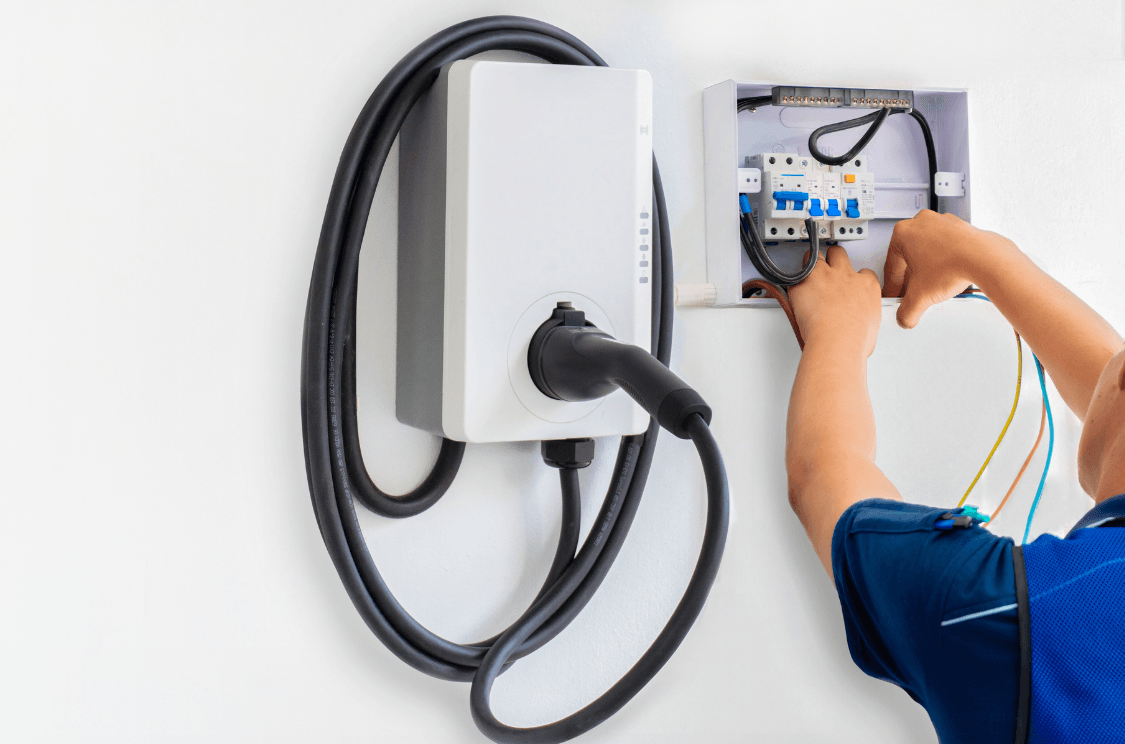
Nabu Energy is a licensed California electrical contractor serving homeowners throughout Milpitas and the Bay Area with residential solar installations, battery storage systems, EV charger installations, electrical panel upgrades, and complete home energy solutions.
Unlike companies that focus on a single product, Nabu Energy takes a whole-home approach to energy planning. Every project begins with understanding the homeowner’s current electrical system, future energy goals, and long-term electrification plans before recommending a solution.
The company completes both system design and installation using its experienced in-house teams, helping maintain consistency from initial consultation through final installation and inspection.
Nabu Energy also follows a Zero Sales Commission business model. Recommendations are based on engineering evaluations, electrical compatibility, homeowner objectives, and project requirements, not individual sales incentives.
As a manufacturer-agnostic installer, Nabu Energy helps homeowners evaluate technologies from leading manufacturers, including Tesla, Enphase, and SolarEdge, ensuring equipment recommendations are based on compatibility with the property rather than a single product line.
Whether you’re purchasing your first EV, expanding an existing solar system, adding battery storage, or planning future electrification, the goal is to provide homeowners with practical guidance and professionally designed energy solutions that support long-term needs.
Helpful Resources for Homeowners
For homeowners interested in learning more about electric vehicles, residential solar, battery storage, and home electrification, the following organizations provide educational information and consumer resources:
- U.S. Department of Energy (DOE) – Guidance on home EV charging, Level 2 charger installation, residential solar, battery storage systems, and whole-home energy planning.
- California Energy Commission (CEC) – Information on California’s zero-emission vehicle (ZEV) programs, residential renewable energy, home electrification, and clean energy initiatives.
- PG&E – Resources on EV rates, Public Safety Power Shutoff (PSPS) events, outage preparedness, electrical service information, and residential energy programs.
- ENERGY STAR® – Information on energy-efficient home improvements, appliances, heat pumps, and strategies for reducing household energy consumption.
- National Fire Protection Association (NFPA) – Educational information about the National Electrical Code (NFPA 70) and residential electrical safety.
- California Contractors State License Board (CSLB) – Consumer guidance for hiring licensed contractors and verifying California contractor licenses before beginning home improvement projects.
Disclaimer
This article is provided for general informational purposes only and should not be considered legal, financial, tax, engineering, or electrical design advice. Electrical service capacity, EV charging requirements, residential solar production, battery storage performance, permitting requirements, utility coordination, installation timelines, equipment compatibility, and applicable building codes vary by property, utility provider, manufacturer, and local jurisdiction.
Homeowners should obtain multiple written proposals, verify contractor licensing, review all contract documents carefully, and consult a licensed California electrical contractor before making decisions regarding EV charging, solar installations, battery storage systems, or electrical upgrades.
Author: Nabu Energy Editorial Team
Reviewed By: C-10 Licensed Electrical Contractor
Position: Licensed California Electrical Contractor | Residential Solar, Battery Storage & EV Charging Specialist